

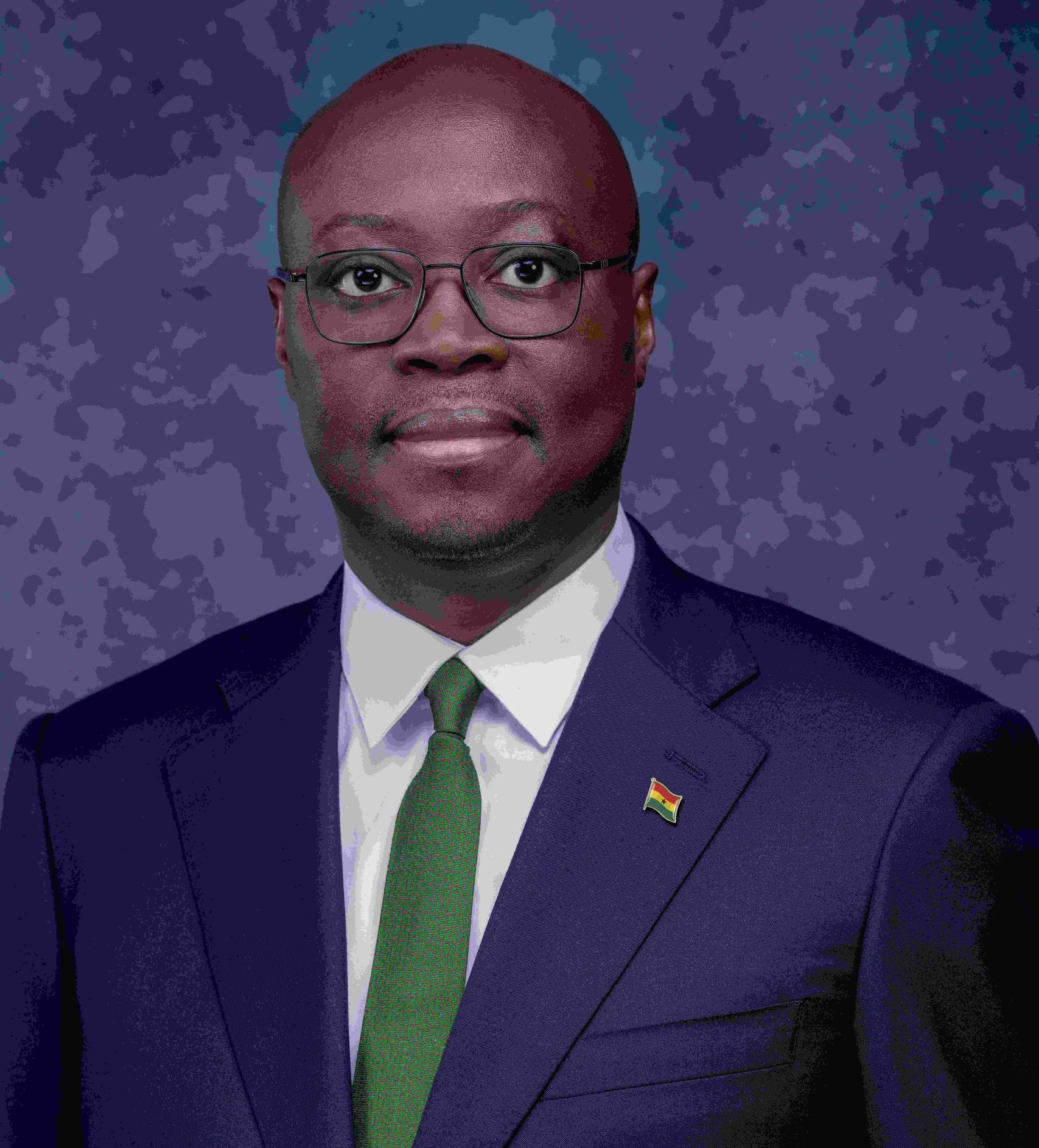

- Ato Forson Puts Workers at Centre of Ghana’s Recovery Agenda
Ghana’s economic recovery is entering a more demanding phase one in which improving macroeconomic indicators must translate into better living conditions, secure employment and stronger purchasing power for workers.
Finance Minister Dr Cassiel Ato Forson has placed workers’ welfare at the centre of that transition following the conclusion of a two-year public-sector remuneration agreement between the government and organised labour.
The agreement provides a 9 per cent increase in total remuneration from January 1, 2027. This comprises an 8-percentage-point adjustment in base pay and an additional 1-percentage-point allocation towards conditions of service.
Public-sector workers will subsequently receive a 10 per cent across-the-board increase in base pay in 2028. The negotiating parties have also included a mechanism allowing them to review the 2028 adjustment if inflation in December 2027 reaches a specified trigger.
According to Dr Forson, the agreement acknowledges the contribution public-sector workers have made to maintaining essential services and supporting Ghana’s return to economic stability.
“The agreement, as has been signed, recognises workers’ contribution to Ghana’s economic recovery. Workers’ dedication has helped sustain public service and support Ghana’s progress,” the Finance Minister said.
“Their welfare must remain central as we consolidate the recovery we have achieved so far,” he added.
The statement is politically important, but its real significance will depend on whether the recovery produces measurable improvements in workers’ economic security.
Economic recovery is often reported through inflation, growth, fiscal balances, exchange rates and public debt. These indicators matter because they affect business confidence, investment and the government’s capacity to deliver services.
For the average worker, however, recovery has a more immediate meaning. It is reflected in whether wages can cover food, transport, housing, education, healthcare and utilities without households being forced to borrow or reduce essential expenditure.
A public-sector employee may acknowledge that inflation is declining but still feel financially constrained if previous price increases have permanently raised the cost of living. Lower inflation means prices are increasing more slowly; it does not ordinarily mean that prices have returned to their former levels.
Consequently, the government’s worker-welfare pledge must be judged by movements in real income, not merely nominal salaries.
If wages increase by 9 per cent while inflation remains below that level, workers could record some improvement in purchasing power. If inflation accelerates beyond the pay adjustment, however, much of the increase could be eroded.
The inflation-trigger mechanism attached to the 2028 agreement is therefore an important safeguard. It recognises that a salary settlement negotiated today could become inadequate if economic conditions change materially before implementation.
The government faces a difficult balancing act. It must improve workers’ incomes without recreating the expenditure pressures that contributed to Ghana’s fiscal difficulties.
Public-sector compensation represents one of the largest and most rigid components of government spending. Once a salary increase is introduced, it becomes a recurring obligation that must be financed every year. It also affects pension contributions, allowances and other employment-related expenditure.
A wage adjustment unsupported by sustainable revenue could increase borrowing requirements, widen the fiscal deficit or crowd out spending on infrastructure and social services. If financed indirectly through inflationary pressures, the increase could ultimately undermine the workers it was intended to support.
Dr Forson acknowledged this tension, arguing that the negotiations were guided by the need to protect incomes while maintaining fiscal sustainability and industrial stability.
“Workers deserve commitment that government can honour. Fiscal sustainability helps us meet our obligation to workers while providing essential public service and sustaining the economic recovery,” he said.
This is the central test of the agreement. A smaller adjustment that is paid reliably and backed by credible revenue may protect workers more effectively than a larger promise that produces arrears or destabilises the budget.
The government must therefore integrate the salary adjustments fully into its medium-term expenditure framework rather than rely on optimistic revenue projections or one-off financing.
The decision to allocate one percentage point of the 2027 remuneration increase to conditions of service deserves attention.
Public-sector welfare extends beyond base pay. It includes allowances, pensions, occupational safety, healthcare, career progression, workload, professional development and the availability of tools needed to work effectively.
The agreement provides for some allowances to be reviewed during the transition period to correct distortions in the compensation system. That could help address long-standing differences between institutions where employees performing comparable functions receive substantially different benefits.
However, allowance reform must be transparent. Without clear principles, negotiations over institutional benefits can create new inequalities and encourage stronger organisations to secure more favourable packages than workers in less influential sectors.
The proposed independent public remuneration commission offers an opportunity to establish a more coherent compensation architecture. Its credibility will depend on its independence, access to reliable payroll data and ability to balance fairness with the state’s capacity to pay.
The commission should also address salary compression, where the differences between entry-level and experienced professional pay become too narrow to reward qualifications, responsibility and performance.
Salary increases alone will not establish trust. The government must demonstrate that it can pay wages, pensions and statutory obligations promptly.
Dr Forson has disclosed that the government paid more than GH¢4.40 billion to the Social Security and National Insurance Trust and towards second-tier pension obligations. He has also reported releases to statutory funds supporting healthcare, education, roads and local development.
These payments matter because delayed pension contributions weaken workers’ retirement security even when monthly salaries are paid. A worker’s welfare is compromised if deductions are made at source but not transferred promptly to the appropriate pension fund.
Earlier in 2026, the government reported spending GH¢48.80 billion on public-sector compensation, including obligations to SSNIT and second-tier pension schemes.
To reinforce confidence, the Ministry of Finance should publish regular updates on compensation expenditure, pension transfers and outstanding arrears. Transparency would allow labour organisations to verify whether negotiated commitments are being honoured.
The remuneration agreement should not be framed solely as a financial concession from the government to organised labour. It should become the foundation of a broader public-sector productivity compact.
Workers deserve fair compensation, but citizens also deserve responsive institutions, shorter processing times, dependable public services and accountability for poor performance.
Ghana cannot sustainably improve public-sector wages without strengthening productivity. Digitalisation, better performance management, continuous training and the elimination of duplicated functions must accompany higher compensation.
Productivity reform must not become a convenient justification for arbitrary job losses. Its purpose should be to give workers the systems, technology and skills required to deliver better services.
The government must also resolve prolonged acting appointments, delayed promotions and unclear career pathways. When qualified employees perform higher responsibilities for extended periods without recognition or corresponding compensation, morale and institutional trust decline.
Although the agreement directly covers public-sector workers, Ghana’s recovery cannot be considered inclusive if private-sector and informal workers experience stagnant earnings.
Many private businesses continue to face expensive credit, high utility costs and constrained consumer demand. Smaller enterprises may be unable to match public-sector salary adjustments without increasing prices, reducing employment or compressing profit margins.
Government must therefore complement the public-sector agreement with policies that improve the wider business environment. These should include reliable energy, lower financing costs, predictable taxation and targeted support for enterprises capable of generating productive employment.
The minimum wage must also remain responsive to living costs. Otherwise, the difference between protected public-sector employment and more vulnerable private-sector or informal work could continue to widen.
Dr Forson’s declaration that workers’ welfare must remain central to Ghana’s recovery establishes an important benchmark against which government policy can be measured.
The 2027 and 2028 salary adjustments provide some predictability for workers and the national budget. The inflation review mechanism offers additional protection, while planned reforms to allowances and public remuneration could address persistent distortions.
But the decisive issue will be implementation.
Government must ensure that the increases are paid on time, pension contributions are transferred fully, inflation remains contained and revenue mobilisation does not depend excessively on taxes that erode workers’ disposable incomes.
The strongest evidence of recovery will not be found only in official economic reports. It will be seen when workers can meet essential expenses, save for emergencies, plan for retirement and believe that their incomes are becoming more secure.
Ghana has made progress towards macroeconomic stability. The next responsibility is to ensure that stability reaches the people whose sacrifices helped make it possible.

