

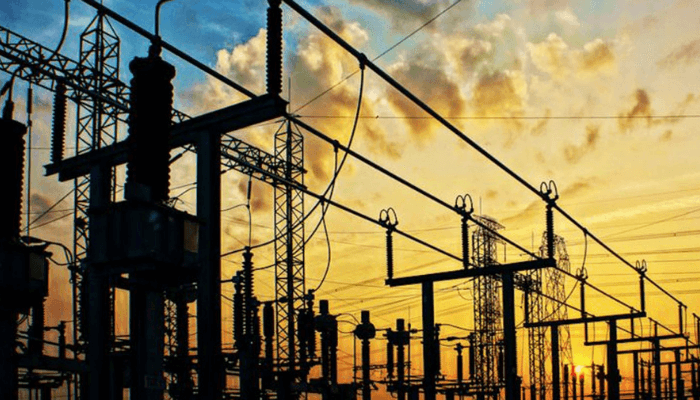

- Bamako Grid Gets US$190.00 million Boost as Mali Targets Power Reliability
Mali has cleared the way for a US$190.00 million electricity infrastructure project aimed at strengthening power supply in Bamako, as the country moves to address rising electricity demand, transmission bottlenecks and persistent reliability challenges in its capital city.
The project, known as the Bamako North 225 kV Loop Project, will modernise the city’s transmission and distribution network, connect 10,000 new households and small businesses to the national grid, and improve power reliability for about 40 industrial facilities.
The project is expected to reduce network congestion, strengthen electricity delivery in fast-growing communities and create a platform for future renewable energy integration.
Its implementation follows the ratification by Mali’s National Transitional Council of financing agreements backed by the African Development Bank Group and other development partners.
The financing package brings together support from the African Development Bank Group, the West African Development Bank, the Islamic Development Bank and the Malian government.
The AfDB Group is providing more than US$68.00 million through concessional loans, climate finance and grants, covering just over 36.00% of the project’s total cost.
The remaining financing is being provided by the other partner institutions and the Malian authorities.
For Mali, the investment comes at a critical time. The country’s electricity sector is under growing pressure from rising demand, limited generation capacity, dependence on thermal power generation and the high cost of imported fuel.
National electricity access stood at 55.80% in 2023, but the figures mask a deep urban-rural divide. Urban access was estimated at 86.60%, while rural access stood at only 30.40%.
That gap remains one of the most important constraints on inclusive growth, industrial development and household welfare.
Electricity demand is also expanding by roughly 10.00% annually, placing additional strain on existing generation, transmission and distribution infrastructure.
In Bamako, the pressure is particularly acute because of population growth, urban expansion, industrial activity and increased demand from households and businesses.
The Bamako North 225 kV Loop Project is therefore designed not only to add connections, but to improve the structure of the grid itself.
The works will include the construction of a 225-kilovolt transmission line linking the Kodialani and Dialakorobougou substations, as well as new substations at Safo and Kénié.
Existing substations across the Bamako network will also be upgraded, while medium- and low-voltage distribution lines will be extended to serve newly developing communities.
This combination of transmission reinforcement and distribution expansion is intended to reduce bottlenecks that currently limit the reliability and quality of power supply.
For industrial users, the project could be particularly important.
Around 40 industrial facilities are expected to benefit from improved electricity reliability, helping reduce the cost of outages, backup generation and production interruptions.
Unreliable power remains one of the major constraints facing businesses across many African economies. It raises operating costs, reduces productivity, weakens competitiveness and discourages investment in manufacturing and agro-processing.
By reinforcing Bamako’s grid, Mali is seeking to improve conditions for industrial activity, agricultural value chains and job creation, particularly for young people and women.
The reinforced transmission network is expected to support future power imports through the Guinea–Mali interconnection, improve regional transmission links and accommodate planned solar power projects at Kambila and Safo.
This is critical because Mali’s energy system remains heavily exposed to fuel-import costs and thermal generation.
A stronger grid would make it easier to integrate more renewable energy, diversify supply and reduce dependence on expensive fossil-fuel-based generation over time.
For the African Development Bank, the project fits into its wider objective of expanding electricity access, strengthening regional power systems and supporting energy security across Africa.
Transmission infrastructure is often less visible than generation projects, but it is central to power-sector reliability.
A country may have generation capacity on paper, but without a strong transmission and distribution network, power cannot be delivered efficiently to households, businesses and industrial zones.
That is why the Bamako North loop is strategically important.
It strengthens the backbone of the system, improves the ability to move power around the capital and creates room for future expansion.
The project is also expected to support Mali’s integration into wider West African power networks.
Regional interconnections can help countries access cheaper and more reliable power, balance supply and demand across borders, and reduce the need for each country to rely entirely on domestic generation.
For landlocked countries such as Mali, regional power trade can be especially important, provided the transmission infrastructure is strong enough and political cooperation remains stable.
Implementation of the Bamako North 225 kV Loop Project is scheduled to begin in the third quarter of 2026.
Once completed, it is expected to rank among Mali’s most significant recent investments in power transmission infrastructure.
The challenge will be delivery.
Large energy infrastructure projects across Africa often face delays linked to procurement, land acquisition, contractor performance, financing disbursement, currency pressures and institutional capacity.
For Mali, timely implementation will be essential because the demand pressures facing Bamako are already visible.
If executed effectively, the project could help reduce outage-related losses, improve electricity reliability for industry, connect new customers and provide the technical foundation for cleaner energy integration.
It could also strengthen investor confidence in Mali’s power sector at a time when energy security remains central to economic resilience.
The project does not solve all of Mali’s electricity challenges.
The country still needs more generation capacity, stronger utility finances, improved rural electrification, better tariff and subsidy management, and continued investment in renewable energy.
But the Bamako North loop is an important step. It addresses one of the core weaknesses of many power systems: the inability of the grid to carry reliable electricity to where it is needed most.

