

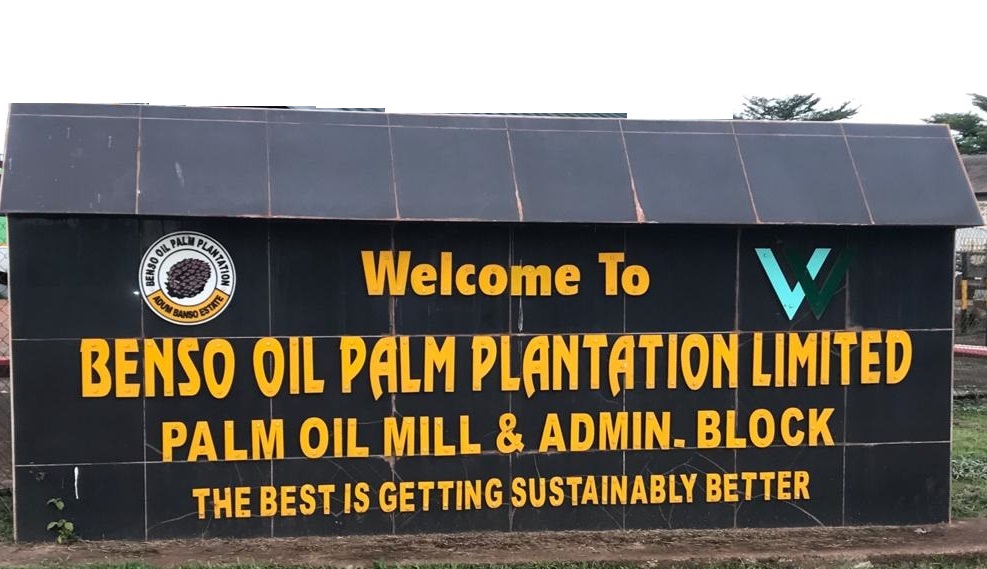

- Benso Oil Palm Profit Falls 26.96% to GH¢46.56 million as Revenue Weakens
Benso Oil Palm Plantation Limited recorded a 26.96% decline in first-half profit to GH¢46.56 million after lower revenue and weaker margins offset improved sales volumes and stronger operating cash generation.
The company’s unaudited financial statements for the six months ended June 30, 2026, showed revenue falling by 10.16% to GH¢218.85 million from GH¢243.59 million in the corresponding period of 2025.
Management attributed the weaker financial performance primarily to the appreciation of the Ghana cedi against the US dollar, despite higher sales volumes and stable dollar-linked pricing. Profitability improved between the first and second quarters but remained below the previous year’s level, according to the outlook statement on page five.
Crude palm oil remained the company’s dominant revenue source, generating GH¢192.26 million, down from GH¢212.62 million.
Palm kernel oil sales declined to GH¢23.16 million from GH¢25.79 million, while revenue from palm kernel expeller increased to GH¢1.99 million from GH¢1.50 million.
Sales of soap fell to GH¢1.45 million from GH¢3.68 million.
The revenue structure remained highly concentrated among related parties, which accounted for GH¢206.98 million, or approximately 94.58% of total sales. Third-party revenue stood at GH¢11.87 million.
That concentration provides a reliable internal market but also exposes the company to counterparty and group-level demand risks.
Cost of sales declined by only 1.86% to GH¢144.12 million, significantly slower than the contraction in revenue.
As a result, gross profit fell by 22.74% to GH¢74.73 million from GH¢96.73 million, while the gross margin narrowed to 34.15% from 39.71%.
The margin compression indicates that the reduction in sales income was not matched by an equivalent decline in production costs.
Fresh fruit bunch and material costs remained the largest component of cost of sales at GH¢46.65 million, although this was lower than GH¢56.22 million a year earlier.
Fertiliser expenditure declined to GH¢13.11 million from GH¢16.82 million, while other materials consumed fell to GH¢8.74 million.
Staff costs increased slightly to GH¢17.60 million from GH¢17.47 million, and depreciation rose to GH¢9.79 million from GH¢8.87 million.
Administrative expenses increased by 10.90% to GH¢23.79 million, placing further pressure on earnings.
Operating profit consequently declined by 26.61% to GH¢55.03 million from GH¢74.98 million.
Finance income also fell sharply to GH¢153,000.00 from GH¢1.33 million, resulting in profit before tax of GH¢55.18 million, down 27.69% year on year.
After tax expenses of GH¢8.62 million, total comprehensive income stood at GH¢46.56 million, compared with GH¢63.75 million in the previous period.
Basic and diluted earnings per share declined by 26.96% to GH¢1.3380 from GH¢1.8319, as shown in the comprehensive income statement on page one.
Despite the earnings decline, the company’s cash position strengthened materially.
Net cash generated from operating activities more than tripled to GH¢65.17 million from GH¢21.72 million, an increase of 200.03%.
Cash generated from operations rose to GH¢70.68 million from GH¢27.59 million, indicating improved working-capital conversion despite lower reported profit.
Investing cash outflows declined to GH¢18.01 million from GH¢25.94 million, reflecting lower purchases of property, plant and equipment and reduced investment in long-term receivables.
The company paid GH¢29.02 million in dividends during the period, compared with GH¢6.47 million a year earlier.
Cash and cash equivalents nevertheless increased by GH¢18.15 million to GH¢47.07 million, almost double the GH¢23.58 million recorded at the end of June 2025. The cash-flow position is detailed on page three.
Total assets increased by 2.07% to GH¢474.96 million, supported by higher property, plant and equipment, biological assets and long-term receivables.
Current assets declined to GH¢190.49 million from GH¢222.27 million, largely because amounts due from related parties fell to GH¢70.05 million from GH¢126.23 million.
Total liabilities decreased to GH¢114.11 million from GH¢126.09 million, while shareholders’ equity rose by 6.38% to GH¢360.85 million.
The company therefore remained strongly capitalised, with equity financing approximately 75.98% of total assets.
Benso Oil Palm’s first-half results present a mixed picture: earnings and margins weakened, but operating cash flow, liquidity and equity improved.
Management said it would maintain prudent cost control and sound agronomic practices as it navigates macroeconomic and geopolitical uncertainty.
The immediate challenge will be to convert higher production volumes into stronger cedi-denominated revenue while preventing rising administrative and fixed costs from placing further pressure on margins.

