


- Zimbabwe ties lithium export restart to local processing in tougher value-add push
Zimbabwe has moved to tighten the terms under which lithium can leave the country, making any resumption of exports contingent on credible commitments by mining companies to build processing capacity locally.
The policy marks a harder turn in Harare’s attempt to reposition the country from a supplier of raw mineral output to a participant in the higher-value segments of the global battery supply chain. In effect, Zimbabwe is telling investors that access to its lithium deposits will increasingly depend not simply on extraction rights, but on what they are prepared to leave behind in terms of industrial capability.
That matters because lithium is no ordinary commodity. As demand for electric vehicle batteries and energy storage systems continues to reshape global minerals markets, control over how lithium is processed has become almost as important as control over the ore itself. For resource-rich African states, that has sharpened an old question in a new form: is it enough to own the mineral, if the real margins are still captured elsewhere?
Officials argue that the previous export model allowed too much value to leak out of the economy. Raw lithium and concentrates could be shipped abroad quickly, but the refining, intermediate processing and industrial learning took place mostly offshore, particularly in Asia. The result was a familiar African commodity problem: the country hosted the resource, while others captured the technology, the jobs and the larger share of the value chain.
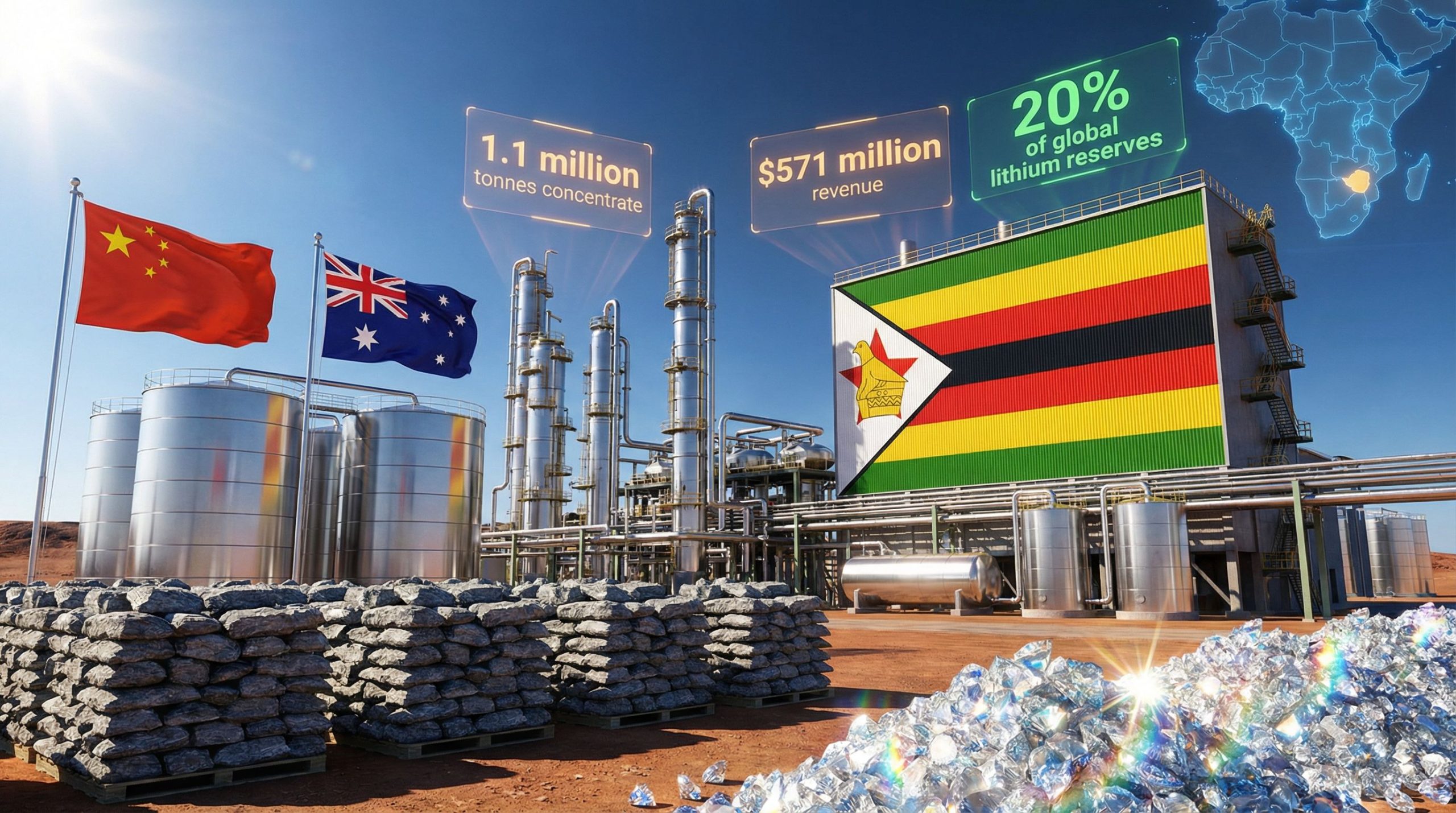
By linking export approvals to domestic processing, Harare is trying to alter that equation. The move fits squarely within a broader industrial policy instinct now taking hold across parts of Africa, where governments are becoming less willing to treat mineral extraction alone as an adequate development strategy. In Zimbabwe’s case, lithium has become the clearest test of that thinking. The country holds some of the continent’s largest deposits, and in recent years it has attracted heavy investor interest, especially from Chinese mining groups seeking to secure feedstock for the global battery boom.
Some of that shift towards local processing is already visible. Several companies are developing facilities capable of producing lithium sulphate, an intermediate input used in battery manufacturing. But the new conditions suggest the government wants to move from encouragement to obligation.
That will not be cost-free. In the short term, stricter export conditions are likely to complicate supply chains for buyers dependent on Zimbabwean concentrates. They may also raise questions about execution risk. Beneficiation is politically appealing, but it demands more than regulation. It requires electricity, transport, water, technical skills, financing and a regulatory environment stable enough for investors to justify longer-term capital commitments.
That is where many resource-nationalist strategies begin to encounter their limits. It is easier to announce value addition than to build the industrial ecosystem that makes it commercially viable.
Zimbabwe therefore faces a double test. It must prove to domestic audiences that its tougher stance can deliver more local value. But it must also persuade investors that the country can support processing at scale without turning mineral policy into an unpredictable political instrument. If it fails on the second point, the risk is that a policy designed to capture more value could instead slow investment and narrow the very opportunity it is trying to expand.
Still, the direction of travel is unmistakable. Harare is no longer content to measure success in tonnage exported. It wants lithium policy to serve a wider industrial purpose.
For African policymakers, that is the more thought-provoking aspect of the move. Zimbabwe is not simply restricting exports. It is trying to redefine what resource access means in a new minerals economy. The question is whether it can turn that ambition into a functioning processing base rather than another well-intentioned bottleneck.

