
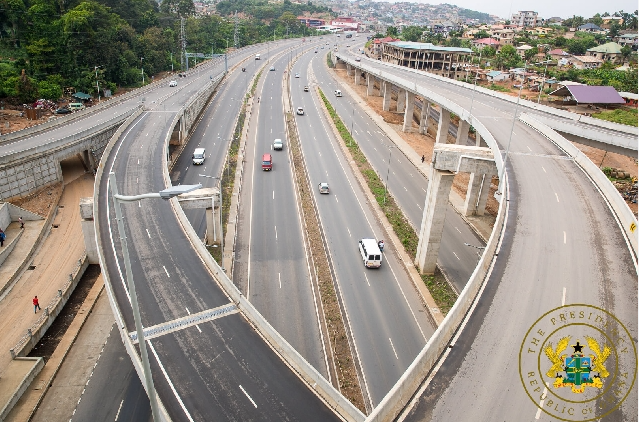

Big Push Plan Faces Money Reality Check; Financing Model Under Scrutiny as Revenue Projections Fall Short
Government’s plan to finance the US$10 billion “Big Push” infrastructure programme solely through internally generated funds has come under renewed scrutiny, with policy think tank INSTEPR arguing that projected revenues are insufficient to support the initiative within the stated four-year timeline.
In its latest assessment, INSTEPR indicates that the primary funding sources identified by President John Mahama – petroleum revenues and mineral royalties – fall significantly short of the required financing envelope. The President had earlier maintained that the ambitious infrastructure drive would not rely on borrowing but would instead be funded from domestic resource mobilisation.
According to the analysis, Ghana’s total petroleum revenue over a 15-year period stands at approximately US$11.58 billion, highlighting the scale of the challenge in mobilising US$10 billion within just four years.
For 2025, petroleum revenue amounted to US$770.27 million, with only about US$433.2 million accruing to the Annual Budget Funding Amount (ABFA) – the portion available for government expenditure on infrastructure.
On the minerals side, the Minerals Income Investment Fund (MIIF) recorded revenues of GH¢5.43 billion in 2025, equivalent to roughly US$517.1 million. Following recent policy adjustments mandating that 80 percent of MIIF revenues be transferred to the Consolidated Fund, approximately US$413.7 million is expected to be available for infrastructure spending.
Combined, petroleum revenues and mineral royalties generated an estimated US$846.9 million in 2025, far below the annual average of US$2.5 billion required to meet the US$10 billion target within four years. At this pace, INSTEPR estimates it would take more than a decade to fully finance the programme.
The think tank also raised concerns over the scale and structure of contracts awarded under the initiative, noting that over US$7 billion worth of projects, particularly in the roads sector, have reportedly been single-sourced due to urgency, with completion timelines set for 2027.
This, it argues, raises critical financing questions, particularly regarding how government intends to settle contractor payments upon completion, especially given an initial allocation of GH¢46 billion (approximately US$4.4 billion) in the 2025–2026 budget.
INSTEPR maintains that, based on available revenue data, the current funding model appears inadequate and may necessitate additional borrowing if government is to meet its obligations to contractors within the project timeline.
The group is therefore calling for deeper scrutiny of the policy framework underpinning the “Big Push” initiative to assess the feasibility of the government’s no-borrowing claim.

