


- Black Stars Goalkeeper Coach Makes Bold Continental Claim Ahead of Gambia Qualifier
Ghana possesses the strongest collection of national-team goalkeepers in Africa, according to Black Stars goalkeepers’ coach Daniel Gaspar, who has backed Lawrence Ati-Zigi, Benjamin Asare and Joseph Anang to provide stability during a difficult start to the country’s 2027 Africa Cup of Nations qualifying campaign.
Gaspar made the assessment as Ghana prepared to face The Gambia at the Accra Sports Stadium on Tuesday, September 29, seeking a response after opening its qualification campaign with a 2-0 defeat to Côte d’Ivoire.
The loss left the Black Stars at the bottom of Group C, increasing the significance of the home fixture against a Gambian side that began its campaign with a 1-0 victory over Somalia.
“We have three outstanding goalkeepers,” Gaspar told Ghana Football Association media during a Black Stars training session.
“In my opinion, I have no doubt it’s the best assembly of goalkeepers in Africa. I believe that, they believe that, and we continue on our mission.”
The declaration is bold, particularly on a continent that has recently produced internationally established goalkeepers including Morocco’s Yassine Bounou, Cameroon’s André Onana and Senegal’s Édouard Mendy.
But Gaspar’s argument appears to rest on the strength of Ghana’s collective options rather than the reputation of one undisputed first-choice goalkeeper.
Ati-Zigi provides international experience, Asare has strengthened his claim through his performances for Ghana, while Anang offers an additional option as the technical team seeks competition and continuity in one of football’s most unforgiving positions.
The three were named in the Black Stars’ current squad as Ghana attempts to recover from defeat in Bouaké and avoid losing further ground in the early stages of qualification.
Describing Ghana’s goalkeeping unit as Africa’s best may build confidence within the squad, but the claim will ultimately be judged through performances rather than internal conviction.
A goalkeeper’s influence extends beyond shot-stopping. Modern international football requires proficiency with the ball, accurate distribution, authority at crosses, communication with defenders and sound decision-making when the defensive structure is placed under pressure.
The strongest goalkeeping departments also require succession planning. An injury or decline in form should not force a national team into a fundamental change in its playing style.
That is where Ghana’s depth could become valuable. If Gaspar is correct, head coach Carlos Queiroz should be able to change goalkeepers without significantly weakening the team or abandoning his preferred approach.
The competition could also raise individual standards. Unlike outfield positions, where substitutions and tactical rotation are common, goalkeepers can spend several international windows without playing. Maintaining genuine competition therefore requires transparent selection criteria and regular communication.
Gaspar must ensure that each goalkeeper understands how performance is being measured and what is required to move up the hierarchy. Without that clarity, depth can become uncertainty.
Ghana’s recent history has frequently featured debates over the identity of its first-choice goalkeeper. Gaspar’s challenge is to turn the present options into an ordered and dependable unit rather than simply a collection of talented individuals.
The timing of his comments is significant.
Ghana entered the qualifying campaign seeking to rebuild confidence after a period of uneven tournament performances. Queiroz was reappointed in September after leading the Black Stars to the round of 32 at the 2026 World Cup, beginning a new mandate centred on the 2027 AFCON campaign.
The defeat to Côte d’Ivoire has already increased the pressure on the team. Although one result does not determine qualification, a second failure against The Gambia would place Ghana in a vulnerable position and deepen public doubts about the direction of the national side.
Gaspar’s confidence in his goalkeepers therefore provides an important counterpoint to the wider uncertainty around the team.
If the Black Stars are still developing attacking cohesion and adjusting to Queiroz’s methods, a stable goalkeeper can offer the foundation from which that development takes place. Strong goalkeeping can preserve narrow leads, prevent difficult periods from becoming decisive and give defenders the confidence to play higher up the pitch.
But goalkeepers cannot compensate indefinitely for structural weaknesses elsewhere.
Ghana conceded twice against Côte d’Ivoire and struggled to impose itself during the match. The response cannot be limited to changing the goalkeeper or expecting exceptional saves. The defensive line, midfield protection and management of transitions must collectively improve.
Gaspar’s assertion should therefore not be interpreted as an argument that Ghana’s defensive problems have been solved. It is better understood as a belief that the technical team possesses sufficient quality in goal to build a stronger defensive structure.
Benjamin Asare has become an increasingly prominent figure in the national set-up, adding domestic representation to a position often occupied by Europe-based players.
His rise has broadened the selection conversation and demonstrated that players competing in Ghana can earn serious consideration when their performances satisfy international demands.
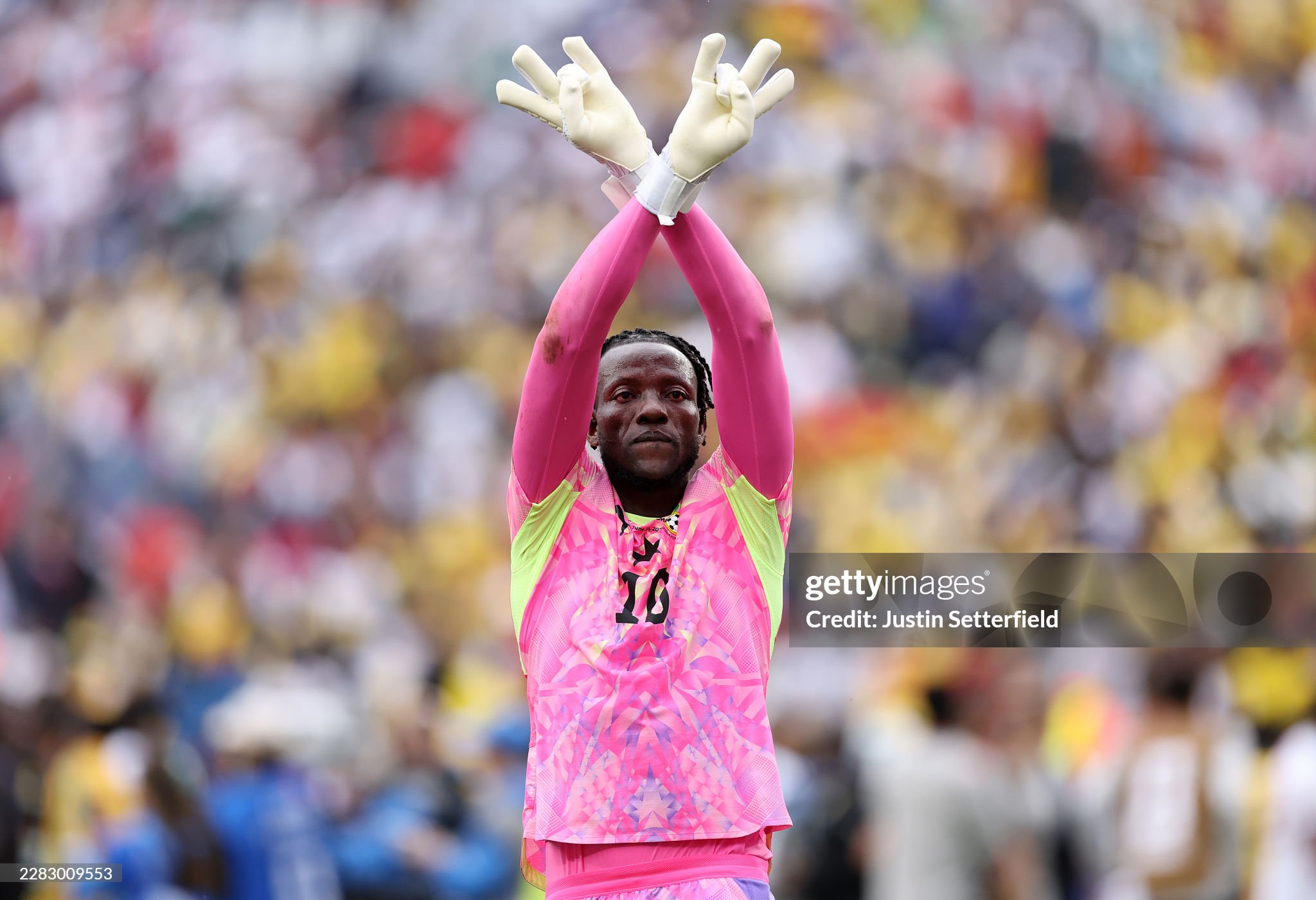
Asare was part of Ghana’s World Cup squad alongside Ati-Zigi and Anang, reinforcing the continuity Gaspar is seeking to develop. Ghana held England to a goalless draw during the tournament, an image of Asare applauding supporters after the match becoming one of the notable moments of the campaign.
Ati-Zigi, meanwhile, brings the experience of multiple international windows and familiarity with the demands of representing Ghana under intense scrutiny.
Anang completes a group whose members have taken different routes into the national side. That diversity may strengthen the unit, provided competition is managed in a way that produces trust rather than instability.
For Gaspar, the immediate objective is unlikely to be proving the continental comparison through rhetoric. It is ensuring that whichever goalkeeper starts against The Gambia performs with the authority implied by his claim.
The Gambia’s victory over Somalia gives the visitors an opportunity to approach the Accra fixture with confidence and less pressure than the hosts.
Ghana will be expected to dominate possession and pursue victory, but that can leave spaces for counter-attacks. The selected goalkeeper may therefore face long periods of limited activity followed by moments requiring immediate concentration and decisive intervention.
Those are often among the most difficult matches for a goalkeeper. The challenge is not simply making several saves under sustained pressure but remaining mentally prepared when opportunities for the opposition are infrequent.
Ghana must also manage the emotional pressure inside the Accra Sports Stadium. An early goal could settle the team and crowd; a prolonged goalless period could increase anxiety and encourage The Gambia to defend more deeply.
In that context, calm distribution from the goalkeeper and clear communication with the defensive line will be important in preventing impatience from turning into vulnerability.
Gaspar’s comments offer a vote of confidence at a moment when the Black Stars need one. But they also raise the standard by which his department will be assessed.
Possessing three capable goalkeepers is an advantage. Transforming that depth into clean sheets, defensive authority and qualification points is the more consequential task.
If Ghana truly has Africa’s strongest goalkeeping assembly, the route to demonstrating it begins not with comparison but with consistency starting against The Gambia in Accra.

