



BoG Governor Urges Caution as Improved Economic Conditions Test Policy Credibility
Governor of the Bank of Ghana, Dr Johnson Asiama, says Ghana’s improving macroeconomic conditions must not breed complacency, stressing that more effort is required to lock in stability and preserve policy credibility.
Speaking at the opening of the 128th Monetary Policy Committee (MPC) meeting on Monday, January 26, 2026, Dr Asiama acknowledged the strong turnaround in key economic indicators but cautioned that the gains remain fragile.
“On one hand, all the economic indicators are looking good, but on the other hand, these very improved conditions must remind us that the work has indeed only just begun,” he said. “We need more effort going forward to be able to lock in stability.”
He disclosed that inflation declined to 5.4% at the end of 2025, outperforming expectations, while external buffers strengthened significantly. According to him, gross international reserves rose to over US$13.8 billion, equivalent to 5.7 months of import cover, supported by a current account surplus of 8.1% of GDP.
Dr Asiama also noted that economic growth remained strong through the third quarter of 2025, with leading indicators pointing to further expansion, helping to restore confidence among consumers and businesses.
“These outcomes confirm that recent policy choices are indeed yielding results, and that policy credibility has been restored,” he said.
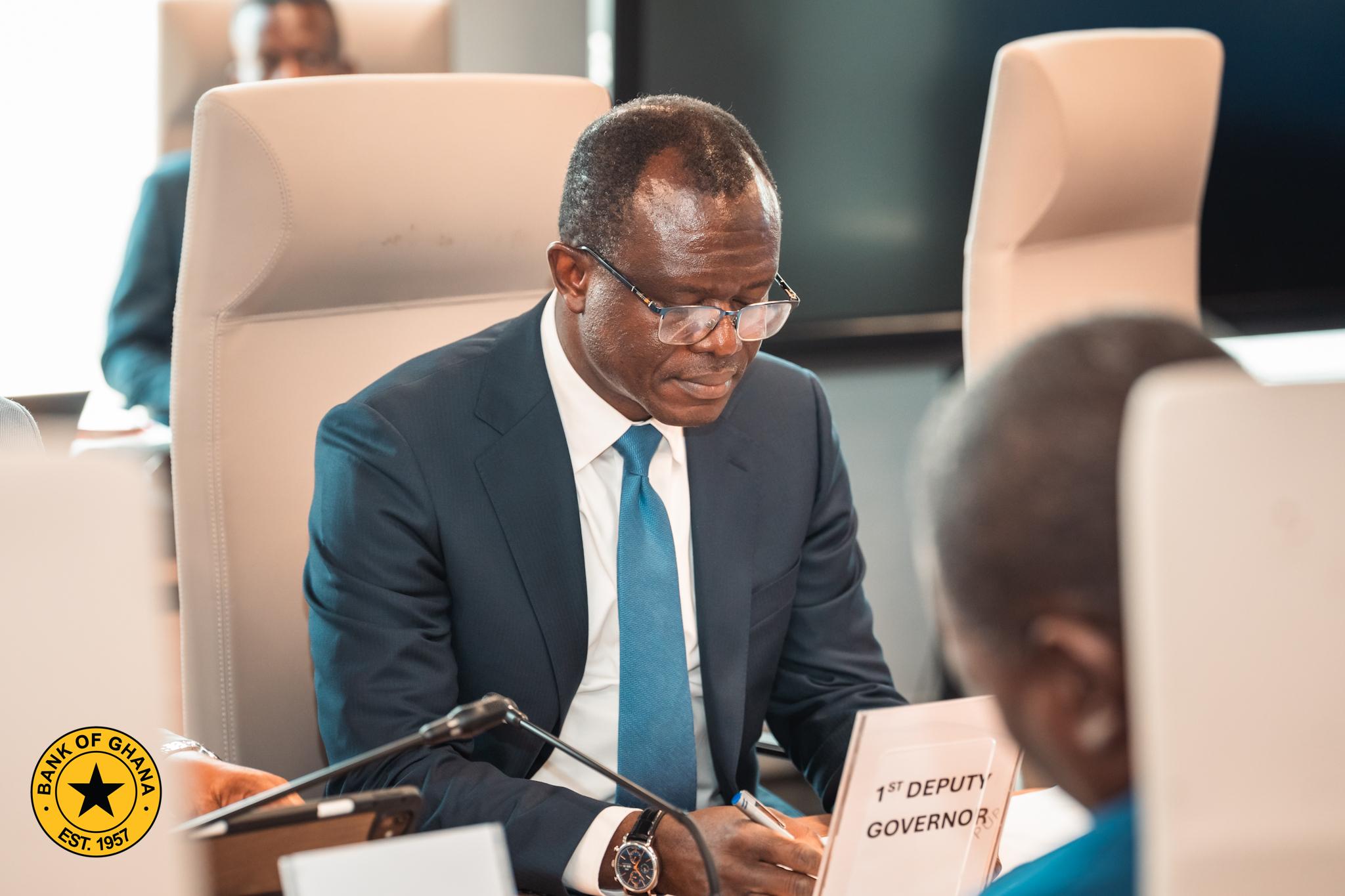
However, the Governor stressed that the MPC meeting was not meant to celebrate successes but to rigorously assess whether the improved conditions can be sustained. He pointed to persistent global uncertainties, noting that while global growth remains resilient with projections of about 3.3% into 2026, geopolitical risks continue to pose threats.
Although Ghana has benefited from favourable external conditions, particularly higher gold prices, Dr Asiama warned that such tailwinds may not be permanent.
Domestically, he said rapid disinflation has created policy space but also raised critical policy questions, requiring careful calibration of monetary policy to support growth while maintaining credibility.
He outlined four key considerations for the Committee’s deliberations. These include the pace and sequencing of any policy adjustments, foreign exchange stability and expectations, the role and sustainability of the Domestic Gold Purchase Programme, and issues of data integrity ahead of external scrutiny.
On the currency, Dr Asiama said the cedi remained remarkably stable in 2025, reflecting improved confidence and a strong external position, but warned that expectations will now play a central role in sustaining that stability.
He also highlighted the importance of the upcoming International Monetary Fund (IMF) review scheduled for April 2026, which will be based on end-December 2025 data.
“This committee is therefore among the very first to rigorously assess the indicators central to programme performance, notably on inflation, reserve accumulation, and adherence to zero central bank financing,” he said.
Dr Asiama emphasised that policy decisions taken now must withstand future scrutiny, describing the choices before the Committee as judgment-based rather than mechanical.
The Monetary Policy Committee is expected to announce its policy rate decision on Wednesday, January 28, 2026.

