


- BoG Mops up GH¢14.50bn Through a 14-day Bill Auction
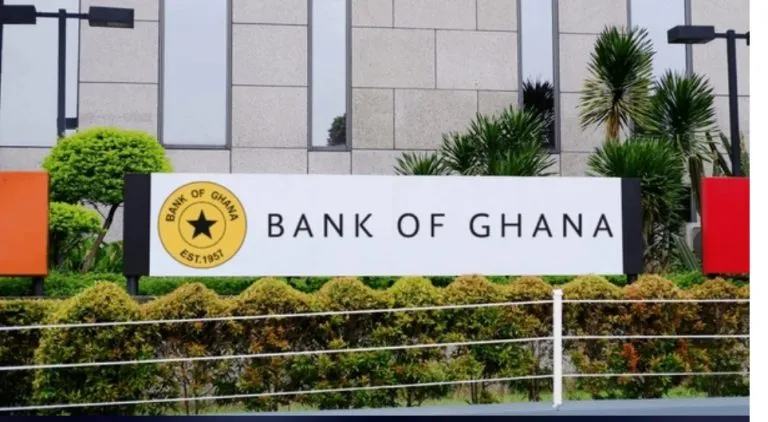
The Bank of Ghana has withdrawn GH¢14.50 billion from the financial system through its latest short-term securities auction, as the central bank continues to manage excess liquidity in the money market.
Results of Tender 871, held on July 20, 2026, show that the Bank sold GH¢14,504.04 million through its 14-day Bank of Ghana bill, with the securities covering the period from July 20 to July 21, 2026.
The auction recorded a narrow bid-rate range of 10.46% to 10.46%, indicating stable pricing by participating banks and money market investors. The weighted average discount rate also settled at 10.46%, while the weighted average interest rate stood at 10.50%.
The latest sale points to the central bank’s continued use of short-term instruments to sterilise excess liquidity and guide short-term interest rates, particularly at a time when inflation has begun rising again after several months of sharp disinflation.
At the opening of the 131st Monetary Policy Committee meeting, Governor Dr Johnson Pandit Asiama indicated that the Committee would assess liquidity conditions, monetary policy transmission and the impact of earlier reforms to the Cash Reserve Ratio framework. The central bank had previously replaced the dynamic Cash Reserve Ratio with a uniform 20.00% domestic currency requirement.
The large mop-up through the 14-day bill is therefore consistent with the Bank’s broader effort to keep liquidity conditions aligned with its policy objectives while preserving market discipline.
The auction also comes at a delicate point for monetary policy. Headline inflation has risen for three consecutive months, moving from 3.20% in March to 5.30% in June. Although inflation remains below the lower bound of the Bank’s 8.00% target band, plus or minus 2.00 percentage points, the shift in direction has raised questions about whether price pressures are merely normalising or beginning to build more persistently.
By absorbing GH¢14.50 billion from the market, the Bank is signalling that it remains focused on disciplined liquidity management, even as the economy continues to show resilience and private-sector credit expands.
The use of Bank of Ghana bills allows the central bank to withdraw excess cash from the banking system on a temporary basis. This helps reduce pressure on short-term rates, supports the inflation-targeting framework and prevents excess liquidity from feeding exchange-rate or price instability.
The stability in the auction rate also suggests that money market participants continue to price the short end of the curve close to the central bank’s desired liquidity conditions. With the weighted average interest rate at 10.50%, the 14-day instrument remains a key operational tool for managing cash conditions without necessarily changing the headline policy rate.
The latest auction will be watched closely by banks, fund managers and other market participants because liquidity conditions remain central to the direction of interest rates, Treasury bill demand and credit pricing.

