

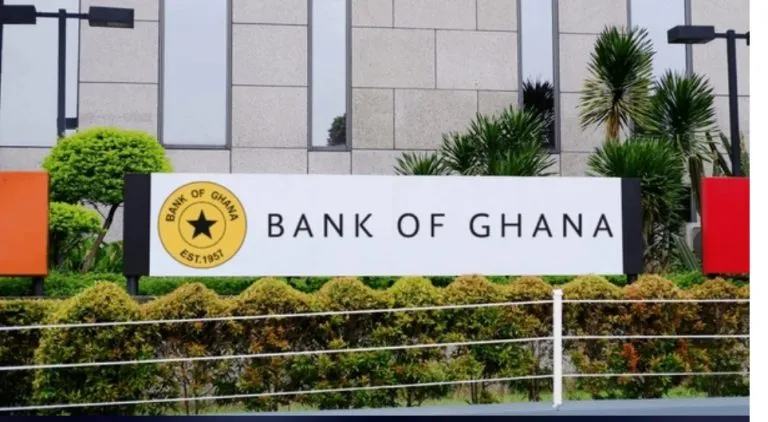

- BoG Sets New GH¢30 Secured-Interest Registration Fee Under Collateral Registry
The Bank of Ghana has announced revised fees for services provided by the Collateral Registry, with the new charges scheduled to take effect from November 1, 2026 as part of the central bank’s administration of Ghana’s secured-lending framework.
Under the revised structure, registration of a secured interest will cost GH¢30.00, late registration will attract a fee of GH¢50.00, while searches conducted through the Collateral Registry will cost GH¢15.00. The changes apply to banks, specialised deposit-taking institutions, non-bank financial institutions and members of the general public.
The Bank said the fee review was undertaken pursuant to Section 77 of the Borrowers and Lenders Act, 2020, Act 1052, and follows earlier notices issued in April and June 2021 governing the Registry’s charges.
The Collateral Registry plays a central role in Ghana’s secured-credit infrastructure because it provides a formal mechanism through which lenders can register security interests over assets pledged by borrowers. Such registration helps establish the legal priority of a lender’s claim and allows other potential creditors to search the Registry before extending additional credit against the same assets.
For financial institutions, the system is important because collateral remains a major component of lending decisions, particularly in markets where credit information can be incomplete and recovery risks are significant. A functioning registry can reduce uncertainty around asset ownership and competing claims, thereby improving the enforceability of secured lending arrangements.
The revised fees are relatively modest in absolute terms, but their importance lies in the scale at which the Registry is used across the financial system. Banks, savings and loans companies, finance houses and other lenders routinely register security interests as part of the process of extending credit to businesses and households.
For borrowers, the system can also influence access to finance. A transparent secured-transactions framework allows lenders to consider a wider range of movable and immovable assets when assessing credit applications, potentially reducing reliance on traditional collateral such as landed property.
That can be especially significant for small and medium-sized enterprises, which may possess equipment, receivables, inventory or other business assets but lack the type of real estate traditionally demanded by lenders. The effectiveness of the Collateral Registry can therefore have a direct bearing on whether such assets can be recognised and used more efficiently within formal credit markets.
The November fee adjustment also underlines the broader administrative cost of maintaining a reliable collateral-registration system. Registries require digital infrastructure, record management, verification processes and public search capabilities, all of which must be sustained if lenders are to rely on the information available.
But any fee structure must also strike a balance. Charges that are too high could discourage registration or add unnecessary friction to credit transactions, while fees that are too low may make it harder to fund the infrastructure and administrative processes necessary for an effective system.
The Bank of Ghana’s revised rates suggest an effort to maintain accessibility while updating the cost of the service. At GH¢30.00 for a standard secured-interest registration and GH¢15.00 for a search, the charges remain small relative to the value of most formal lending transactions.
The higher GH¢50.00 fee for late registration also creates an incentive for lenders and other parties to complete registration within the prescribed period. Timely registration is important because delays can create uncertainty around priority and potentially complicate competing claims over collateral.
The change will therefore require financial institutions to update internal procedures and pricing systems ahead of the November 1 implementation date. Banks and non-bank lenders that process large numbers of secured transactions will need to incorporate the new charges into their credit administration systems and customer documentation.
The notice does not indicate any change in the underlying legal requirements governing secured transactions. It is specifically a review of fees for the services of the Collateral Registry rather than a broader amendment to the Borrowers and Lenders Act.
That distinction is important because the Registry is one part of a wider credit ecosystem. Its effectiveness depends not only on registration fees but also on the enforceability of security interests, the efficiency of the courts, the quality of credit information and the ability of lenders to realise collateral when borrowers default.
For Ghana’s financial sector, strengthening those institutions is critical to reducing the risk premium embedded in lending. Where lenders have greater certainty that security interests are properly recorded and enforceable, the cost and complexity of extending credit can potentially be reduced.
The Bank has directed all banks, specialised deposit-taking institutions, non-bank financial institutions and the general public to take note of the revised fees. Enquiries are to be directed to the Registrar of the Collateral Registry Department at the Bank of Ghana.
The immediate impact of the announcement is therefore administrative, but the broader context is financial-sector efficiency. A credible collateral-registration regime supports lending by making secured claims more transparent and easier to verify.
From November, the cost of accessing that infrastructure will change. The larger policy test, however, remains whether Ghana’s secured-transactions framework can continue to make it easier for viable borrowers, particularly businesses with limited traditional collateral, to convert assets into access to formal credit.

