


- Bournemouth Win 3-0 as Manchester United Sink Towards Relegation Battle
Manchester United’s 3-0 defeat by Bournemouth was not simply another poor result. It was a performance stripped of control, conviction and clarity, leaving Old Trafford to confront whether changing the manager can repair a club whose problems appear deeper than the technical area.
Goals from Rayan, Marcus Tavernier and Evanilson gave Bournemouth a deserved victory and extended United’s winless run to eight matches. The hosts finished the weekend in 16th place with seven points from eight Premier League games, perilously close to a relegation fight that their history and spending should make unthinkable.
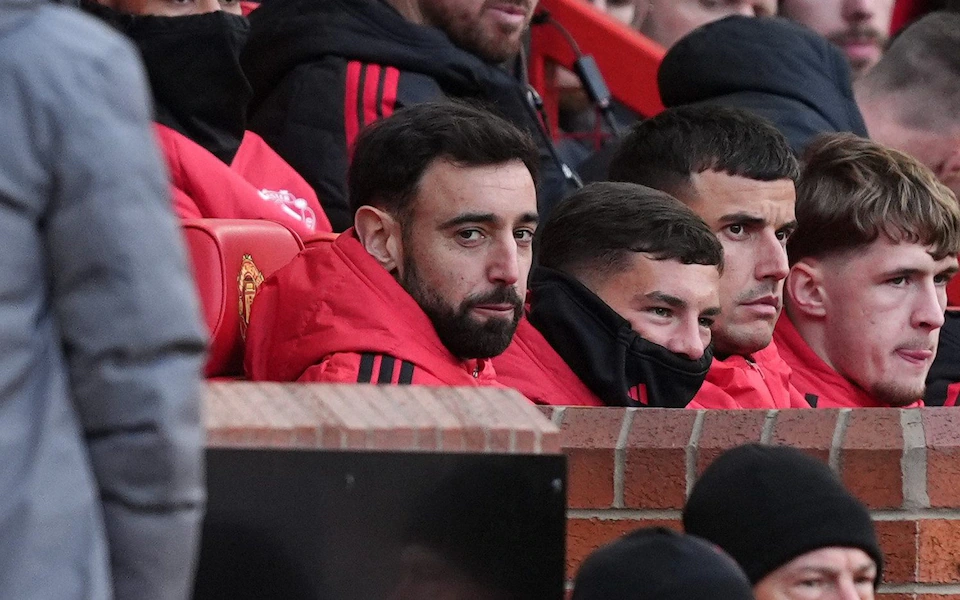
For Michael Carrick, the defeat may prove decisive. The United manager was already under intense pressure after a 4-1 Champions League loss to Como. His decision to omit captain Bruno Fernandes following the midfielder’s public criticism added a layer of tension to a fixture that demanded unity and a convincing response.
Neither arrived. United were disjointed in possession, uncertain defensively and without attacking authority. Bournemouth did not need an extraordinary performance to dominate the afternoon. They required organisation, aggression and the patience to wait for the errors that United offered.
The opening goal in the 38th minute captured the home side’s lack of concentration. Justin Kluivert delivered a diagonal free-kick and Rayan was allowed to meet it unmarked. At a moment when United needed calm, their defensive structure disappeared and Bournemouth accepted the invitation.
Five minutes later, the visitors doubled their advantage. Leny Yoro slipped near his penalty area, allowing Adrien Truffert to collect possession and deliver for Tavernier, who finished with composure. Two avoidable incidents had transformed a nervous contest into an Old Trafford humiliation before half-time.
The reaction from the stands was revealing. Supporters displayed a banner bearing the faces of Eric Cantona, Bryan Robson and Roy Keane above one word: “STANDARDS”. Yet the football unfolding beneath it demonstrated how distant the current team has become from the authority and competitive personality represented by those former captains.
Carrick replaced Youri Tielemans with Matheus Cunha at half-time, but the substitution did not alter the direction of the match. United held possession without using it purposefully, while Bournemouth remained compact and prepared to attack the spaces left by a home side chasing the game without a coherent method.
Evanilson delivered the final blow in the 71st minute. Goalkeeper Senne Lammens raced from his area in an attempt to clear a through ball, but the Brazilian reached it first, moved around him and finished from a difficult angle. The goal gave the scoreline the severity United’s performance deserved.
Bournemouth’s achievement should not be treated merely as another chapter in United’s collapse. The visitors were tactically disciplined and ruthless when opportunities arrived. They recognised United’s anxiety, protected central areas and forced the hosts into rushed decisions. Their players appeared to understand their roles more clearly than opponents assembled at far greater expense.
The result continued a remarkable pattern at Old Trafford. Bournemouth have now gone three goals ahead there in three Premier League matches, matching a feat achieved only by Liverpool and Manchester City. A ground once associated with intimidation has become a venue where well-organised visitors expect opportunity rather than fear resistance.
That erosion of home authority is among the clearest measures of United’s decline. Opponents no longer need to survive an early siege or manage waves of sustained pressure. Bournemouth grew in confidence because every misplaced pass, hesitant challenge and isolated United attacker confirmed that the hosts were vulnerable.
Carrick’s handling of Fernandes will attract scrutiny. A manager must retain the authority to select his team, and no captain should be guaranteed a place regardless of form or conduct. But leaving United’s most productive creative player unused during a match in which the side lacked imagination inevitably makes the decision central to the post-match debate.
The episode also reflects a fractured dressing room. Public criticism, disputed authority and uncertainty over leadership rarely remain separate from performance. Players hesitate, tactical instructions lose force and every setback becomes evidence of division. United looked like a collection of individuals waiting for somebody else to reverse the momentum.
Removing Carrick might provide immediate relief, but it would not automatically repair those conditions. United have repeatedly changed managers while retaining many of the structural weaknesses that undermined their predecessors. Recruitment has lacked continuity, squad construction has been uneven and sporting authority has too often appeared divided.
The board must therefore decide two questions rather than one. The first is whether Carrick retains sufficient authority and tactical credibility to guide the team out of immediate danger. The second is whether the executives responsible for recruitment, squad planning and football strategy have created conditions in which any coach can succeed.
Yet institutional failure cannot excuse the manager’s record. Eight matches without a victory, a team sitting 16th and successive defeats by a combined score of 7-1 represent a crisis by any reasonable standard. Carrick must be judged on organisation, selection and whether players appear to understand his plan. Against Bournemouth, the evidence was deeply damaging.
There is now a genuine risk that United’s season becomes defined by survival rather than recovery. Relegation may still appear improbable given the squad’s individual quality, but league position is determined by collective performance, not reputation. Confidence can collapse quickly when defeats become routine and supporters turn openly against players and executives.
Bournemouth leave Manchester with three points and confirmation that disciplined teams can punish United without requiring prolonged dominance. Their victory was constructed through intelligent pressure, defensive concentration and clinical finishing — qualities conspicuously absent from the home side.
United, meanwhile, face another decision about leadership while the table becomes increasingly uncomfortable. Whether Carrick remains or departs, the club cannot present the next appointment as a complete solution.
The banner at Old Trafford demanded standards. The scoreline exposed the distance between that demand and reality. Until Manchester United rebuild structures capable of enforcing accountability from the boardroom to the pitch, humiliations such as this will remain not exceptional events, but recurring symptoms of a club still searching for itself.

