

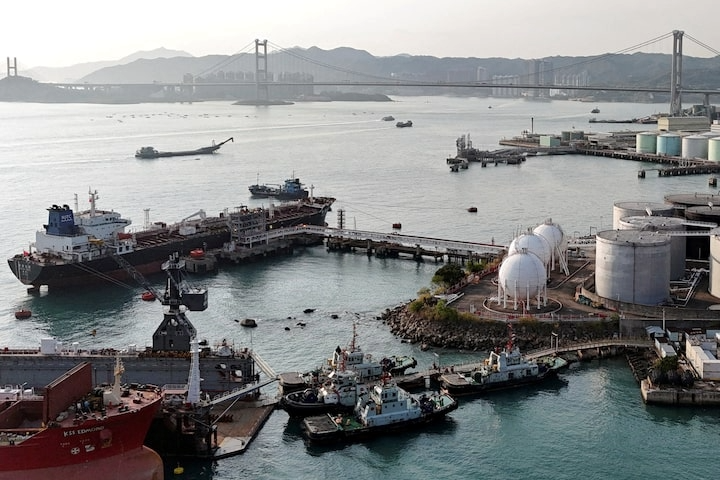

- Brent Falls 1.20% as Diplomacy Weighs Against Persistent Supply Threats
Oil prices fell by more than $1 a barrel on Thursday as traders weighed hopes for progress in talks involving Iran and Ukraine against continuing threats to supply.
Brent crude dropped 1.20% to $91.62 a barrel and US West Texas Intermediate fell 1.20% to $85.49, giving back some of Wednesday’s gains. The decline points to how quickly diplomatic signals can shift energy markets. It does not yet show that the supply risks behind recent volatility have passed.
The price move followed reports of progress in two days of US-mediated talks in Abu Dhabi between Russian and Ukrainian negotiators. The sides agreed to a major prisoner exchange, but significant disagreements including over territory remained.
In the Middle East, hopes that the Iran conflict would not escalate further also weighed on prices, even as Iran’s security chief warned against removing enriched nuclear material and threatened consequences if the United States launched new strikes.
For traders, the immediate question is whether the diplomatic openings could reduce the risk of disrupted production and shipments. Oil prices reflect anticipated supply as well as barrels already in the market.
If investors believe a ceasefire or de-escalation is more likely, they may reduce the premium they had attached to the possibility of a wider conflict even before a deal is reached.
That helps explain why the price response can appear larger than the diplomatic progress itself. The prisoner exchange is a concrete outcome, but it is not a ceasefire. Nor does agreement on one issue resolve the disputes over territory or other terms.
In the Iran conflict, the positions on nuclear material and future US military action remain far apart. The market is reacting to a change in expectations, not confirmation that conflict-related risks have disappeared.
The Strait of Hormuz remains central to the market’s caution. Uncertainty over the waterway could limit how far prices fall, even if traders continue to hope for progress.
As one market strategist put it, prices were “unlikely to suffer a significant collapse” while the Strait’s status remained uncertain.
That distinction matters. A lower oil price can reflect a reduced expectation of disruption, but a reliable return to normal trade flows would require more than optimistic headlines.
Shipping operators and insurers must be confident that routes are safe and commercially viable. Until then, the threat of disruption can keep prices higher than they might otherwise be.
Supply signals are mixed. OPEC+ crude production rose sharply in October, led by increased output from Saudi Arabia, while shipments through Hormuz remained disrupted. Separately, US crude stocks were reported to have risen by 9 million barrels in the latest week, based on preliminary figures cited from the American Petroleum Institute.
Official US inventory data was due later on Thursday, so the reported increase should be treated as an early signal rather than the final figure.
Higher production and rising inventories can ease concerns about near-term scarcity. But they do not remove the risk that a worsening conflict could disrupt supply again. T
he price decline therefore reflects two forces pulling in different directions: more barrels and the possibility of de-escalation on one side; uncertain shipping and unresolved conflicts on the other.
The US Energy Information Administration’s November outlook illustrates that tension. It estimated Middle East production shut-ins averaged 2.5 million barrels a day in October, down from a peak of 10.9 million barrels a day in May, but assumed that flows would remain constrained through the rest of 2026.
On that basis, it forecast Brent would average about $100 a barrel in November and December. That is a forecast under specific supply assumptions, not a guaranteed price path and Thursday’s Brent price was below it.
The gap between the forecast and the daily market price underlines the uncertainty. If diplomacy leads to a sustained reopening of routes and a further recovery in supply, the assumptions supporting higher prices may need to be revised. If talks stall or shipping risks intensify, Thursday’s decline could prove temporary.
For Ghana, a fall in crude prices could ease some pressure on the cost of imported petroleum products and on businesses exposed to fuel and transport expenses. But a single day’s movement in Brent does not guarantee an immediate reduction in local pump prices.
The effect depends on how international prices move over the pricing period, the exchange rate, taxes, levies and other costs in the domestic fuel chain.
There is a further trade-off for an oil-producing country. Lower prices may reduce costs for fuel users, but sustained weakness can also affect expected revenue from petroleum exports.
The net effect depends on the scale and timing of imports and exports, the cedi’s value and the prices at which Ghana’s crude is sold. This means cheaper oil is not automatically a fiscal gain or a broad relief measure.
The main question for importers, households and government is whether the decline lasts. If the price retreats because supply is genuinely becoming more secure, the benefits could extend beyond a brief easing in market quotations.
If it is driven mostly by hopes that negotiations may succeed, the relief could quickly reverse.
For oil producers, the lesson is similar. A market shaped by diplomatic expectations can swing even while production data changes more slowly. Companies and governments planning investment or budgets around one day’s benchmark price risk mistaking volatility for a trend.
The market is watching for confirmation: whether Ukraine and Russia make progress beyond the prisoner exchange; whether Iran-related negotiations reduce the threat of escalation; whether Hormuz shipping becomes more dependable; and what the official US inventory figures show.
Thursday’s fall is a reminder that oil markets price both barrels and risk. Peace hopes have reduced some of the immediate fear premium, but the key supply questions remain unsettled. Until diplomacy changes conditions on the ground and at sea, the decline may offer buyers a pause rather than lasting security.

