
- Brussels Airlines Posts Record €84 Million Adjusted EBIT In Third Quarter
Brussels Airlines reported a record adjusted operating result for the third quarter of 2026, as stronger capacity and more reliable operations helped the carrier recover from a loss-making first half.
But the summer rebound leaves the airline facing a more difficult test in the final quarter: sustaining demand and controlling costs amid high fuel prices, geopolitical uncertainty and further strike disruption.
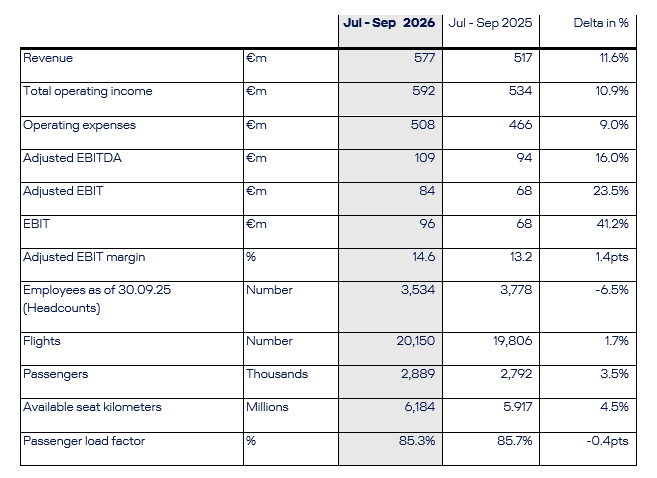
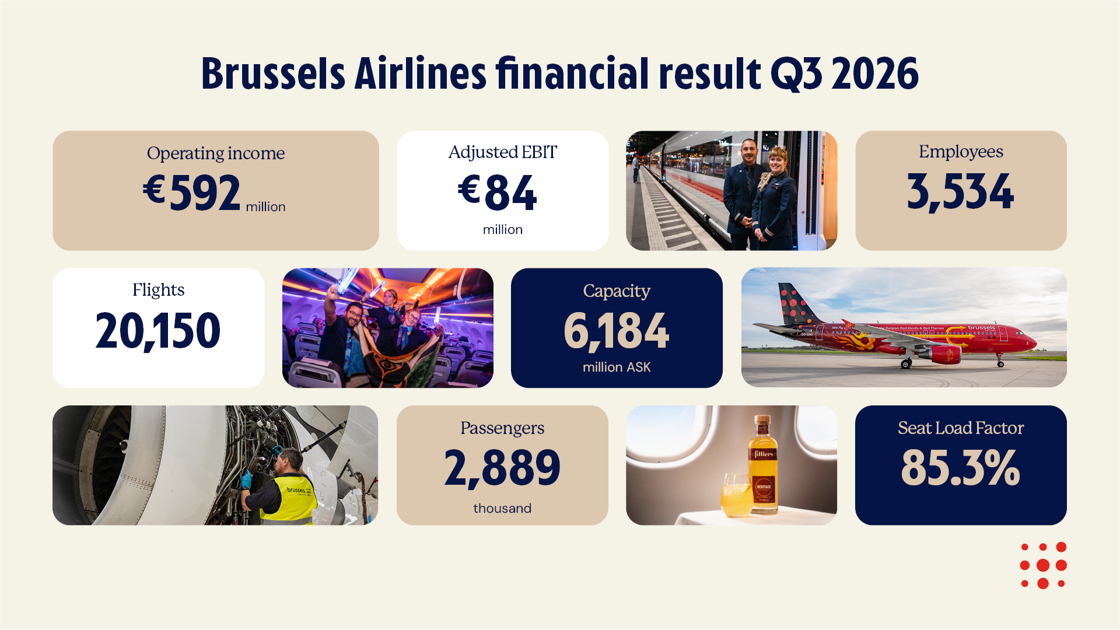
Adjusted earnings before interest and tax (EBIT) rose 23.50% year on year to €84 million for July to September, exceeding the previous record quarter in 2024 by 6%. The result helped move the airline into positive year-to-date territory, even though it had recorded a negative result during the first six months of 2026.
The carrier welcomed 2.9 million passengers during the quarter, an increase of 3.50% on the same period last year. It operated 20,150 flights, up 1.70%, while available seat kilometres a measure of capacity rose 4.50% to 6,184 million.
The difference between passenger growth and capacity growth is worth watching. Capacity increased faster than passenger numbers, and the seat-load factor the share of available seats filled edged down 0.40 percentage points to 85.30%.
That remains a strong utilisation rate, but the movement suggests that additional seats were not filled at the same pace as capacity expanded. The airline will need demand to keep pace with growth if it is to protect returns in the months ahead.
Revenue rose 11.60% to €577 million, while total operating income increased 10.90% to €592 million. Operating expenses grew more slowly, rising 9.00% to €508 million.
Adjusted EBITDA, which measures operating earnings before interest, tax, depreciation and amortisation, increased 16.00% to €109 million. The adjusted EBIT margin improved to 14.60% from 13.20% a year earlier.
These figures point to stronger operating leverage: income grew faster than expenses, allowing the airline to convert more of its revenue into adjusted operating earnings. But the improvement should be viewed in the context of a concentrated summer travel season and the company’s own account of a difficult first half.
The quarterly result is strong; it does not yet establish that the same margins can be sustained through a less favourable operating period.
The airline attributed the record performance to increased capacity and stable operations. It reported 14.00% lower irregularity costs per passenger, suggesting that fewer operational disruptions helped protect the quarter’s earnings.
Chief Financial Officer Nina Öwerdieck said: “when we operate as planned, the results are also there.” The comment captures a central issue for an airline business: schedules, aircraft availability and reliable ground operations can matter as much to profitability as demand.
Brussels Airlines’ first-half difficulties underline that vulnerability. The company said geopolitical instability contributed to high fuel prices, while an Ebola outbreak in East Africa and social unrest in Belgium led to strikes at third parties.
Those pressures resulted in a negative first-half result. At the beginning of the fourth quarter, another external strike caused cancelled flights and added financial costs.
The return to positive year-to-date figures is therefore a meaningful recovery, but it also leaves the full-year outcome dependent on how the airline manages risks beyond its direct control.
A strong summer can offset earlier losses; it cannot eliminate the possibility that fuel costs or disruptions will erode earnings again.
Fuel is a particularly important pressure point. Airlines have limited room to absorb a sustained increase in fuel costs without affecting margins, but passing those costs to customers can make fares less competitive.
Brussels Airlines said it was maintaining cost-optimisation measures in response to fuel-related headwinds, while keeping strategic investments on track. The balance will be difficult: reducing costs can protect near-term results, but underinvestment in service and the passenger experience can weaken the airline’s ability to compete.
The company plans to continue rolling out Lufthansa Group Wi-Fi across its fleet, renovate its flagship lounge in Brussels and introduce new cabin interiors.
These investments aim to improve the product and passenger experience, but they require capital at a time when external costs remain elevated.
The commercial test will be whether improved service helps attract passengers and support revenue enough to justify the investment.
Other developments in the quarter included the annual Tomorrowland party flights, the addition of Cologne to the network through cooperation with Deutsche Bahn, and a new signature aperitif in Business Class.
These initiatives broaden the airline’s offer and its connectivity, though their individual contribution to the reported financial result was not disclosed.
The operating data also raise questions about productivity. The airline reported 3,534 employees, down 6.50% from the comparison figure a year earlier, while passenger volumes and revenue increased.
The release does not explain the change in headcount or link it directly to the financial improvement, so the figures do not establish that workforce reductions drove the stronger result.
They do, however, show that the company delivered more passenger and revenue activity with a smaller reported workforce, a trend that will require careful scrutiny of service quality and operational resilience.
Brussels Airlines expects a positive development in the fourth quarter, citing robust demand, but it has also warned that geopolitical instability and high fuel costs remain challenges. The recent cancellations linked to an external strike show how quickly the operating environment can change, even when bookings are holding up.
The third-quarter performance demonstrates that additional capacity can produce strong returns when flights operate reliably and costs remain controlled. The more demanding question is whether the airline can carry that performance beyond the summer peak.
Its year-to-date return to positive figures provides a stronger base for the final quarter, but the outcome will depend on demand, fuel expenses and the ability to limit disruption without compromising the service investments intended to support future growth.