

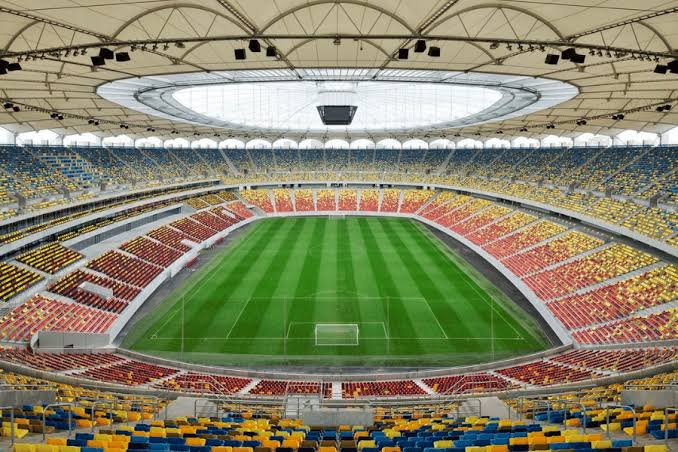

- Bucharest Named Europe’s Best-Value Football City as Weekend Costs Just £186.36
Bucharest has been ranked Europe’s best-value destination for a football weekend, scoring a perfect 10.00 out of 10.00 in a new index comparing the cost of flights, accommodation, match tickets, meals and beer across 16 European cities.
The Romanian capital topped research commissioned by Betpack, with an estimated total weekend cost of £186.36 for a one-night Saturday-to-Sunday trip from the United Kingdom, outperforming Prague and Bratislava despite neither offering the absolute lowest overall price.
The ranking highlights an important distinction for travelling football supporters: the cheapest trip does not necessarily offer the strongest overall value.
Milan was the least expensive destination in pure monetary terms, with a total estimated cost of £176.13, but finished only eighth with a Matchday Value Score of 7.70 out of 10.00. Bucharest’s stronger ranking reflected a more balanced combination of accommodation, food, drink, travel and match-ticket costs.
The study assessed return flights from either London Stansted or Gatwick, one night in a hotel rated at least three stars, the cost of a restaurant meal, a pint of local beer and admission to a football match. Each component was weighted according to its contribution to the overall weekend.
Bucharest’s itinerary was built around FCSB’s fixture against Oțelul Galați on October 10, 2026.
A return flight was estimated at £98.00, while the match ticket cost was around £40.00. Neither component was the cheapest in the study, but relatively inexpensive accommodation, food and drink pushed the Romanian capital to the top of the overall ranking.
That result illustrates why football tourism is increasingly about the broader city experience rather than simply ticket prices.
A supporter travelling internationally rarely spends only on the match. Accommodation, food, local transport, nightlife and sightseeing can easily account for a much larger share of total expenditure, meaning destinations with consistently moderate costs can outperform cities offering a cheap flight but more expensive spending once visitors arrive.
Prague ranked second with a score of 9.70, despite an overall weekend cost of £207.43, 11.30% more expensive than Bucharest.
The Czech capital benefited from particularly low food and drink costs. A 500ml local beer was priced at around £2.30, the cheapest in the study, while the football component centred on Sparta Prague’s match against Pardubice on October 10.
Bratislava followed in third with 9.30 out of 10.00 and an overall cost of £200.13.
The Slovak capital’s package included a ticket for Slovan Bratislava against MFK Skalica, with the city performing strongly across accommodation, food, drink and travel costs.
Warsaw placed fourth with a 9.00 score and a total weekend cost of £198.00.
Its selected fixture was Legia Warszawa against Motor Lublin in March 2027. Although cheaper overall than Prague and Bratislava, relatively higher hotel and beer prices reduced its composite score.
Budapest completed the top five with 8.70 out of 10.00, at an estimated cost of £214.46.
Its football offering included a Budapest Honvéd-Újpest derby, with a match ticket estimated at just £23.00, demonstrating how attractive match pricing can partly offset higher costs elsewhere.
Lisbon ranked sixth with 8.30, followed by Bremen at 8.00, Milan at 7.70, Sofia at 7.30 and Munich at 7.00.
Milan provides perhaps the most interesting comparison.
The Italian city offered the cheapest return flight among the leading destinations at £67.00 and a relatively inexpensive football ticket of £23.00. Yet an average meal price of £17.00 and beer costing £5.13 weakened its overall value position.
Its ranking demonstrates how low headline travel prices can obscure higher destination costs.
For football fans operating within a fixed budget, a slightly more expensive flight to a lower-cost city can ultimately result in a cheaper or more enjoyable weekend than a heavily discounted flight to a destination where accommodation, meals and drinks are significantly more expensive.
At the opposite end of the index, Madrid was the most expensive weekend surveyed at £293.90, scoring 5.30 out of 10.00.
Its overall cost was 57.70% higher than Bucharest’s £186.36 package and 66.86% above Milan’s lowest-cost £176.13 weekend.
Amsterdam recorded the lowest value score in the study at 5.00, while Vienna at 5.70, Paris at 6.00 and Athens at 6.30 joined Madrid among the five weakest-performing destinations.
Four of the top five destinations — Bucharest, Prague, Bratislava and Budapest — are in Central or Eastern Europe, while Warsaw completed the group from Poland.
That reflects a longstanding advantage for the region in tourism economics: relatively competitive accommodation, food and entertainment costs alongside established football cultures and increasingly strong air connectivity with Britain.
For clubs and cities, that affordability can become an economic asset.
Football tourism generates spending far beyond stadium gates. Travelling supporters pay airlines, hotels, restaurants, bars, taxi operators and attractions, effectively turning fixtures into short-duration tourism events.
Cities able to combine compelling football with affordable visitor costs may therefore capture expenditure that would otherwise flow towards more established but increasingly expensive destinations.
The ranking should still be interpreted as a snapshot rather than a permanent measure. Airfares and hotel prices fluctuate considerably according to booking dates, match schedules, demand and major events, while ticket availability can vary substantially between clubs.
Europe’s most famous football cities do not automatically provide its best-value weekends. For supporters prepared to look beyond the traditional destinations, Bucharest’s £186.36 package suggests that some of the strongest combinations of live football, nightlife, culture and affordability are increasingly found further east.

