


- Burkina Faso Says Africa Must Finance Its Own Transformation With ADF-17 Support
Burkina Faso has committed XOF 100 million, approximately US$167,000.00, to the seventeenth replenishment of the African Development Fund, signalling growing African ownership of the continent’s development financing architecture at a time of rising demand for concessional capital.
The African Development Fund is the concessional financing arm of the African Development Bank Group and remains one of the continent’s key instruments for supporting low-income and fragile economies.
Burkina Faso’s contribution to ADF-17 marks the country’s first financial commitment to the Fund and reflects a wider push by African countries to move beyond reliance on external financing for infrastructure, resilience, jobs and economic transformation.
Aboubakar Nacanabo, Minister of Economy and Finance, said the contribution reflected Burkina Faso’s conviction that African countries must take a more active role in financing their own development.
“Burkina Faso’s contribution to ADF-17 reflects our conviction that Africa must take control of its destiny and actively participate in financing its own transformation,” he said.
The commitment comes as African governments and development institutions work to reshape how capital is mobilised, governed and deployed across the continent.
It also aligns with the New African Financial Architecture for Development, adopted through the Abidjan Consensus, which calls for a stronger, better coordinated and more self-reliant African financial ecosystem.
NAFAD seeks to mobilise more domestic resources, strengthen African institutions, reduce dependency on external financing and direct capital toward the continent’s own priorities.
Burkina Faso’s contribution therefore carries significance beyond its monetary value. It reinforces the idea that African countries are not only beneficiaries of concessional finance, but co-investors in the institutions that finance their development.
African contributions to ADF-17 are part of a broader shift toward shared responsibility for the financing of resilience, regional integration, private sector growth and long-term economic renewal.
For Burkina Faso, the decision to support the Fund is grounded in more than five decades of development partnership.
Since 1972, the African Development Fund has financed more than 120 projects in Burkina Faso, with total commitments exceeding US$2.40 billion.
The resources have supported sectors central to the country’s development, including agriculture, transport, energy, water and sanitation, social development and multisector operations.
The Fund’s impact has been particularly visible in agriculture, food security and regional connectivity, areas that are critical to livelihoods and long-term competitiveness in a landlocked economy.
One major intervention was the Emergency Project for Increasing Agricultural Production, financed with an initial €38.40 million from the African Development Bank Group under the African Emergency Food Production Facility.
The project helped Burkina Faso increase food production at a time of pressure on households and markets.
It delivered nearly 8,500 tonnes of seeds to more than 275,000 producers and provided more than 34,000 tonnes of fertiliser to nearly 325,000 producers.
The intervention led to sharp improvements in yields, with rice yields rising by 224.00%, maize by 165.00%, cowpea by 91.00% and sorghum by 33.00%.
The project increased national agricultural production by more than 1.18 million tonnes, helping to strengthen food security and support rural incomes.
The African Development Fund has also supported strategic transport infrastructure in Burkina Faso, particularly corridors that connect the country to regional markets.
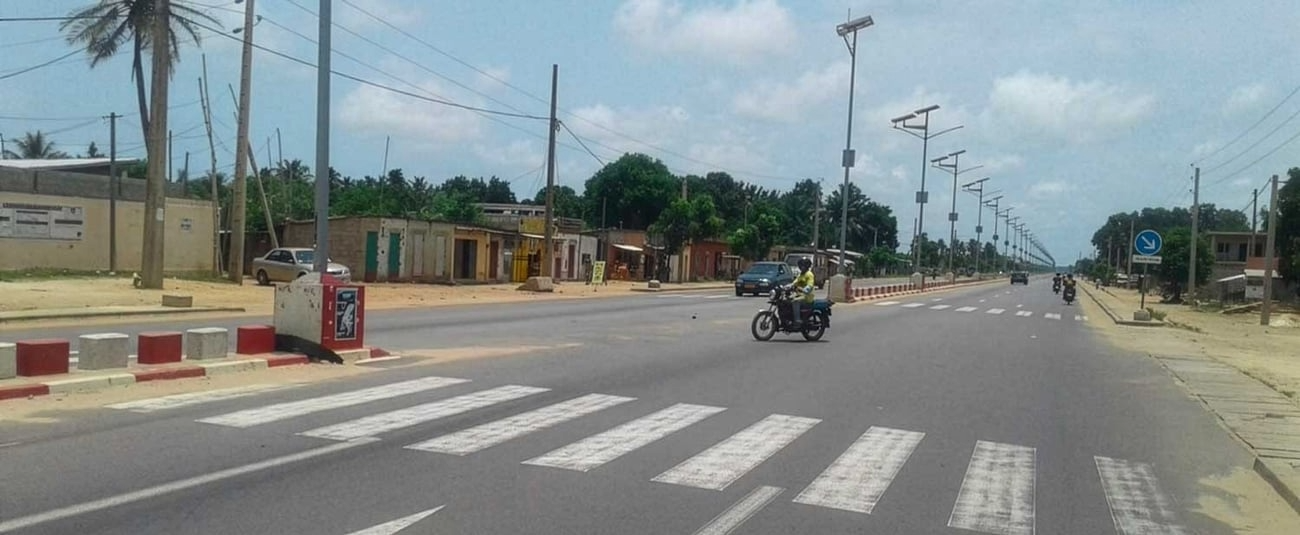
The US$325.00 million Lomé-Cinkansé-Ouagadougou corridor rehabilitation project, financed 70.00% by the African Development Fund and the Fragile States Facility, upgraded one of Burkina Faso’s most important trade routes.
The project rehabilitated 303 kilometres of road, including 153 kilometres in Burkina Faso and 150 kilometres in Togo.
The corridor works improved traffic flow, logistics services and road safety, while trade between Burkina Faso and Togo rose by 33.00% following rehabilitation of the Koupéla-Bitou-Togo border section.
The project also delivered local development benefits through 40 kilometres of rural roads and the construction or rehabilitation of about 20 socioeconomic facilities.
For a landlocked country such as Burkina Faso, corridor infrastructure is central to economic competitiveness.
It connects producers to markets, reduces transport constraints, improves logistics efficiency, supports regional integration and creates better conditions for private sector activity.
Minister Nacanabo said the country’s contribution to ADF-17 builds on the outcomes achieved through the African Development Bank Group’s investments.
“Building on the successes achieved thanks to the African Development Bank Group’s investments, we are now strengthening this mutual commitment to a partnership focused on innovation and the structural transformation of our economies,” he said.
“By contributing to the African Development Fund, we are affirming our desire to build a balanced partnership focused on concrete results that serve our populations.”
The contribution comes at a time when concessional financing has become increasingly important for African economies facing fiscal pressure, climate shocks, security challenges and high infrastructure needs.
Many low-income and fragile countries require long-term, low-cost financing to invest in productive infrastructure and social services without worsening debt vulnerabilities.
The African Development Fund plays a critical role in this space by providing concessional loans and grants to countries that may not have affordable access to commercial capital markets.
ADF-17 is therefore expected to be central to the continent’s next phase of development financing, particularly in areas such as food security, climate resilience, regional infrastructure, youth employment, private sector development and institutional strengthening.
Burkina Faso’s contribution reinforces the political message behind the replenishment: African countries must have a stronger voice and stake in the institutions that finance their development priorities.
For the African Development Bank Group, the contribution adds to growing momentum behind African ownership of ADF-17.
For Burkina Faso, it represents confidence in a results-driven development partnership that has supported agriculture, transport, regional trade and community infrastructure over several decades.
The broader message is that Africa’s development financing future cannot depend solely on external partners.
While international support remains important, African countries are increasingly being called upon to mobilise domestic resources, strengthen regional financial institutions and invest collectively in platforms that deliver results.
Burkina Faso’s XOF 100 million contribution to ADF-17 is therefore both a financial commitment and a strategic statement.
It affirms the country’s support for a more balanced development partnership, one in which African states are active contributors to the institutions that help finance resilience, integration and structural transformation.
As the ADF-17 replenishment gathers momentum, Burkina Faso’s decision adds to the growing case for an Africa-led financing compact built on shared responsibility, institutional confidence and measurable development outcomes.

