

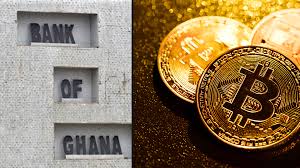

- Can BoG and SEC Protect the Cedi Before Crypto Triggers Ghana’s Next Digital Financial Scandal?
Ghana is standing at the edge of a financial transformation that can either deepen inclusion, lower transaction costs and position the country as a continental digital finance leader or open another corridor for fraud, dollarisation, capital flight and consumer losses.
That is the hard truth emerging from a review of Ghana’s fast-expanding digital assets market, the new Virtual Asset Service Providers regulatory framework, recent Bank of Ghana policy signals, global lessons from the IMF and World Bank, and fraud-risk warnings from financial analyst Dr Richmond Atuahene.
The central question is no longer whether Ghanaians are using digital assets. They are.
The question is whether Ghana can regulate the market before the market regulates Ghana.
According to the digital assets review examined by NorvanReports, more than three million Ghanaians are already active in crypto-related transactions, using digital assets for savings, remittances, commerce and international payments. The paper estimates annual crypto transactions at about US$3.00 billion, driven by mobile money penetration, high internet usage, a young tech-savvy population, cedi volatility and the convenience of stablecoins such as USDT and USDC.
That number should force a national conversation.
Three million users is no longer a side activity for technology enthusiasts. It is a shadow financial market. It is a payments corridor. It is a savings refuge. It is a speculative playground. It is also a regulatory stress test.
The Bank of Ghana appears to understand this. In a recent keynote address, First Deputy Governor Dr Zakari Mumuni framed the challenge in simple but profound language: “Do you feel protected?” The more troubling follow-up, he said, is the question from the digital entrepreneur: “Protected by whom?”
That question should sit on the desk of the President, the Governor of the Bank of Ghana, the Director-General of the Securities and Exchange Commission, the Financial Intelligence Centre, the Cyber Security Authority, the Ministry of Finance and Parliament.
Protected by whom if a virtual asset exchange collapses?
Protected by whom if a stablecoin wallet freezes?
Protected by whom if a local VASP is hacked?
Protected by whom if a young Ghanaian loses school fees to a fake investment token?
Protected by whom if a dollar wallet run by a foreign crypto platform begins to operate like an unlicensed bank inside Ghana?
The passage of the Virtual Asset Service Providers Act, 2025, Act 1154, is an important first step. It brings virtual asset service providers into a legal framework and gives regulators a basis to license, supervise and sanction operators. But a law is only the beginning of regulation, not the end of it.
The document reviewed by NorvanReports is clear: Ghana’s digital assets policy must rest on four pillars which are strict licensing, public education, cross-border regulatory harmonisation and efficient judicial enforcement.
This is where Ghana must move from announcement to architecture.
The first test is licensing. Will every VASP operating in Ghana be required to register, disclose beneficial ownership, prove capital adequacy, demonstrate cybersecurity resilience, submit audited accounts and show clear segregation of customer assets from company funds?
Will the public have access to a live register of licensed VASPs, suspended operators, revoked licences and enforcement actions?
Will foreign crypto platforms serving Ghanaian users be required to establish local accountability, or will they continue to profit from Ghanaian users while remaining outside Ghanaian regulatory reach?
These are not theoretical questions. The Bank of Ghana’s recent directive on unauthorised fiat USD wallet services shows that some crypto platforms were already using local financial rails to support foreign currency wallets without the required authorisation. That is precisely how regulatory gaps become systemic risks.
The second test is consumer protection. The digital assets paper makes a crucial point: virtual assets are not covered by Ghana’s deposit protection scheme or any statutory compensation fund. In simple terms, if consumers lose money in crypto, they may be on their own unless the regulatory framework creates specific safeguards.
This is where Ghana must avoid copying traditional financial regulation lazily. Crypto is not a bank deposit. A stablecoin wallet is not a current account. A token is not always a security. A wallet provider is not always a payment service provider. Yet each can perform functions similar enough to confuse the consumer.
The regulator must therefore answer a simple public question: what exactly is protected, what is not protected, and who bears the loss when things go wrong?
- If a licensed VASP fails, will customers rank ahead of other creditors?
- If customer assets are held in custody, must they be ring-fenced?
- Will VASPs be required to maintain insurance, recovery funds or minimum liquidity buffers?
- Will there be a consumer redress mechanism with strict timelines?
Will marketing claims be vetted before firms advertise “safe”, “guaranteed” or “high-yield” like crypto products?
The third test is public education. The reviewed document recommends a comprehensive national digital assets education programme led by the Bank of Ghana and SEC. That recommendation may be more important than any licence the regulator issues.
Ghana’s mobile money experience has shown that adoption without literacy creates fertile ground for fraud. Dr Richmond Atuahene’s work on mobile money and digital fraud warns that criminals exploit social engineering, SIM swaps, phishing, vishing, smishing and weak customer verification to target ordinary users and even bank staff. He argues that Ghana’s digital financial ecosystem must move from periodic compliance to continuous risk assessment, real-time monitoring and stronger cross-sector intelligence sharing.
If fraudsters can exploit mobile money users under a system citizens know well, imagine what they can do with wallets, seed phrases, fake tokens, offshore exchanges and decentralised platforms that many users barely understand.
The Bank of Ghana and SEC must therefore not wait for the first major crypto scandal before educating the public.
Every licensed VASP should be required to carry standardised risk warnings. Schools, universities, churches, mosques, trade associations, market women groups, transport unions and youth groups should become part of the literacy campaign. The language must be simple: crypto can go up, crypto can crash, crypto can be stolen, crypto is not legal tender, and not every dollar token is safe.
The fourth test is monetary sovereignty. This may be the most sensitive issue. The IMF’s recent work on stablecoins in Nigeria shows how quickly dollar-linked digital tokens can become a parallel payments route. Nigeria received large crypto inflows, with stablecoins increasingly used for cross-border transfers, partly because they are faster, cheaper and offer refuge from currency weakness. But the same trend raises policy concerns: reduced demand for local currency, weaker monetary policy transmission, harder oversight and potential illicit flows.
At NorvanReports we say Ghana must not pretend it is immune. If USDT and USDC become the preferred store of value for businesses, importers, freelancers and households, Ghana could gradually face a digital form of dollarisation. The cedi would remain the legal currency, but more economic decisions would be priced mentally in digital dollars.
This is why Dr Mumuni’s warning matters: whatever Ghana builds or tokenises must not displace the cedi.
But how exactly will regulators enforce that principle?
- Will stablecoin transactions above a threshold be reportable?
- Will VASPs be required to provide transaction data to regulators in real time?
- Will merchants be allowed to price goods in stablecoins?
- Will licensed platforms be allowed to offer yield on dollar stablecoin balances?
- Will there be capital controls on crypto-based outward transfers?
- Will Ghana’s e-Cedi be designed as a practical alternative, or will it become another official product that citizens ignore while private stablecoins dominate?
Nigeria’s eNaira experience offers a difficult lesson. Being first is not the same as being adopted. The IMF found that Nigeria’s CBDC had not moved beyond limited adoption in its early phase and would require coordinated policy effort to break weak network effects. Meanwhile, private stablecoins have continued to gain traction for cross-border transfers.
That is the nightmare Ghana must avoid: an official digital cedi with weak usage, sitting beside a thriving private dollar stablecoin economy outside full state control.
The fifth test is institutional coordination., The digital assets document warns of possible regulatory dichotomy because the market sits across the mandates of the Bank of Ghana, SEC and Financial Intelligence Centre. This is a real danger.
If one token is a payment instrument, a security and a possible money laundering channel, who leads?
If a VASP provides custody, trading, remittance, merchant settlement and tokenised investment products, does it answer to BoG, SEC, FIC or all three?
If all three regulate without a clear command structure, Ghana risks delays, duplication and confusion. If none takes full ownership, the market will exploit the gap.
The country needs a joint Digital Assets Regulatory Council with published rules, shared supervision, joint enforcement protocols and a single public portal for licensing, complaints, warnings and sanctions.
The sixth test is enforcement. Ghana’s GoldBod model offers a useful lesson. In gold trading, the state is moving toward official pricing, traceability, licensing and sanctions. Whether one agrees with every detail or not, the principle is clear: if a strategic market matters to the economy, the state must know who is operating, at what price, under what rules, and with what consequences for breach.
Digital assets require the same seriousness. If Ghana can regulate gold buyers, why can it not regulate digital assets especially the crypto exchanges?
If GoldBod can deploy compliance teams to trading hubs, why can BoG and SEC not deploy digital compliance teams to monitor exchanges, wallet providers and online promotions?
If gold pricing can be linked to LBMA benchmarks, why can stablecoin issuers and VASPs not be required to disclose reserve quality, redemption rules and pricing spreads?
The seventh test is the courts. The paper rightly recommends efficient judicial processes. Crypto disputes will not wait five years for judgment. Stolen digital assets can move across wallets in seconds. Fraudsters can disappear behind offshore platforms. Smart contract disputes may require technical evidence many courts have never handled.
After engaging the literature and doing assessment of US, El-Salvador and next door Nigeria, it is clear that Ghana needs trained cyber-financial prosecutors, judges familiar with digital evidence, asset freezing procedures, blockchain analytics capability and fast-track financial technology dispute resolution.
Without that, regulation will look strong on paper but weak in reality.
The final test is political leadership. This is not a small fintech matter. It is a financial stability issue. It is a youth protection issue. It is a foreign exchange issue. It is a national competitiveness issue.
Handled properly, Ghana can become Africa’s model for responsible digital asset regulation. It can attract compliant exchanges, support tokenised capital markets, reduce remittance costs, strengthen AfCFTA payments, protect consumers and build a trusted digital finance ecosystem.
Handled poorly, it could become another market where young people are left to learn through losses, regulators chase problems after they explode, and foreign platforms extract value without accountability.
The President should therefore ask the regulators for a 12-month national digital assets implementation roadmap.
That roadmap must answer the hard questions: who is licensed, who is banned, how consumers are protected, how data is shared, how stablecoins are monitored, how the cedi is protected, how fraud is prosecuted, how the e-Cedi fits in, and how Ghana avoids Nigeria’s adoption gap.
Ghana has already made the right first move by choosing regulation over denial.
But the next phase is more difficult.
The country must now prove that it can build a digital assets market that is open but not reckless, innovative but not lawless, global but not dollarised, and inclusive but not predatory.
The opportunity is real. So is the danger.
Digital assets can transform Ghana’s financial system. But only if Ghana builds trust before speculation, rules before chaos, and protection before the next scandal.

