


- Cheap Imported Milk Powders Expose Tariff Gap Threatening West Africa’s Local Dairy Industry
ECOWAS is stepping up efforts to close a customs classification gap that allows some imported milk-based food preparations to enter West African markets at significantly lower tariffs than traditional dairy products, creating what the regional bloc says is a competitive disadvantage for local milk producers.
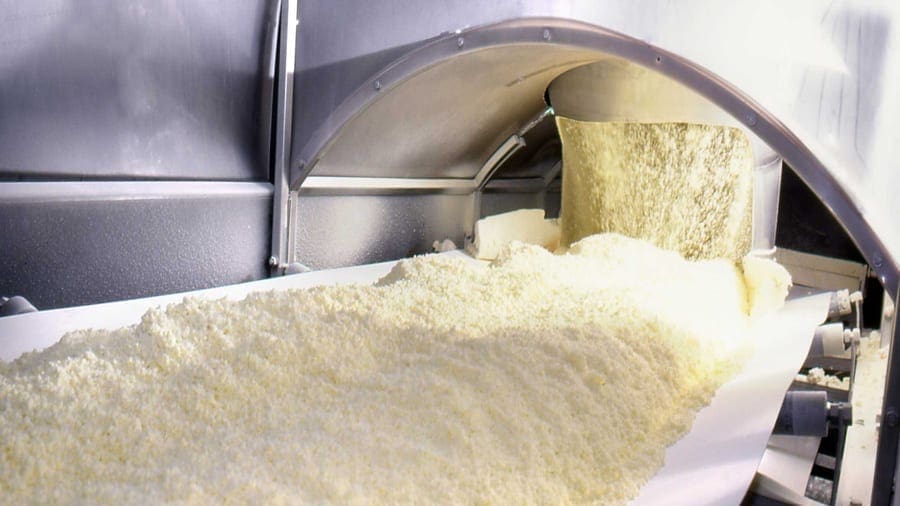
The issue centres on fat-filled milk powders typically skimmed milk enriched with vegetable fats which can be classified as food preparations rather than dairy products under the ECOWAS Common External Tariff. That distinction can reduce the applicable customs duty to about 5.00%, compared with a proposed tariff treatment of 20.00%-35.00% that regional dairy stakeholders want applied to the products.
The dispute goes to the heart of ECOWAS’s ambition to build a commercially viable dairy industry capable of reducing the region’s heavy dependence on imported milk products. In 2020, the bloc adopted its “Local Milk Offensive”, a strategy designed to double local fresh milk production from pastoral and agropastoral systems to 10bn litres annually by 2030, compared with about 5.8bn litres in 2018. It also aims to increase the proportion of collected milk processed by dairies from 5.00% to 20.00%, while creating a business environment capable of attracting greater private investment into local dairy value chains.
But ECOWAS’s own briefing note suggests that tariff architecture may be working against those objectives. Under customs nomenclature, milk is narrowly defined as a product of animal origin, while dairy products cover milk derivatives meeting specific compositional standards.
Products in which milk-derived fat has been replaced by vegetable fat can therefore move outside conventional dairy classifications and fall into categories of food preparations that attract lower duties.
That technical distinction has substantial commercial consequences. ECOWAS says fat-filled milk powders imported in large volumes, often in 25-kilogram bags, gain a significant price advantage because of their lower tax treatment and can compete aggressively against locally collected fresh milk.
The briefing note warns that this can weaken incentives for processors to invest in productivity improvements, collection systems and processing infrastructure across the regional dairy industry.
The document describes the challenge in unusually direct terms, saying the region needs to reclassify fat-filled milk powder within the Common External Tariff at a rate of 20.00%-35.00% instead of the 5.00% duty currently applied. Such a change would amount to a significant trade-policy intervention, effectively narrowing the price advantage enjoyed by some imported substitutes.
ECOWAS frames the issue not simply as protectionism, but as an attempt to make customs treatment reflect the competitive effect these products have on local milk.
The policy debate is part of the West African Dairy Offensive Support Project, or PAOLAO, which ECOWAS has been implementing with support from the French Development Agency since 2024.
The programme is intended both to support incentive-based trade and tax reforms and to improve the capacity of public officials and private-sector operators dealing with border controls, customs nomenclature, quality standards and food labelling. It covers 18 countries across West Africa and the Sahel.
A regional training workshop held in Agbodrafo, Togo, from August 24 to 28 brought together health inspectors, customs officers, dairy-processing managers and representatives of regional livestock organisations.
Participants received training covering milk classifications under the Codex Alimentarius and the ECOWAS Common External Tariff, good agricultural and manufacturing practices, food-safety systems, sanitary and phytosanitary rules, health inspections and labelling requirements. The programme also included field and classroom exercises intended to expose officials to the practical difficulties of distinguishing dairy products from milk-based food preparations.
Those exercises exposed weaknesses that extend beyond tariff policy. Participants reported packaging that was difficult to read or failed to provide all information required under product-composition regulations, while discussions also highlighted alleged failures to conduct required health inspections before customs clearance.
The note further records concerns about incomplete import documentation, inadequate laboratory testing and, in some countries, intervention by political or religious authorities to facilitate the entry of products described by participants as dubious.
These shortcomings matter because the dairy trade involves both industrial competitiveness and consumer protection. Customs officials have to determine whether an imported product is genuine milk, a dairy derivative or a food preparation, while health authorities must establish whether products comply with quality, composition and safety rules before they reach consumers.
Weak enforcement can therefore simultaneously reduce tariff revenue, distort competition and increase the risk of poorly documented or substandard products entering regional markets.
ECOWAS is consequently calling for health inspections before customs release, stronger laboratory and border-control capacity, improved compliance with regional standards and renewed advocacy for tariff reclassification.
Participants also recommended a regional standard capable of strengthening trade defence and consumer health protections while limiting imports of food preparations incorrectly presented or classified as dairy products. The proposals point towards a much more coordinated approach between customs, health regulators, agriculture authorities and regional trade policymakers.
There is, however, a policy balance to strike. Raising tariffs on imported milk-based preparations could improve the competitive position of West African farmers and processors, but it could also increase input costs for manufacturers and ultimately food prices if domestic production cannot expand quickly enough to replace cheaper imports.
The success of the Local Milk Offensive will therefore depend not merely on shielding producers from import competition, but on improving productivity, cold-chain infrastructure, processing capacity, quality standards and reliable milk collection.
ECOWAS itself recognises that challenge. The briefing note calls for stronger local dairy value chains, improved cold-chain management and a broader role for producer organisations and inter-professional bodies in mobilising resources and delivering services.
It also proposes recognition and incentive mechanisms for exemplary operators across the dairy value chain, signalling that tariff reform is intended to sit alongside productivity and governance improvements rather than substitute for them.
For West Africa, the customs debate therefore represents something larger than a dispute over where a bag of milk powder sits in a tariff schedule. It tests whether the region can align trade rules with an industrial strategy aimed at turning millions of livestock farmers into participants in a commercially competitive dairy economy.
If ECOWAS wants local milk production to nearly double by 2030, closing tariff anomalies may help but the harder task will be ensuring that any protection created at the border produces investment, productivity and stronger regional supply chains behind it.

