

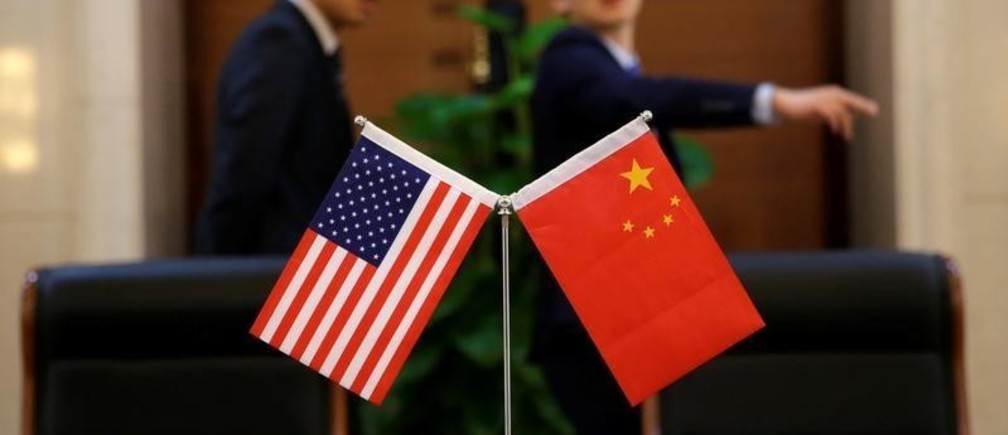

- China Captures Nearly 40% Of Nigeria’s Imports as US Trade Share Collapses
China has strengthened its position as Nigeria’s dominant source of imported goods, supplying N11.01tn, or about US$8.2bn, of merchandise in the first half of 2026 and accounting for nearly four out of every 10 naira the country spent on imports.
The surge came even as Nigeria’s overall import bill declined, underlining a growing concentration of trade flows towards Beijing rather than a general expansion in foreign purchases.
Official data cited by Business Insider Africa put China’s share of total imports at 39.27% during the six-month period.
The contrast with the United States is increasingly stark. In the first quarter, China supplied N5.10tn of goods to Nigeria compared with N2.81tn from the US, but by the second quarter Chinese imports had risen to N5.92tn while American shipments fell to N1.01tn. China therefore accounted for more than 41.00% of Nigeria’s second-quarter import bill, compared with less than 7.00% for the US.
The shift is notable because Nigeria imported less overall than it did a year earlier. Total imports fell from N33.14tn in the first half of 2025 to N28.04tn in the same period of 2026, a decline of about 15.37%, while imports from China rose 14.49% from N9.62tn. Beijing’s share of Nigeria’s import market consequently increased by more than 10 percentage points in a single year.
Chinese goods are embedded across some of Nigeria’s fastest-growing and most investment-intensive sectors.
Shipments include solar panels, telecommunications equipment, agricultural machinery and industrial inputs, giving China an increasingly important role not merely as a supplier of consumer goods but as a source of equipment used in infrastructure, manufacturing and energy.
That breadth helps explain why Chinese imports have remained resilient even as Nigeria’s total foreign purchases contracted.
The imbalance, however, is substantial. Nigeria exported only N1.09tn worth of goods to China during the same six-month period, creating an estimated trade deficit of N9.92tn with Beijing. In practical terms, Nigeria imported more than 10 times as much from China as it sold back, reinforcing a trade structure in which value flows heavily in one direction.
That pattern raises a wider industrial question for Africa’s largest economy. Chinese machinery and capital goods can support productive investment, especially where domestic capacity is limited, but persistent dependence on imported manufactured products can also constrain the development of local industrial supply chains.
The policy challenge is therefore not simply to reduce imports, but to distinguish between imports that strengthen domestic productive capacity and those that permanently displace local manufacturing without building new capabilities.
The growing China-Nigeria trade relationship is also bringing enforcement concerns. Nigeria’s National Agency for Food and Drug Administration and Control has warned that foreign counterfeit networks are increasingly operating inside local commercial hubs rather than relying solely on Nigerian traders travelling abroad to source fake products.
Martins Iluyomade, NAFDAC’s director of investigation and enforcement, said counterfeiters were now embedded more directly in local distribution networks
“Before, to fake a product, you needed to go to China to bring it,” Iluyomade said. “Now, you don’t need to go. They are here with us.”
He added that enforcement raids had uncovered cases in which Chinese individuals allegedly owned logistics companies used to move counterfeit products into Nigerian markets, claims that place regulatory capacity alongside trade volumes at the centre of the debate.
Local manufacturers say the consequences can be severe. Peter Popoola, vice-chairman of the Lagos chapter of the National Association of Small-Scale Industrialists, warned that fake products weaken legitimate businesses because consumers may struggle to distinguish between authentic and counterfeit goods.
“Counterfeiting reduces our sales and profits,” he said, adding that inferior copies can also damage the reputation of genuine brands.
The problem illustrates the tension at the heart of Nigeria’s trade relationship with China. The same commercial networks that deliver lower-cost equipment, machinery and manufactured goods at enormous scale can also make enforcement more complicated when substandard or illicit products enter the supply chain.
Managing that risk will require stronger customs controls, product verification and cooperation between Nigerian regulators and Chinese authorities rather than treating all Chinese trade as either wholly beneficial or inherently problematic.
For Nigerian policymakers, the more strategic concern is the widening asymmetry. China’s growing share of the import market gives Nigerian businesses access to equipment and inputs that can support investment, but the relatively small value of exports flowing in the opposite direction shows how little Nigeria has yet converted that relationship into reciprocal market access.
The imbalance will remain difficult to narrow without greater domestic processing, manufacturing and export diversification.
The broader regional implication is equally important. Across Africa, China has built trade relationships around infrastructure, manufactured goods, machinery and increasingly renewable-energy technology, while many African economies still export commodities and low-value products.
Nigeria’s first-half data provide a particularly clear example of how quickly that model can deepen when one supplier captures a growing share of a shrinking import market.
China’s N11.01tn lead over its rivals therefore says as much about Nigeria’s industrial structure as it does about Beijing’s commercial strength.
The immediate numbers show an extraordinary shift in import concentration, but the longer-term test is whether Nigeria can use those imported machines, technologies and inputs to build industries capable of exporting more back to China and elsewhere. Without that transformation, the trade relationship risks becoming deeper without becoming more balanced.

