


- COCOBOD Takes New Cocoa Law to Farmers as Ashanti Growers Back Key Reforms
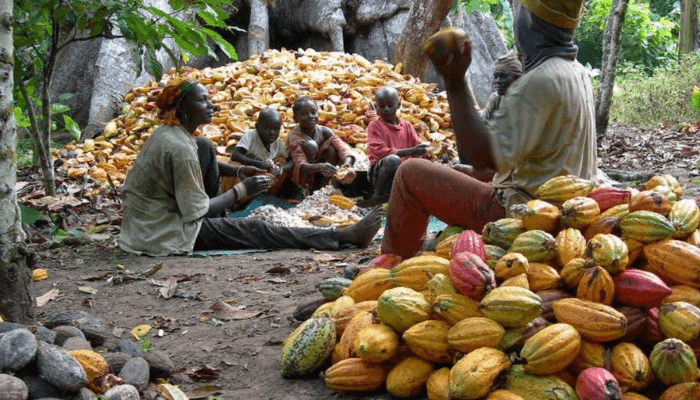
Cocoa farmers across parts of the Ashanti Region have welcomed Ghana’s new Cocoa Board Bill, backing reforms covering farmer welfare, producer pricing, pension arrangements and protection of cocoa farms as COCOBOD begins a broader effort to explain the legislation directly to producers.
Farmers from Juaben, Asiwa, Juaso and Konongo expressed support during a stakeholder sensitisation rally organised by the Ghana Cocoa Board at Konongo, less than a week after Parliament passed the legislation.
More than 400 people attended what COCOBOD described as the first major farmers’ rally in the cocoa-growing regions since the Bill’s passage, marking the beginning of an effort to move debate over the reforms from Parliament and national media to the communities most directly affected.
The engagement was led by Dr Richard Adu Acheampong, Executive Director of COCOBOD’s Cocoa Health and Extension Division, and Benjamin Teye Larweh, Deputy Head of Public Affairs.
They outlined provisions covering farmer welfare, producer pricing, protection against the destruction of cocoa farms, cocoa smuggling, sector financing, the Cocoa Farmers Pension Scheme, educational support for farmers’ children, local processing and stronger governance.
The reforms arrive at a sensitive point for Ghana’s cocoa industry, which continues to confront pressure from illegal mining, ageing farms, smuggling and financing constraints. For government, the Bill is therefore intended not merely as an institutional restructuring exercise but as an attempt to redefine how the sector protects productive assets, rewards farmers and allocates responsibility for activities that have historically stretched COCOBOD beyond its core mandate.
One of the most important parts of the Konongo engagement involved correcting claims that the new legislation would prevent farmers from cultivating food crops alongside cocoa.
COCOBOD officials said the Bill does not prohibit compatible intercropping and that crops such as plantain can continue to be cultivated, particularly during the establishment of young farms where they can provide temporary shade while supporting household income.
Officials also rejected suggestions that the legislation would transfer ownership of cocoa farms to COCOBOD. They said the farm-protection provisions are instead designed to prevent unlawful destruction and permanent conversion of productive cocoa land to incompatible uses, including illegal mining and other activities that threaten both individual farmers’ investments and national production.
That clarification is economically important because land rights sit at the centre of farmer confidence. Any perception that stronger regulatory powers could weaken farmers’ control over their property would risk generating resistance to reforms intended to protect the same farms, making precise communication about ownership, compensation and enforcement essential as implementation progresses.
Sarah Amoako, Municipal Chief Executive for Asante Akim North, also highlighted provisions intended to return COCOBOD more narrowly to its core sector responsibilities.
The Bill seeks to restrict quasi-fiscal activities such as cocoa-road construction, with local and central government institutions expected instead to assume responsibility for broader infrastructure and community-development obligations.
That shift could prove one of the more consequential aspects of the reform because COCOBOD has historically carried responsibilities extending well beyond crop regulation and marketing.
Removing road construction and similar expenditure from its balance sheet could allow more resources to be directed towards productivity, disease control, extension services and farmer support, but cocoa communities will judge the change partly on whether other state institutions actually fill the infrastructure gap.
Farmers at the rally sought clarification on issues including the pension scheme, educational support for their children, illegal mining, cocoa roads, compensation, agricultural financing, weighing scales, planting materials, farm rehabilitation and their role in decision-making.
Their questions illustrate that support for the legislation will ultimately depend less on its broad objectives than on how those provisions affect incomes, farm security and access to services on the ground.
Participants subsequently called for sustained sensitisation and consultation across cocoa-growing communities. That demand is significant because the political controversy surrounding the Bill has demonstrated how quickly uncertainty over technical provisions can shape public perceptions before implementation has begun.
For COCOBOD, continued engagement will therefore be part of the reform itself rather than merely a communications exercise. A pension promise, producer-price framework or farm-protection provision will have limited value if farmers do not understand eligibility, enforcement mechanisms, compensation arrangements or how disputes will be resolved.
The removal of quasi-fiscal responsibilities also creates an accountability test for government. If COCOBOD stops financing roads but district assemblies and central government agencies fail to provide them, cocoa farmers could experience the reform as a withdrawal of support even where the objective is to improve the financial sustainability of the cocoa institution.
The same applies to farm protection. Stronger legal safeguards against illegal mining could preserve productive land and reduce one of the threats facing cocoa cultivation, but enforcement will matter more than statutory language if farmers continue to lose farms to unlawful activity.
The Ashanti engagement therefore provides an early indication that significant elements of the new framework have support among farmers once the provisions are explained directly. It does not, however, remove the larger implementation challenge confronting COCOBOD: converting promises on pricing, pensions, farm protection and governance into measurable improvements in farmer welfare.
Ghana’s cocoa reforms will ultimately be judged in farming communities rather than Parliament. The emerging support in Juaben, Asiwa, Juaso and Konongo gives COCOBOD an encouraging starting point, but sustaining it will depend on whether the new legal framework protects farms, improves financial security and allows cocoa farmers to see tangible benefits from a sector they have sustained for generations.

