
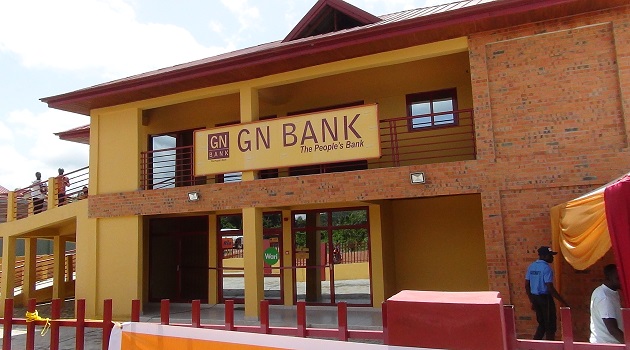

- Court of Appeal Restores GN Savings and Loans Licence After Seven-Year Legal Battle
The Court of Appeal has overturned the Bank of Ghana’s 2019 revocation of GN Savings and Loans Company Limited’s licence, handing Groupe Nduom a major legal victory and raising fresh questions over the legacy of Ghana’s financial sector clean-up.
A three-member panel of the court unanimously ruled that the central bank’s decision to revoke the company’s licence was unfair and unreasonable, and ordered the Receiver to return possession, management and control of the company to its shareholders.
The judgment, delivered in Accra on Thursday, also quashed the January 2024 High Court ruling that had upheld the Bank of Ghana’s action. It represents one of the most significant legal setbacks for the central bank since the 2018–2019 clean-up exercise, which led to the collapse or consolidation of several banks, savings and loans companies, finance houses and microfinance institutions.
In practical terms, the ruling sets aside the August 2019 revocation order, the receivership process that followed, and the High Court’s earlier validation of both decisions.
But while the judgment restores GN Savings and Loans’ licence on paper, it does not automatically return the institution to full operations. A court-ordered restoration and the resumption of regulated financial activity are two different processes.
The company does not currently appear on the Bank of Ghana’s register of licensed institutions, and the Receiver’s work over the past six years has involved asset management, partial settlement of depositor claims under the government-backed clean-up framework, and the winding down of the company’s commercial footprint.
Any return to business would therefore require regulatory cooperation, fresh supervisory review, recapitalisation, governance restructuring and clarity over the status of assets and liabilities handled during the receivership period.
The case has its roots in January 2019, when GN Bank was downgraded from a universal bank to a savings and loans company and renamed GN Savings and Loans Company Limited. The Bank of Ghana cited persistent breaches of prudential requirements, including capital adequacy shortfalls, liquidity problems, related-party exposures and governance weaknesses.
Seven months later, on August 16, 2019, the central bank revoked the company’s licence and appointed Eric Nana Nipah as Receiver.
The Bank of Ghana’s case was that GN Savings and Loans was deeply insolvent. According to the regulator, the institution’s capital adequacy ratio stood at negative 61.20 per cent at the end of May 2019, while its adjusted net worth was negative GH¢30.70 million. The central bank also cited alleged breaches involving related-party exposures, failure to publish audited accounts and the transfer of more than $62 million in depositor funds to an affiliated US-based entity without supporting documentation.
Groupe Nduom rejected those claims, arguing that the Bank of Ghana ignored government-related receivables allegedly owed to Nduom-affiliated entities. The group maintained that a portfolio of infrastructure receivables worth more than GH¢2.2 billion, held through Gold Coast Advisors, was central to the company’s liquidity challenges and should have been properly considered before the revocation.
Dr Papa Kwesi Nduom and the company’s shareholders filed suit at the Human Rights Division of the Accra High Court on August 30, 2019, seeking to quash the revocation and recover control of the company.
The legal journey was long and contested. In 2022, the Court of Appeal referred the dispute to arbitration after the Bank of Ghana argued that licence revocation disputes should not be resolved by the courts. But in July 2023, the Supreme Court ruled that the High Court had jurisdiction to hear the matter.
The case returned to the High Court, where Justice Gifty Agyei Addo dismissed the application in January 2024, holding that the Bank of Ghana had acted within its powers. Dr Nduom’s legal team appealed that decision five days later.
The Court of Appeal’s latest ruling now changes the legal and political landscape around the clean-up. For Groupe Nduom, the judgment is a vindication of a position it has maintained since 2019: that the revocation was unjustified and failed to account for the company’s broader financial position.
For the Bank of Ghana, the ruling is a direct judicial rebuke of one of the most politically sensitive decisions taken during the clean-up. The central bank has not yet publicly responded to the ruling, but it may seek a stay of execution and pursue a further appeal at the Supreme Court.
Such a move would delay the practical return of control to the shareholders and keep the matter in litigation.
The broader implications could be significant. The judgment is the first major appellate finding that one of the clean-up-era revocations was unreasonable. Former owners of other collapsed financial institutions may see the ruling as strengthening their own legal and political claims, although each case will still depend on its specific facts.
For depositors, former employees and shareholders, the ruling offers legal momentum but not immediate closure. The difficult questions remain: what assets are left, what liabilities remain unresolved, how much recapitalisation will be required, and whether the Bank of Ghana will accept a pathway for GN Savings and Loans to operate again.
The judgment may have restored the licence. But the real battle may now shift from the courtroom to the regulatory table.

