


- IMF Says Global Investors Are Showing Renewed Appetite for Ghanaian Assets
Global investors are showing renewed appetite for exposure to Ghana’s economy, in a strong signal that confidence is returning after the country’s painful 2022 debt crisis and subsequent restructuring programme. The International Monetary Fund says interest in Ghanaian assets has intensified, with investors and global financial institutions increasingly engaging the Fund for updates on the country’s economic outlook, reform performance and prospects for a future return to international capital markets.
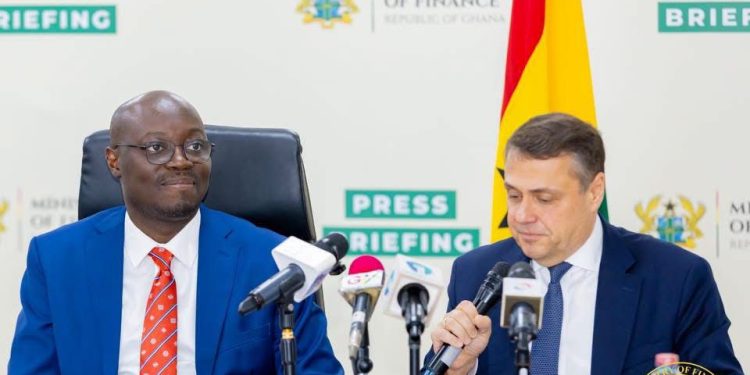
Speaking after the IMF reached a Staff-Level Agreement with the Government of Ghana in Accra, Dr Ruben Atoyan, IMF Mission Chief to Ghana, said the country’s recovery story had attracted significant attention from international investors. “With our discussions with international investors, we do see a lot of interest in exposure to Ghana. The good story of Ghana has been noticed,” Dr Atoyan said.
He added that the Fund was receiving persistent requests from investors seeking to understand Ghana’s direction after the completion of its IMF-backed programme.
“We get bombarded by requests from investors to meet and talk about Ghana going forward, so whenever the government decides to re-enter the capital market, certainly the interest will be there,” he said.
The comments are among the clearest indications yet that Ghana’s reform programme, debt restructuring and macroeconomic stabilisation efforts are beginning to reshape investor perceptions.
Ghana was shut out of international capital markets after defaulting on most external debt obligations in 2022, following a severe deterioration in public finances, soaring inflation, heavy debt-service pressures and a sharp depreciation of the cedi.
The crisis forced the country into a domestic debt exchange, external debt restructuring negotiations and an IMF-supported stabilisation programme aimed at restoring debt sustainability, rebuilding reserves and anchoring fiscal discipline.
Since entering the IMF programme, Ghana has recorded significant fiscal consolidation, stronger foreign exchange buffers, lower inflation and relative stability in the cedi, developments that have helped improve the country’s medium-term outlook.
That improvement has also fed speculation that Ghana could attract strong demand whenever it eventually returns to the Eurobond market.
But the government has signalled caution over any immediate return to international capital markets, even as investor interest improves. The key policy question is whether Ghana should rush to take advantage of renewed market appetite or wait until reforms are more deeply entrenched.
For investors, Ghana once again offers a high-yield frontier-market recovery story: a restructured sovereign, improving external balances, falling inflation, renewed IMF engagement and a clearer path toward fiscal repair.
For Ghana, however, the risk is that a premature return to borrowing could recreate the very vulnerabilities the country is now trying to escape.
The IMF’s message was therefore not a blank cheque. Dr Atoyan stressed that investor confidence remains conditional on Ghana sustaining progress on reforms.
“And of course, on conditions of sustained progress in terms of the reforms,” he said.
Ghana’s credibility in the post-ECF period will depend on whether it can maintain fiscal discipline, strengthen debt management, avoid election-cycle spending pressures, rebuild buffers and deepen reforms in state-owned enterprises, energy-sector financing and public financial management.
The planned transition to a non-financing Policy Coordination Instrument with the IMF is expected to serve as a signalling framework, reassuring investors that Ghana remains committed to reform even after the end of bailout disbursements. The renewed investor interest also comes at a time when Ghana’s domestic capital market is beginning to show signs of repair. Government has resumed domestic Treasury bond issuance, while improved macroeconomic conditions have helped restore some confidence among local investors.

