



CSOs Scorecard Rates Government’s First-Year Mining Commitments as ‘More Than Satisfactory’
An alliance of five coalitions and nine Civil Society Organisations (CSOs) active in mining governance, petroleum oversight, environmental protection, climate action, energy transition and anti-corruption has assessed the government’s first-year performance in the mining sector as “more than satisfactory,” following the release of its inaugural Governance Commitments Scorecard.
According to the Scorecard, the government has delivered 37.5% of its mining-related commitments outlined in the 2024 manifesto, significantly above the expected 25% benchmark for the first year of a four-year implementation cycle.
Launching the assessment, the CSO Alliance explained that the government is expected to meet 25% of its commitments annually to achieve full implementation by the end of its mandate. With mining sector delivery exceeding this threshold, the Alliance described the progress as satisfactory, noting however, that performance in anti-corruption commitments fell slightly short, recording 23.04% against the 25% requirement.
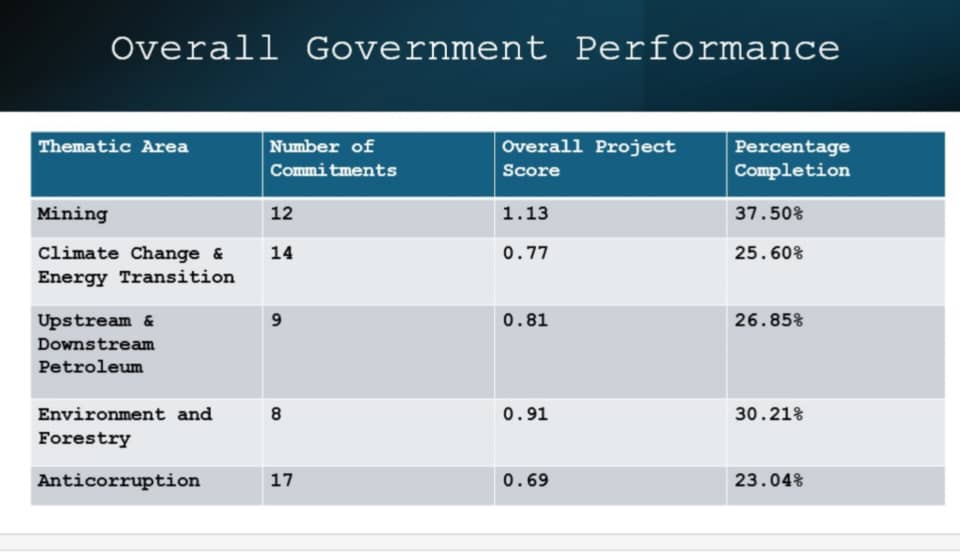
“The Scorecard is not merely a document; it is a mirror—a reflection of actions, gaps, intentions and governance realities, informed by verifiable evidence and technical analysis,” the Alliance stated.
The organisations stressed that the Scorecard does not serve as an indictment or political verdict on government performance. Rather, it is designed as a policy-tracking tool to guide how effectively the administration is fulfilling the development expectations of the Ghanaian electorate.
Beyond assessment, the Alliance framed the Scorecard as a call to action—urging a strengthening of governance systems in the extractive sector, consistency in policy implementation, and a culture of transparency where citizens can track not only promises but actual delivery.
The CSO Alliance urged government and relevant stakeholders to treat the findings with the seriousness they deserve, rather than respond with defensiveness. It called for open and inclusive engagements, particularly in areas where progress has been slow, to ensure that gaps are addressed collaboratively.
The Alliance further stressed the need to strengthen key institutions responsible for monitoring, enforcement and transparency, noting that robust institutional capacity is critical for achieving meaningful reforms. It also emphasised the importance of timely and consistent implementation of commitments made in the various sectors.
Adding that, decisions must be guided by evidence-based analysis and free from political influence to guarantee credible and sustainable outcomes.

