

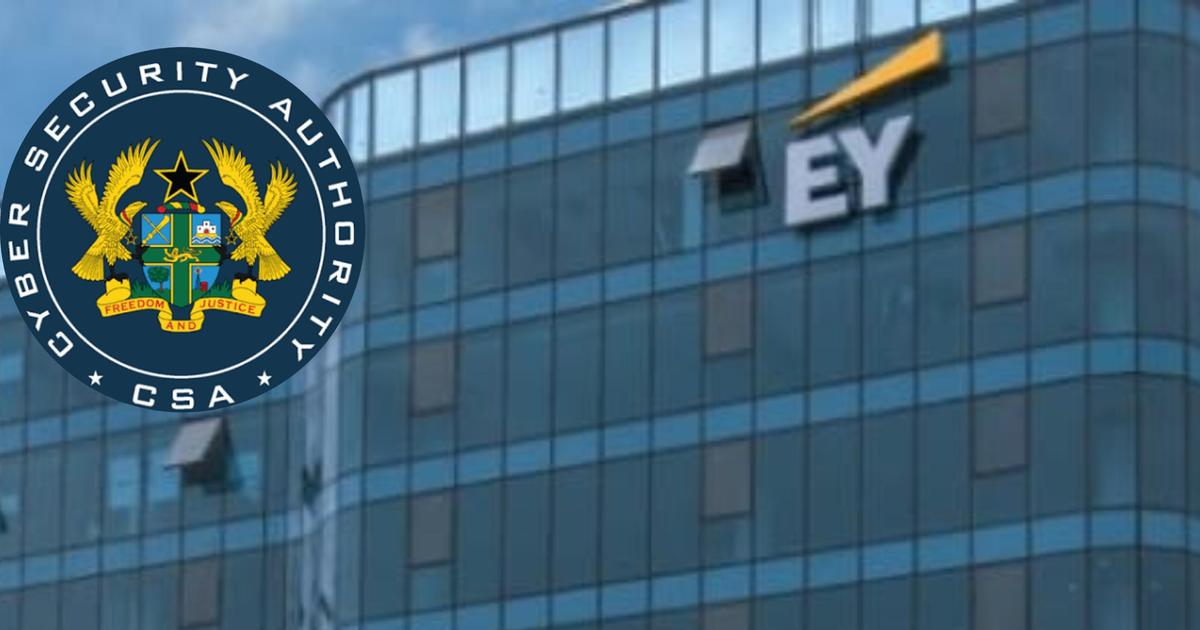

- Cybersecurity Licensing Dispute Ends as CSA and EY Ghana Reach Settlement
The Cyber Security Authority and Ernst & Young Ghana have resolved regulatory issues relating to cybersecurity service licensing, bringing an end to a dispute involving licence fees and associated administrative requirements.
In a joint statement issued on August 18, 2026, the two organisations said they had held constructive discussions on the licensing requirements governing the provision of cybersecurity services in Ghana. The engagement resulted in steps being taken to clarify and address the matters in contention.
“Subsequently, regulatory issues between the CSA and EY Ghana have been satisfactorily resolved,” the statement said. Neither organisation disclosed the specific financial terms, administrative adjustments or compliance actions that led to the settlement.
The resolution is significant because cybersecurity service providers in Ghana operate within an increasingly formal regulatory environment as authorities attempt to strengthen oversight of companies handling sensitive digital systems, information-security functions and cyber-risk services.
The statement indicates that the disagreement centred on licensing requirements, licence fees and administrative obligations rather than a broader dispute over the legitimacy of Ghana’s cybersecurity regulatory framework. Both sides described the engagement as constructive and collaborative.
The two institutions also reaffirmed their commitment to supporting Ghana’s cybersecurity regulatory framework. That position suggests the settlement was reached through regulatory engagement rather than prolonged litigation or enforcement escalation.
For the Cyber Security Authority, the episode also provides an opportunity to clarify how it intends to approach compliance within a rapidly developing digital economy. The regulator said its mandate extends beyond enforcement to helping organisations understand and meet their regulatory obligations.
“The Cyber Security Authority reiterates that its objective is not only to enforce compliance but also to support organisations in understanding and meeting their regulatory obligations,” the joint statement said.
The Authority added that it remained committed to building a secure, resilient and trusted digital ecosystem through effective regulation, responsible industry participation and enforcement of Ghana’s cybersecurity laws.
That balance between enforcement and regulatory engagement is becoming increasingly important as Ghana expands digital payments, cloud services, artificial intelligence, fintech and other technology-dependent sectors. Organisations operating within that ecosystem face rising compliance responsibilities as regulators attempt to manage cybercrime, data breaches and systemic digital vulnerabilities.
For professional-services firms such as EY Ghana, cybersecurity has increasingly become both an advisory business and a regulated activity. Licensing requirements therefore have implications not only for compliance but also for how firms structure and deliver cybersecurity services to corporate and institutional clients.
The joint statement does not specify whether EY Ghana has paid revised licence fees, completed additional administrative requirements or received any waiver or adjustment from the regulator. It also does not disclose whether the resolution changes the licensing framework applicable to other cybersecurity service providers.
That distinction matters because the settlement should not automatically be interpreted as a change in the wider regulatory regime. Based on the statement, the resolution applies specifically to the regulatory issues between the CSA and EY Ghana, while the Authority continues to emphasise enforcement of existing cybersecurity laws.
The outcome nevertheless demonstrates the role dialogue can play in resolving regulatory disagreements before they become prolonged disputes. Clearer communication around fees, licensing classifications and administrative procedures could also help other industry participants avoid similar disagreements.
The statement was jointly issued by the Cyber Security Authority and EY Ghana at 20:30 GMT on August 18, signalling that both organisations were aligned on the public communication surrounding the resolution.
The settlement closes the immediate dispute, but the broader regulatory challenge remains. As Ghana’s digital economy expands, the Cyber Security Authority will have to combine credible enforcement with predictable licensing procedures and sufficient guidance for companies whose services increasingly fall within regulated cybersecurity activity.
For EY Ghana, the resolution removes an immediate regulatory uncertainty surrounding its cybersecurity operations. For the wider industry, the episode underscores that compliance with Ghana’s expanding cybersecurity framework is becoming a core operational requirement rather than a peripheral legal consideration.

