


- DACF Pushes 75% Revenue Guarantee to Strengthen Local Government Finances
Ghana is considering a potentially far-reaching change to the financing of local government, with the Administrator of the District Assemblies Common Fund proposing a constitutional guarantee that would prevent Metropolitan, Municipal and District Assemblies from retaining less than 75.00% of qualifying revenues generated within their jurisdictions.
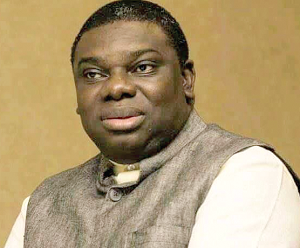
Michael Yamson, Administrator of the DACF, said the proposed constitutional floor would strengthen the fiscal autonomy of MMDAs by protecting locally generated revenues from future policy reversals by central government. He made the proposal on the final day of the National Dialogue on Decentralization and Responsive Governance.
The idea is potentially significant because assemblies currently retain 100.00% of their internally generated funds, or IGF. Mr Yamson’s argument is not that the present retention rate should be reduced, but that a minimum level should be protected in the Constitution so a future administration cannot substantially reverse the policy.
“Some of you may already be asking, and you are right to ask it: MMDAs keep all their internally generated funds today, so why propose 75%?” he said. “Let me be precise about what this guarantee is. It is not a ceiling. Full IGF retention continues exactly as it stands today.”
“It is a floor and a constitutional one,” he added. “The 100% they enjoy now is a matter of policy and administrative convention, real but revocable by whichever administration decides otherwise tomorrow. I am proposing that we stop relying on convention and write a guarantee into our constitution as this compact widens what counts as local revenue.”
That distinction between a ceiling and a floor is central to the proposal. Under Mr Yamson’s formulation, assemblies would continue to retain all of their IGF under the current system, but the Constitution would establish 75% as the minimum share of qualifying locally generated revenues that could remain with local government.
If adopted, it would extend the principle of constitutional protection beyond transfers from central government and into revenues mobilised by assemblies themselves. Ghana’s existing decentralisation framework already provides constitutional protection for central-to-local transfers through the District Assemblies Common Fund, but local revenue retention is treated differently.
Local governments are expected to plan and finance infrastructure, sanitation, markets, roads and other public services, yet many remain heavily dependent on transfers from central government. Delays or uncertainty in those transfers can constrain budget execution and weaken the ability of assemblies to plan beyond the immediate fiscal year.
A constitutionally protected share of locally generated revenue could therefore give assemblies greater confidence that resources raised within their jurisdictions will remain available for local development. That, in turn, could strengthen incentives to improve property-rate administration, broaden revenue registers and reduce collection leakages.
But fiscal autonomy brings a second question: whether assemblies can actually expand their own revenue bases.
Mr Yamson has proposed a district own-revenue mobilisation compact under which every MMDA would be expected to achieve at least 15.00% annual growth in locally generated revenue as a condition for receiving its full grant allocation.
That would introduce a more explicit performance component into Ghana’s system of intergovernmental transfers.
The economic logic is clear. A constitutional guarantee would give assemblies greater security over the revenues they collect, while the annual growth target would encourage them to make greater efforts to expand their own-source revenue rather than relying overwhelmingly on central transfers.
But a uniform 15.00% growth requirement could also expose sharp differences between districts.
Accra, Tema and Kumasi operate within much larger commercial and property markets than poorer rural districts, meaning their capacity to expand revenue is structurally different. A fast-growing urban municipality with rapidly appreciating property values may find a 15.00% increase achievable, while a rural assembly with a small formal business base could struggle to meet the same threshold despite efficient administration.
That raises an important design question. If the grant system rewards absolute revenue growth without adjusting for local economic conditions, the districts most in need of fiscal support could become the ones most likely to lose part of it.
There is also a difference between stronger revenue administration and simply charging residents more.
An assembly can increase collections by improving property databases, digitising payments, reducing leakages and widening compliance. But it can also raise revenue quickly by increasing fees and licences on businesses and households already inside the system.
The latter approach could satisfy a nominal revenue target while weakening the local business environment.
A well-designed compact would therefore need to measure improvements in the underlying revenue system rather than revenue growth alone. Collection efficiency, expansion of the taxpayer base, digitalisation, property valuation and reductions in arrears may provide more useful measures of institutional progress than a single annual percentage target.
The proposal nevertheless addresses a longstanding weakness in Ghana’s decentralisation architecture: responsibilities have often moved towards local authorities faster than reliable financing has followed them.
MMDAs may be expected to maintain local infrastructure, regulate businesses and deliver public services, but their financial autonomy remains limited when much of their resource envelope depends on transfers whose timing is outside their control.
Assemblies with dependable revenues may be better positioned to undertake medium-term capital planning, maintain infrastructure and co-finance projects rather than waiting entirely for central allocations. Over time, stronger balance sheets could also improve the ability of well-managed local governments to structure partnerships around markets, transport terminals and other income-generating infrastructure.
But greater fiscal autonomy would necessarily have to be matched by stronger accountability.
If assemblies retain a larger and constitutionally protected share of local revenue, residents and businesses will have stronger grounds to demand evidence of how those funds are spent. Transparent budgets, procurement discipline, timely audits and public reporting would therefore become even more important.
Fiscal autonomy can strengthen local government only if the institutions receiving greater control over resources are capable of managing those resources effectively. Otherwise, decentralisation may simply shift financial discretion from central government to local structures without improving public services.
The proposal could also alter the political relationship between local authorities and central government.
Assemblies that raise and retain more of their own money may become less dependent on Accra for routine financing. That could make local development planning more responsive to residents and local economic conditions rather than primarily to the timing and priorities of national transfers.
It could also strengthen accountability between citizens and local officials. When businesses and households can see a clearer connection between taxes collected locally and services delivered locally, pressure for performance may become more direct.
The success of such a framework, however, would depend heavily on how broadly “local revenue” is defined. Mr Yamson’s comments suggest that the proposed compact could extend beyond the current definition of IGF, making the constitutional protection potentially more consequential than simply preserving the existing 100.00% retention policy.
That detail will matter in any constitutional amendment. A poorly defined revenue base could generate disputes between central and local government over which taxes and charges belong to whom. A clear framework would therefore need to specify revenue assignments, collection responsibilities and how shared taxes are treated.
The proposal ultimately raises a larger question at the centre of Ghana’s decentralisation project.
For decades, the country has transferred administrative responsibilities to local government while maintaining a fiscal structure in which many assemblies remain heavily reliant on resources determined elsewhere.
A 75% constitutional floor, combined with stronger own-source revenue mobilisation, could begin shifting that model from decentralisation by administrative design towards decentralisation supported by genuine financial capacity.
But the 15% performance requirement will need careful safeguards. If calibrated intelligently, it could encourage better revenue administration and greater local accountability. If applied mechanically, it risks penalising districts whose weak revenue performance reflects limited economic opportunity rather than poor management.
The debate is therefore not ultimately about whether assemblies should retain 75.00% or 100.00% of locally generated revenues. It is about whether Ghana is prepared to give local governments both the financial independence and the institutional discipline required to become genuine engines of development rather than primarily administrative extensions of central government.

