

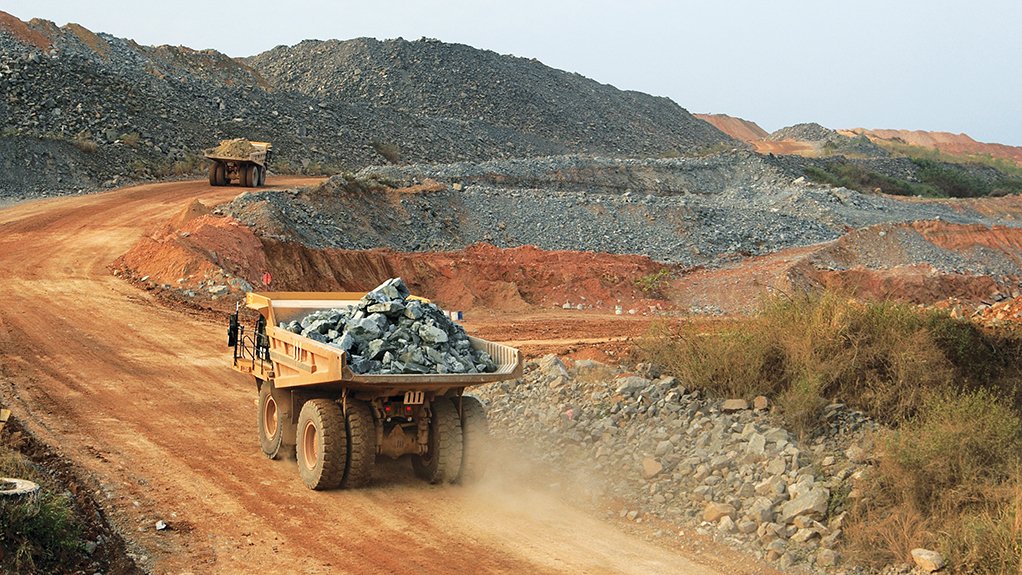

- Damang Transition Shows Lawful Continuity as E&P, DGML Protect Jobs, Revenue and Mine Operations
A NorvanReports review of documents, parliamentary records and the legal context surrounding Ghana’s mining lease regime suggests that criticisms of Damang Gold Mine Ltd and Engineers & Planners over gold sales from the Damang concession ignore a long-standing industry reality: several mining companies in Ghana operated for years without parliamentary ratification of their leases until litigation and subsequent parliamentary action forced the issue into the open.
The review follows claims by IMANI Africa Vice-President Bright Simons that E&P had “no right” to sell gold from the Damang mine because the lease was yet to be ratified by Parliament. His argument was that until parliamentary ratification, gold from the concession belonged to the state and could not lawfully be sold by the operator.
But documents reviewed by NorvanReports show that the legal and operational situation at Damang is more complex than that claim suggests. More importantly, the historical record raises a significant question of consistency: why has the Damang transition attracted such sharp criticism when Ghana’s mining sector has, for years, operated under a ratification backlog involving major mining companies, many of them foreign-controlled?
The point is not that parliamentary ratification is unimportant. It is constitutionally required. Article 268 of the 1992 Constitution provides that agreements involving the grant of rights or concessions for the exploitation of natural resources must be submitted to Parliament for ratification. The real issue is whether the absence of immediate ratification automatically means a mining company cannot operate or sell minerals in the transitional period after the grant of mineral rights.
On the evidence reviewed, that proposition appears too sweeping.
A writ filed in 2018 at the Supreme Court, invoking the court’s original jurisdiction, named the Attorney-General, the Minerals Commission and 37 mining and related companies in a case challenging the non-ratification of mining leases. The companies listed included AngloGold Ashanti Iduapriem Ltd, Newmont Ghana Ltd, AngloGold Ashanti Ghana Ltd, Golden Star Bogoso/Prestea Ltd, Abosso Goldfields Ltd, Asanko Gold Ghana Ltd, Azumah Resources Ghana Ltd, Prestea Sankofa Ltd and others.
The reliefs sought in that action were direct and far-reaching. The plaintiffs asked the Supreme Court to declare that no company was entitled to carry on exploitation of minerals without ratification by Parliament, and further sought declarations that revenues and financial gains made from such operations were unconstitutional if the underlying transactions had not been ratified.
This record matters because it shows that the non-ratification question was not peculiar to Damang Gold Mine Ltd or Engineers & Planners. It was a systemic problem within Ghana’s mining governance architecture. It affected some of the country’s biggest and longest-operating mining companies.
The parliamentary documents subsequently reviewed by NorvanReports reinforce that point. A July 2020 report of Parliament’s Select Committee on Mines and Energy on the ratification of the “Asaase” mining leases noted that 14 mining leases had been laid before Parliament for ratification on May 22, 2020. The report listed leases involving companies such as Asanko Gold Ghana Ltd, Ghanaian Australian Goldfields Ltd, Adamus Resources Ltd, Chirano Gold Mines Ltd, Golden Star Bogoso Prestea Ltd, Abosso Goldfields Ltd, Cardinal Namdini Mining Company Ltd and Ashanti Goldfields Company Ltd.
Crucially, the committee observed that 11 out of the 14 mining companies whose leases were before Parliament had already commenced operations before ratification. The committee further noted that this was contrary to Article 268 of the Constitution and Section 5(4) of the Minerals and Mining Act, 2006, Act 703. It urged the Ministry to take cue from the Supreme Court ruling in the Exton Cubic matter and ensure, as a matter of urgency and priority, that mining leases were submitted to Parliament for ratification before companies were allowed to commence operations.
This parliamentary record significantly weakens the suggestion that E&P and Damang Gold Mine Ltd are involved in an unprecedented violation. Ghana’s own legislative record shows that delayed ratification had become a structural governance problem, not a scandal invented by the Damang transition.
It also exposes the unevenness of the public criticism now directed at E&P. For years, foreign-controlled mining companies operated, produced gold and sold minerals while their leases had either not been ratified or were caught in delayed ratification processes. Yet the current controversy has been framed as though a Ghanaian-led operator at Damang is uniquely offending Ghana’s constitutional order.
That framing is difficult to sustain.
At Damang, the operational context was urgent. Abosso Goldfields Ltd’s extended lease expired on April 18, 2026. Once that happened, government could not leave the mine, equipment, machinery and assets unattended. More than 1,000 Ghanaian workers, including direct and contract workers, faced uncertainty, while more than 20 third-party contracting entities risked disruption after the termination of their contracts with Abosso Goldfields.
A producing mine cannot be abandoned without consequence. Shutdowns carry safety, environmental, financial, labour and community risks. Government, therefore, needed a technically capable and financially prepared entity to step in immediately to maintain operations, preserve jobs and protect state revenue.
Following a tender process, Damang Gold Mine Ltd was selected as lessee and Engineers & Planners as operator of the mine. The transition was therefore not an arbitrary occupation of a concession, but a practical response to a serious operational risk.
The legal sequence also matters. Under Section 40 of the Minerals and Mining Act, a mining lease may be applied for over land that is not already the subject of a mineral right for the mineral applied for. This means government could not properly grant a new lease over Damang while Abosso Goldfields’ rights were still active. The transition could only lawfully proceed after the previous right expired.
Information reviewed by NorvanReports indicates that the steps under Section 13 of Act 703 for the grant of a mineral right have been followed in the Damang matter. These include recommendation by the Minerals Commission, notification by the Minister, acceptance by the applicant and the subsequent grant of the mineral right. The statement reviewed further argues that Section 13(9) entitles the holder of the mineral right to enter the land in respect of which the right has been granted.
The companies have also indicated that revenues from gold sales are being retained in Ghana to allow proper reconciliation after parliamentary ratification, including confirmation of the government’s share of revenue.
That point is significant. The controversy has been framed as though the state is being deprived of its mineral interest. But the information reviewed suggests the opposite: production has continued, jobs have been protected, local contractors have remained engaged, and proceeds are being kept in Ghana pending reconciliation.
The parliamentary report on the Asaase leases also noted the importance of local content, urging the Ministry and Minerals Commission to intensify efforts to ensure employment and training of Ghanaians, procurement of Ghanaian goods and services, increased in-country expenditure and more employment opportunities for citizens. That policy direction aligns more naturally with the Damang transition than with a blanket attack on a Ghanaian-led operator attempting to run a strategic mine.
This is why the Damang case must be understood beyond partisan commentary and social media outrage. It is a test of Ghana’s willingness to treat Ghanaian mining capital with the same tolerance, procedural fairness and policy support long extended to foreign mining companies.
Bright Simons is right to insist that Ghana’s mineral resources must be governed by law. But the record suggests his attack on E&P and Damang Gold Mine Ltd is weakened by the very history of Ghana’s mining sector. If non-ratification was tolerated for years when foreign-controlled companies operated and exported gold, it is difficult to justify a harsher standard when a Ghanaian company assumes risk, keeps a mine running and retains revenues locally.
The stronger public interest question is not whether Damang should be shut down. It should not. The stronger question is how quickly the Ministry can complete the lease documentation and submit the transaction to Parliament for ratification, while preserving production, employment and revenue continuity.
On the facts reviewed, Damang Gold Mine Ltd and Engineers & Planners appear to have stepped into a difficult transition at a critical moment. Their role has kept the mine alive, protected Ghanaian jobs and offered a rare opportunity to prove that local mining capacity can operate at scale.
The Damang story, properly understood, is not evidence of lawlessness. It is evidence of Ghana confronting an old ratification problem while trying not to destroy value in the process.
We are off the strong opinion that asking questions is good and encouraged at all times but the E&P’s operation of Damang should be scrutinised fairly not subjected to a standard that the country did not apply with the same intensity to foreign mining companies for decades.

