


- Dangote Targets World’s Largest Urea Platform With AFC’s US$600 million Backing
Africa Finance Corporation has committed US$600 million to support Dangote Group’s US$7 billion fertiliser expansion programme, backing a major industrial project expected to strengthen Africa’s fertiliser production base and reduce the continent’s dependence on imports.
The financing, extended to Greenview Fertiliser Corporation, will support capacity expansion in Nigeria and the development of a new fertiliser complex in Ethiopia.
The investment is among the largest recent funding commitments to fertiliser production on the continent and comes as African governments seek to improve food security, strengthen agricultural productivity and build more resilient industrial supply chains.
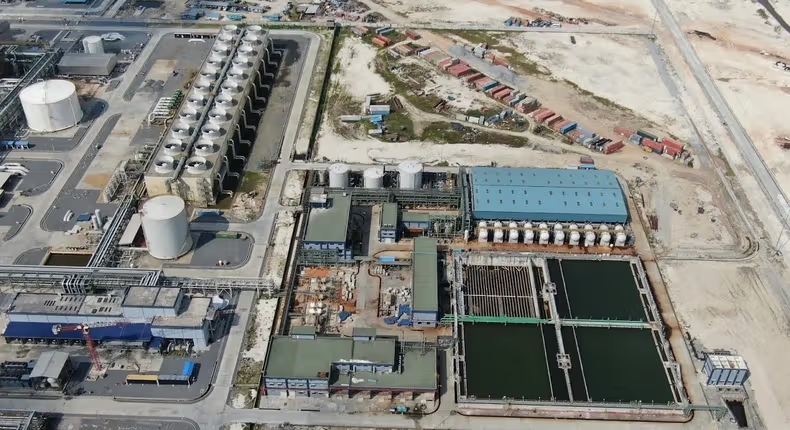
Under the expansion programme, the Dangote Fertiliser Plant in Ibeju-Lekki, Lagos, will increase its urea production capacity from 3 million metric tonnes annually to 9 million tonnes.
The Ethiopia project will add a further 3 million tonnes of annual production capacity, creating a combined 12 million-tonne fertiliser platform across West and East Africa.
The expansion moves Aliko Dangote closer to his stated ambition of making Africa self-sufficient in fertiliser and positioning Dangote Group as the world’s largest urea producer.
In 2025, Mr Dangote said he wanted to surpass Qatar and eliminate Africa’s dependence on imported fertiliser within 40 months.
He said the latest expansion could generate more than US$4 billion in annual fertiliser export earnings for Nigeria within three years.
“What he’s actually given us this money for is a company where by the next three years we’ll be able to have an export of over US$4 billion worth of urea fertilizer,” Mr Dangote said.
“I think it is a big contribution to the foreign exchange income of the country.”
The fertiliser business has become one of Dangote Group’s most important industrial investments outside its refinery operations.
Since beginning commercial production in 2022, the Lagos facility has supplied local farmers while exporting to markets across Africa, Europe and the Americas.
For Nigeria, the expansion carries significance beyond agriculture.
The country has spent decades relying heavily on crude oil exports for foreign exchange earnings, leaving public finances and the naira exposed to oil price volatility and production disruptions.
A fertiliser business generating more than US$4 billion annually in export revenue would rank among Nigeria’s most important non-oil foreign exchange earners and support the country’s wider diversification agenda.
The project also addresses a long-standing structural challenge facing African agriculture.
Africa remains heavily dependent on imported fertiliser, leaving farmers exposed to global supply disruptions, currency pressures and price shocks.
That vulnerability became more pronounced after the Russia-Ukraine war disrupted global fertiliser markets, pushing prices sharply higher and increasing food production costs across several African countries.
A larger domestic fertiliser supply base could reduce those risks, improve availability for farmers and support efforts to raise crop yields across the continent.
African farmers continue to use fertiliser at rates well below the global average, a factor that limits productivity and contributes to food insecurity.
The Ethiopia investment is particularly significant because it gives Dangote Group a second major production hub outside Nigeria.
Earlier this year, the group increased planned investment in the Ethiopian project to more than US$4 billion from an earlier estimate of US$2.5 billion, signalling the scale of its commitment to the East African market.
The project could also deepen intra-African industrial supply chains by linking gas-based fertiliser production to agricultural demand across multiple regions.
AFC President and Chief Executive Officer Samaila Zubairu said the transaction reflects the institution’s strategy of recycling capital into high-impact African industrial projects.
According to AFC, the corporation had previously invested in Dangote Industries Limited and received full repayment before redeploying and doubling that capital into the fertiliser expansion programme.
The latest financing therefore extends a long-standing relationship between AFC and Dangote Group, while aligning with AFC’s mandate to support infrastructure, industrialisation and value addition across Africa.
If completed as planned, the Nigeria and Ethiopia projects would create one of the largest fertiliser production platforms globally.
They would also strengthen Africa’s efforts to reduce import dependence, improve food security and increase the share of value-added industrial exports from the continent.
For Dangote Group, the expansion adds another pillar to its industrial portfolio at a time when the conglomerate is also scaling operations in refining, cement, petrochemicals and other manufacturing segments.
For African policymakers, the project underscores the strategic importance of domestic fertiliser production in a continent where agriculture remains central to employment, food supply and rural livelihoods.
The investment also reflects a wider shift toward large-scale African industrial projects designed not only for domestic markets, but also for export competitiveness.
Analysts say the success of the expansion will depend on project execution, gas feedstock availability, transport logistics, pricing, regional market access and the ability to reach farmers at affordable cost.
While the scale of production could improve supply, fertiliser affordability will remain critical for smallholder farmers, many of whom face financing constraints and limited access to modern agricultural inputs.
Still, the AFC-backed expansion represents a major vote of confidence in Africa’s capacity to build globally competitive industrial platforms from within the continent.
It also comes at a time when food security, supply-chain resilience and non-oil export diversification have become central themes in African economic policy.
If Dangote Group succeeds in delivering the 12 million-tonne platform, the project could reshape Africa’s fertiliser market, reduce exposure to imported supply shocks and position Nigeria and Ethiopia as major production hubs in the global urea industry.

