

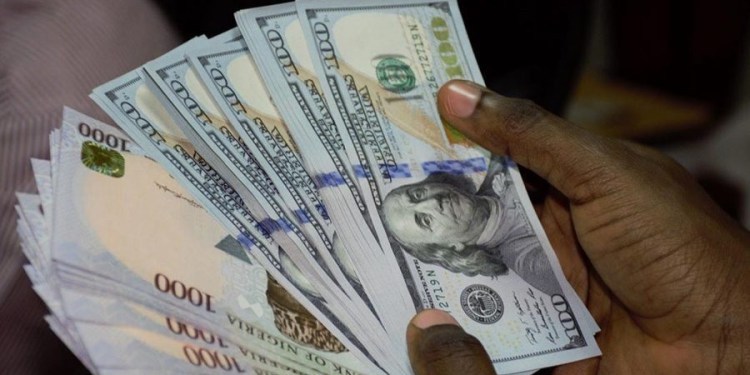

- Dollar Holds Near 98.92 As Fed Uncertainty Keeps Emerging-Market Currencies on Edge
The US dollar traded in a narrow range on Wednesday as investors held back ahead of key American inflation data and the Federal Reserve’s Jackson Hole symposium, leaving emerging-market currencies and commodity-linked economies such as Ghana exposed to the next shift in global monetary expectations.
The US dollar index, which measures the greenback against a basket of six major currencies, was little changed at 98.918 in early Asian trading after snapping a three-day winning streak on Tuesday.
The muted trading reflected investor caution ahead of the release of July US personal consumption expenditures data later on Wednesday, a key inflation measure closely watched by the Federal Reserve. Markets are also preparing for the annual Jackson Hole gathering, where policymakers are expected to provide fresh signals on the trajectory of interest rates.
For emerging markets, the significance of both events extends beyond the dollar itself.
A softer inflation reading could strengthen expectations of easier US monetary policy, potentially weakening the dollar and improving investor appetite for emerging-market assets. A hotter-than-expected print, however, could revive expectations that US rates will remain higher for longer, potentially tightening global financial conditions and putting renewed pressure on emerging-market currencies.
For Ghana, the balance matters because movements in the dollar influence imported inflation, foreign-exchange market conditions, external debt service costs and investor appetite for cedi-denominated assets.
Global risk sentiment received some support from signs of easing Middle East tensions.
Westpac analysts cited efforts to reopen the Strait between Iran and Oman and plans to return US diplomatic personnel to the region as factors weighing on oil prices and improving broader market confidence.
Brent crude fell 2.10% to US$86.68 per barrel during Asian trading.
For Ghana, lower crude prices can provide some relief through the import channel, particularly if declines are sustained and ultimately feed through into domestic petroleum pricing.
The effect, however, is not entirely one-sided. Ghana is both a petroleum importer and a crude producer, meaning lower international oil prices can reduce import costs while also weighing on petroleum export earnings.
The net impact therefore depends on the scale and persistence of the price movement.
Gold also weakened, falling 0.50% to US$4,633.94 per ounce, although the precious metal remained up 15.00% for the month.
For Ghana, which is one of Africa’s major gold producers, bullion prices remain a critical external-sector variable.
Elevated gold prices have supported export earnings, mining-company cash flows and foreign-exchange inflows, while also strengthening the fiscal significance of the mining sector.
A sustained retreat would therefore matter for Ghana’s trade and external balances, although prices remain historically elevated despite Wednesday’s decline.
The euro was steady at US$1.1675, while sterling was unchanged at US$1.3647.
The Japanese yen also held broadly steady at ¥159.14 per dollar, remaining stronger than levels that recently prompted joint intervention by US and Japanese authorities.
A Reuters poll showed that a majority of economists expect the Bank of Japan to raise interest rates again in September, potentially adding another layer of uncertainty to global capital flows.
The Australian dollar was 0.10% firmer at US$0.7172 after underlying inflation rose at an annualised rate of 3.60%, while the New Zealand dollar slipped 0.20% to US$0.5962 ahead of next week’s Reserve Bank of New Zealand decision.
Markets overwhelmingly expect New Zealand’s central bank to raise its policy rate by 25 basis points to 2.75%.
Digital assets continued to recover, with bitcoin rising 0.80% to US$78,829.03 and ether gaining 0.70% to US$2,453.10.
Bitcoin and ether were up 25.00% and 31.00%, respectively, so far in August, reflecting renewed interest in trades linked to concerns about long-term currency debasement.
For Ghana, the immediate issue is less the daily movement in the dollar index than what this week’s US data and Jackson Hole messaging could mean for the global interest-rate cycle.
A weaker dollar and softer US yields would generally improve conditions for emerging markets by easing external financing pressure, supporting portfolio flows and reducing the cost of servicing dollar-denominated obligations.
That could also provide additional support to the cedi, particularly if domestic foreign-exchange inflows remain strong.
The opposite scenario would be more challenging.
If US inflation proves persistent and Fed officials signal that rates will remain restrictive for longer, the dollar could strengthen and global investors could become more selective about emerging-market exposure.
For Ghana, that would increase the importance of maintaining adequate foreign-exchange liquidity, preserving investor confidence and sustaining the external buffers provided by gold exports, remittances and other inflows.
The current calm in currency markets therefore masks a potentially important inflection point.
With the dollar pinned close to 98.92, gold above US$4,600 an ounce and Brent crude below US$87, global markets are effectively waiting for the next macroeconomic signal.
For Ghana and other emerging economies, the direction of that signal could quickly determine whether the external environment becomes more supportive or more difficult in the weeks ahead.

