


- Domestic Workers in Zimbabwe Get US$90.00 Minimum Wage Amid Currency Strains
Zimbabwe has raised the minimum monthly wage for domestic workers to US$90.00, offering some relief to one of the country’s lowest-paid categories of workers but still leaving them behind peers in South Africa, Egypt and Kenya.
The new wage structure takes immediate effect and also sets the minimum monthly wage for workers in unclassified operations at US$270.00.
The increase forms part of government efforts to cushion low-income workers against rising living costs at a time when Zimbabwe continues to battle weak household purchasing power, currency pressures and high costs for food, transport, housing and electricity.
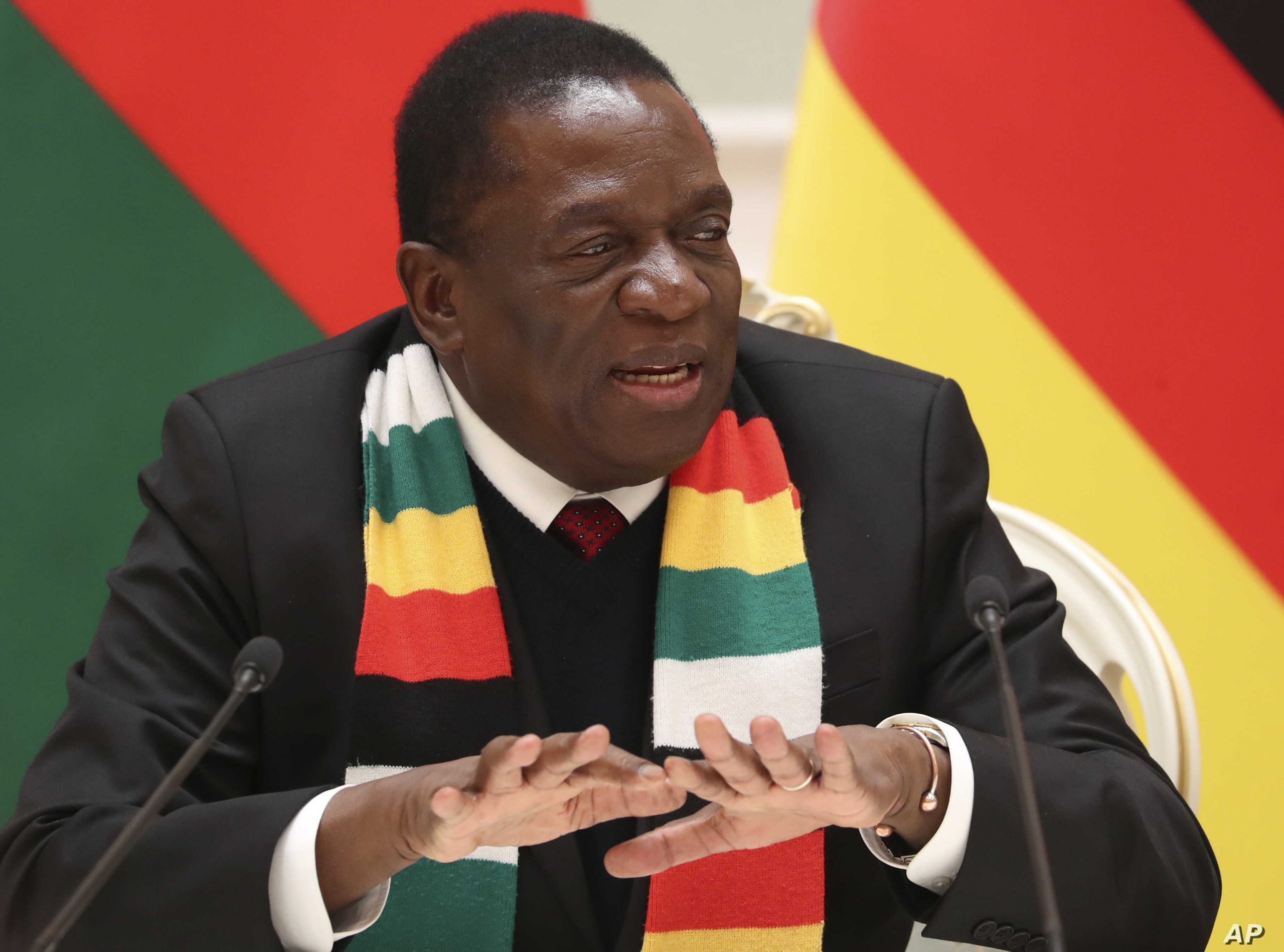
According to Zimbabwe’s Information Minister Soda Zhemu, the wage review was carried out under Section 19 of the Labour Act following recommendations from the Tripartite Wages and Salaries Advisory Council.
“Accordingly, the minimum wage for workers in unclassified operations is henceforth pegged at US$270 payable in local currency,” Mr Zhemu said during a post-Cabinet media briefing.
“The minimum wage for domestic workers will be US$90,” he added.
Under the revised schedule, yard workers and gardeners will earn at least US$90.00 per month, while cooks and housekeepers will receive a minimum of US$99.00.
Child minders and persons caring for elderly people or those with disabilities will receive at least US$108.00, while carers for the elderly or persons with disabilities who hold a Red Cross certificate will earn a minimum of US$117.00.
The wage increase is modest but politically and socially important.
Domestic work remains one of the most vulnerable forms of employment across many African economies. Workers in the sector often face low pay, weak bargaining power, informal work arrangements and limited enforcement of labour protections.
In Zimbabwe, the new US$90.00 floor is higher than the US$85.00 previously applicable to domestic workers. But the adjustment still leaves domestic workers below comparable wage floors in some of the continent’s larger economies.
South Africa, for example, raised its national minimum wage to R30.23 an hour from March 1, 2026, with the rate also applying to domestic workers. Based on a 45-hour working week, that translates into about R5,894 a month, equivalent to roughly US$364.00.
Egypt raised its private-sector minimum wage to EGP7,000 a month in March 2025, equivalent to about US$135.00.
Kenya implemented a 6.00% increase in statutory minimum wages in November 2024. Under the revised schedule, general labourers, including gardeners and domestic workers in Nairobi and other major cities, must earn at least KSh16,113.75 a month, equivalent to about US$124.00. That figure excludes statutory housing allowance where employers do not provide accommodation.
By comparison, Zimbabwe’s US$90.00 minimum wage for domestic workers remains significantly below South Africa, Egypt and Kenya.
It is, however, higher than Nigeria’s national minimum wage of N70,000, equivalent to about US$51.00, after Nigeria raised its wage floor from N30,000 to N70,000 in July 2024.
The comparison shows how wage protection differs widely across African economies, depending on labour market structure, inflation, exchange rates, enforcement capacity and political choices.
Zimbabwe’s US$270.00 minimum wage for workers in unclassified operations is comparatively stronger in US-dollar terms. It exceeds statutory monthly wage floors in Nigeria, Kenya and Egypt.
Unclassified operations cover workers whose employers are not under National Employment Councils, which typically negotiate sector-specific wages and conditions in organised industries.
For domestic workers, however, the new wage floor still raises a basic question: will the increase be enforced?
Business Insider Africa noted that some domestic workers in Zimbabwe earn as little as US$50.00 a month, particularly where employers do not comply with statutory wage requirements.
That means the real impact of the wage increase will depend not only on the legal announcement, but also on whether workers are aware of their rights, whether employers comply and whether authorities have the capacity to enforce the rules.
Zimbabwe operates a multicurrency system in which the US dollar circulates alongside Zimbabwe Gold, or ZiG. Although the new wage rates are linked to the US dollar, employers are allowed to pay in local currency at the applicable exchange rate.
That creates a potential challenge for workers.
If the local currency weakens or if the exchange rate used in wage payment differs from what workers face in the market, the real value of the wage floor could be eroded.
Zimbabwe has a long history of currency instability, including repeated currency failures and periods of hyperinflation. As a result, many businesses and households continue to prefer the US dollar for transactions and savings.
Reserve Bank of Zimbabwe Governor John Mushayavanhu has argued that the ZiG is undervalued and could be worth almost twice its prevailing market value based on the country’s gold and foreign exchange reserves.
For low-income workers, that confidence issue is not theoretical. It affects food prices, transport fares, rent, savings and the ability to plan household budgets.
The wage review comes as Zimbabwe tries to stabilise its economy after years of inflation, depreciation and reduced purchasing power.
The country has seen some improvement from stronger agricultural production and higher earnings from gold and other minerals. The central bank expects growth of at least 5.00% in 2026, supported by favourable prices for gold and platinum-group metals.
But the recovery remains constrained by deep structural weaknesses.
Zimbabwe continues to face severe borrowing limitations because of long-standing debt arrears. It has remained largely excluded from international capital markets and most official financing for more than two decades.
In April 2026, the International Monetary Fund approved a 10-month staff-monitored programme for Zimbabwe aimed at strengthening fiscal discipline, monetary stability and economic governance.
The programme does not provide a new IMF loan. Instead, it is meant to help Zimbabwe build a credible reform record as it works toward debt restructuring, arrears clearance and renewed access to international financing.
Zimbabwe’s public debt stood at US$23.40 billion in the latest reported figures, including US$13.60 billion in external obligations. The IMF has estimated arrears to official creditors at US$7.40 billion.
This wider economic context explains why wage policy is difficult.
Government is under pressure to protect workers from rising living costs, but businesses are also operating in a fragile economy marked by currency uncertainty, limited credit access and weak formal financing.
If wage floors are too low, workers remain trapped in poverty. If wage rules rise without enforcement or productivity growth, they may be ignored in informal sectors.
Domestic work is particularly difficult to regulate because much of it takes place inside private homes, where labour inspection and formal contracts are often limited.
That makes public awareness and worker organisation important.
The new US$90.00 floor can only improve living conditions if domestic workers know the minimum rates, employers respect them and authorities take compliance seriously.
For now, the wage increase gives Zimbabwe’s domestic workers some relief, but not enough to close the regional gap.
The policy is a recognition that low-income earners need protection in a high-cost economy. But its real test will be whether the new rates translate into money actually paid to workers and whether that income retains value in a fragile currency environment.

