


- Dr Asiama Welcomes Families as New Ghana Cedi Notes Prepare to Enter Circulation
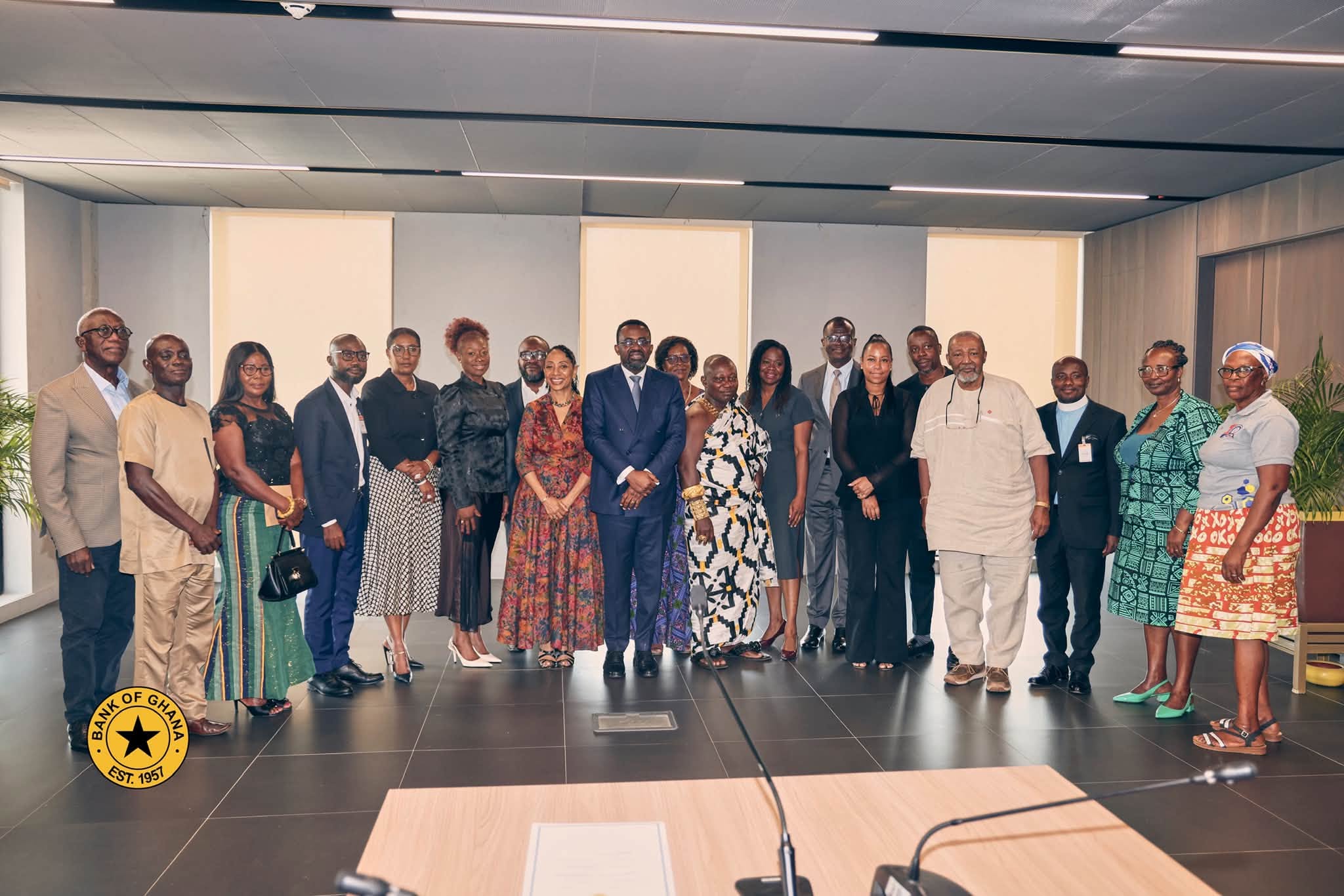
As Ghana prepares to put its new Heritage Series banknotes into circulation, Bank of Ghana Governor Dr Johnson Pandit Asiama has met families of the national figures whose portraits appear on the notes, describing the currency as a way to bring the country’s history into everyday life.
The meeting, held at Bank Square on Wednesday, brought together relatives of eight distinguished Ghanaians honoured in the new series. In a post on X, Dr Asiama thanked the families for allowing the Bank to recognise their loved ones.
“These notes carry more than value; they carry our history,” he wrote, adding that from December 1, Ghanaians would hold “a piece of that legacy” in their hands.
The portraits represent Agnes Oforiwa Tagoe-Quarcoopome, Cardinal Peter Porekuu Dery, James Emmanuel Kwegyir-Aggrey, Justice Annie Jiagge, Dr Ephraim Amu, Theodosia Salome Okoh, Kofi Annan and Ghana’s first president, Dr Kwame Nkrumah. Their contributions span commerce, religion, education, justice, culture, national identity, diplomacy and the country’s political history.
The meeting gives the launch a human dimension: the portraits are not simply design choices but representations of people whose contributions are part of Ghana’s collective memory. The families’ reported pride and appreciation also provide an important endorsement of the tribute, though the long-term meaning of the notes will depend on how well the public understands the people and values they represent.
The new notes will enter circulation on December 1, alongside the existing series, which will remain legal tender. The Bank has presented the redesign as both a modernisation of currency and an opportunity to celebrate Ghanaian heritage.
The upgraded notes are intended to improve security, durability and currency management, while featuring national figures, historic sites, monuments and Adinkra symbols.
That combination matters. A banknote is used every day, often without much thought. By placing national figures and symbols in people’s hands, the Heritage Series turns ordinary transactions into repeated encounters with history.
But a portrait can prompt curiosity only if the story behind it is made accessible. Public education will need to go beyond showing people how to identify security features: it can also explain why each figure was selected and what their work means to the country.
The Bank’s engagement with the families comes after public questions were raised about the portrait of Theodosia Salome Okoh, designer of Ghana’s national flag, on the new GH¢50 note. The Bank said the portrait was developed from several photographs of Okoh and not from an image of her sister, Dr Letitia Obeng.
It acknowledged that artistic and technical adjustments made for banknote production contributed to perceived differences in her appearance and to the likeness noted by members of the public.
That episode showed that the symbolism of currency is not insulated from scrutiny. A portrait on a national banknote carries an implicit claim: that the person has been identified accurately and is being honoured with care.
The Bank’s clarification addressed the concern, while the meeting with families offered a further opportunity to recognise the personal significance of the tribute.
The encounter should not be treated as a substitute for clear communication about the redesign. Public confidence in new currency depends on practical questions too: how to distinguish genuine notes, whether old notes can still be used and whether the change affects the value of money.
The Bank has said the existing series will continue to circulate alongside the Heritage notes. Its public education campaign will be important in preventing confusion and countering misinformation during the transition.
There is also a distinction worth keeping clear: a new design can strengthen a currency’s security and durability, but it does not, by itself, increase the cedi’s purchasing power.
That depends on broader economic conditions and the policies that support price and financial stability.
The Heritage Series gives the currency cultural meaning; the Bank’s operational case for the redesign rests on security, resilience and efficient management.
The Bank has described the series as an upgraded design, noting that the existing core banknote designs had been in circulation for more than two decades.
Its stated objectives include stronger protection against counterfeiting and notes that can better withstand frequent use. The historical content adds another layer to that practical purpose.
The Governor’s meeting with the families helps connect those two dimensions. The notes are instruments of payment, but they also express what the nation chooses to remember.
That makes the selection of figures, the accuracy of their representation and the explanation of their contributions matters of public interest.
The December 1 rollout will put the series into daily use. Whether it becomes more than a redesign will depend on what follows: accessible education, careful handling and an effort to ensure that the people featured are remembered for their contributions, not merely recognised as images on denominations.
For now, the Bank has made clear that the notes are intended to carry both economic and cultural purpose. As Dr Asiama put it, they carry “more than value”. The public will soon decide how fully that history travels with them.

