

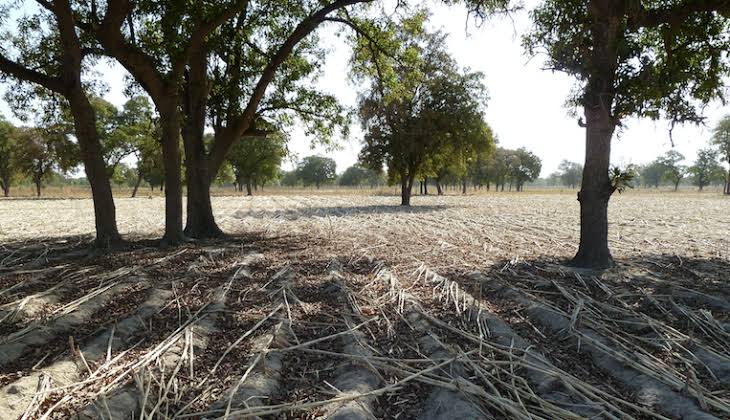

- Shea Industry Faces Long-Term Supply Risk As Tree Losses Threaten Rural Incomes
West Africa’s shea industry is facing mounting supply and market risks as the region loses an estimated 8 million shea trees every year, raising concerns over the long-term sustainability of a value chain that supports millions of rural households and feeds into global food, cosmetics, pharmaceutical and confectionery markets.
The warning, issued by the Global Shea Alliance during the 2026 Shea Day celebrations in Buipe, points to a deepening crisis in the region’s shea parklands, where agricultural expansion, population growth, bushfires, unsustainable tree felling and climate change are steadily eroding the natural resource base behind one of Africa’s most important non-timber forest industries.
The Alliance cautioned that unless urgent conservation and restoration measures are scaled up, global demand for shea products could exceed available supply by 2044. Such an outcome would not only threaten rural livelihoods across producing countries such as Ghana, Burkina Faso, Mali, Nigeria and Côte d’Ivoire, but could also disrupt international supply chains that rely on shea butter as a key input.
Shea is more than a commodity. Across northern Ghana and much of West Africa’s savannah belt, it is a source of income, a women-led enterprise base, a climate-resilience asset and a major contributor to rural economic activity. Millions of women collect, process and trade shea nuts, making the sector central to household welfare, local enterprise and inclusive growth.
That is why the annual loss of 8 million trees carries implications beyond the environment. It is a warning about future export earnings, rural employment, industrial supply, gender livelihoods and the competitiveness of West Africa’s shea economy in global markets.
The shea value chain has grown in importance as international demand for sustainably sourced natural ingredients rises. Shea butter is used widely in chocolate, margarine, cosmetics, soaps, creams and pharmaceutical products. This expanding demand should ordinarily create opportunities for producing countries to earn more foreign exchange, attract investment and deepen value addition.
But declining tree stocks could limit the region’s ability to benefit from that demand. If supply becomes structurally constrained, prices may rise in the short term, but producing communities could lose out over the longer term if fewer trees mean lower harvests, weaker processing volumes and reduced industrial reliability.
The issue is therefore both ecological and economic. A shrinking shea parkland means a shrinking productive base. For processors and exporters, it raises sourcing risks. For global buyers, it raises concerns about supply security. For rural women, it threatens income stability. For governments, it weakens a sector that could otherwise support agro-processing, exports and rural development.
The Global Shea Alliance said the deterioration of shea parklands requires an accelerated response through conservation, restoration and stronger community participation. Its Action for Shea Parklands initiative, launched in 2020, is being expanded to restore degraded landscapes through community nurseries, direct seeding, assisted natural regeneration and agroforestry.
The programme is built around three strategic pillars: restore, protect and promote. These pillars are intended to safeguard shea landscapes, improve long-term productivity and strengthen climate resilience in producing communities.
The restoration pillar focuses on rebuilding the tree base through nursery development, seedling planting and natural regeneration. Protection is aimed at reducing threats such as bushfires, indiscriminate cutting and unsustainable land-use practices. Promotion seeks to raise awareness of shea’s economic and environmental value while mobilising communities, governments and private-sector actors around conservation.
The emphasis on community participation is critical. Shea trees grow across landscapes where farming, settlement expansion and fuelwood demand compete with conservation. Protecting the trees therefore requires local ownership, incentives for communities and stronger alignment between environmental policy and rural economic needs.
Speaker of Parliament Alban Sumana Kingsford Bagbin described the shea industry as a strategic pillar of northern Ghana’s economy, particularly for women-led enterprises and rural communities. He highlighted plans for a proposed Northern Ghana Shea Resource Hub, an initiative expected to mobilise investment, deepen value addition, strengthen research and innovation, and improve market access across the value chain.
Such a hub could become important if it moves beyond symbolism into practical support for the sector. Northern Ghana needs stronger processing capacity, better aggregation systems, improved quality standards, research into tree regeneration, access to finance for women processors and more structured export linkages.
The shea industry has long suffered from a familiar African commodity problem: producing the raw material while capturing only a limited share of the final value. Greater investment in local processing, branding, certification and product development could increase returns for rural communities and position Ghana more strongly in the global shea market.
But value addition will be difficult to sustain if the resource base itself is declining. Factories cannot process trees that no longer exist. Export strategies cannot thrive on depleted parklands. And women-led enterprises cannot expand if annual nut availability becomes increasingly uncertain.
The Forestry Commission’s call for stronger collaboration among government, traditional authorities, development partners and the private sector therefore speaks to the scale of the challenge. Shea conservation cannot be left to isolated environmental campaigns. It must become part of national economic planning, climate policy, agricultural development and industrial strategy.
Traditional authorities also have an important role to play because many shea landscapes are governed through customary land arrangements. Community by-laws, fire management systems, protection of young trees and restrictions on indiscriminate felling can help reduce losses if backed by local leadership and enforcement.
The private sector, too, has a direct stake. Companies that depend on shea for exports and manufacturing should see tree conservation as supply-chain insurance, not charity. Investment in parkland restoration, traceability, community incentives and climate-smart sourcing will be essential if the industry is to remain globally competitive.
The symbolic planting of shea seedlings by national and traditional leaders at the close of the Shea Day event reflected growing recognition that the sector’s future will depend on protecting its natural capital. But symbolism must now be matched with measurable action.
The annual loss of 8 million trees should be treated as an economic alarm bell. It suggests that the foundations of the shea industry are being weakened even as global demand is rising.
For West Africa, the choice is clear. The region can protect, restore and upgrade the shea economy now, or face a future in which demand grows but supply weakens, prices become volatile, rural incomes suffer and global buyers look elsewhere for alternatives.
The shea tree is not only an environmental asset. It is a rural bank, a women’s enterprise platform, a climate buffer and an export resource. Losing it at the current pace is not just deforestation. It is economic self-sabotage.

