


- GCB Staff Back Stand-Alone Adolescent Health Centre to Tackle Access and Stigma in Maamobi
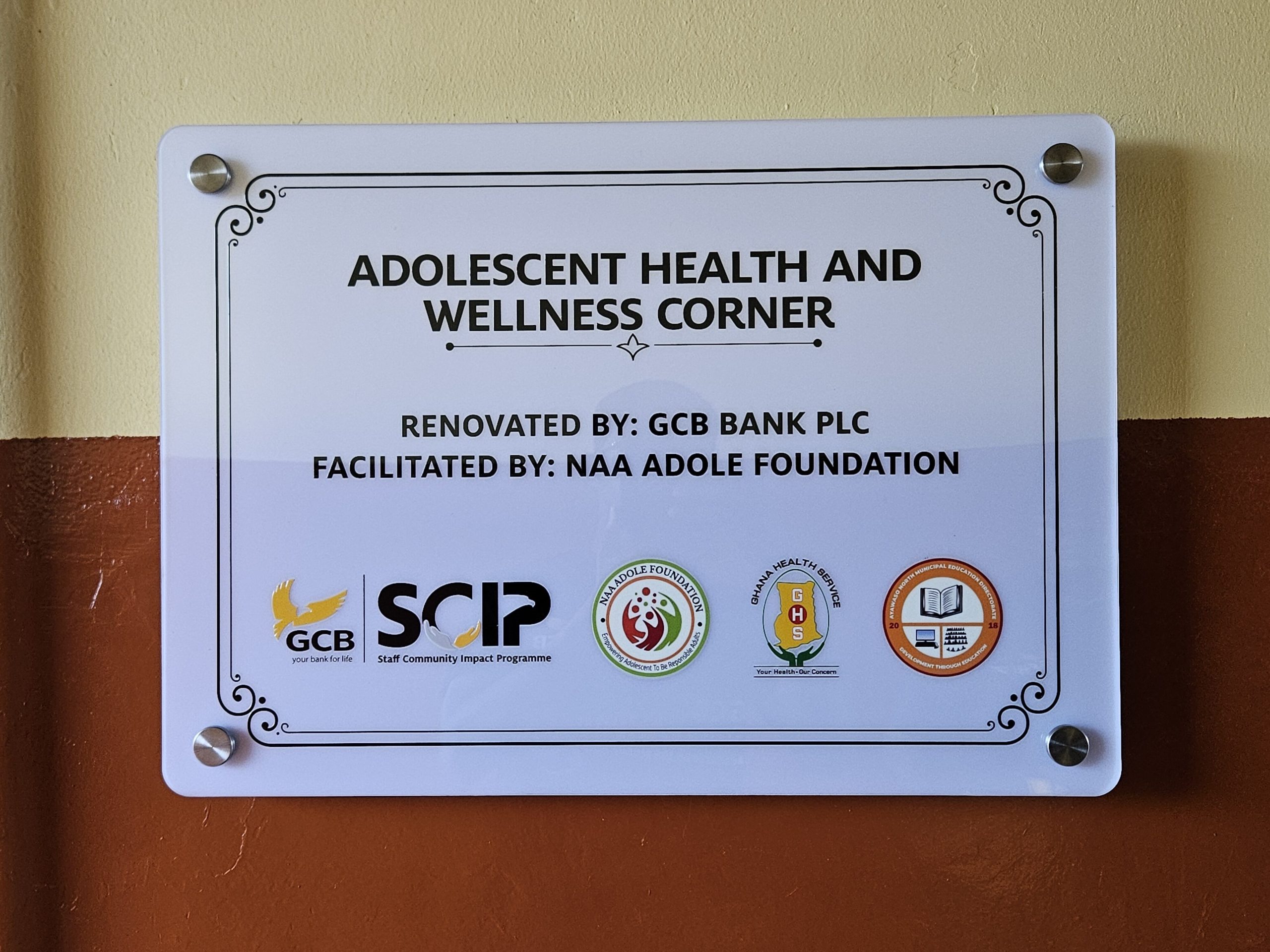
Employees of GCB Bank PLC have supported the establishment of a stand-alone Community Adolescent Health Corner in Maamobi, seeking to remove privacy and stigma barriers that have discouraged some young people from accessing health information, counselling and other support services.
The facility, located within the Ayawaso North District, forms part of GCB Bank’s 2026 Staff Community Impact Programme, an employee-led initiative through which more than 4,500 staff have been organised into 95 groups to implement 95 community projects nationwide between August and September. The programme is intended to positively affect up to one million people across Ghana.
The Maamobi intervention responds to concerns over low utilisation of adolescent health services in the district.
Previously, such services were provided from a facility within the Family Planning Unit of the Maamobi General Hospital. According to GCB, concerns about privacy and the stigma associated with young people visiting a family-planning clinic made some adolescents reluctant to seek information and support.
The new stand-alone facility has therefore been designed to offer a more private and youth-friendly environment where adolescents can access health information, counselling, psychosocial support, basic health screening and referrals to appropriate healthcare providers where necessary.
The intervention broadens the traditional idea of an adolescent health centre by combining healthcare with education, recreation and personal development.
Young people who use the facility will be able to participate in reading activities, educational games, movie sessions, life-skills training and talent-development programmes, particularly during school vacation periods.
The centre is also expected to support teenage mothers and out-of-school youth through vocational and entrepreneurship training in baking, bead-making, soap production, ICT, fashion design and financial literacy.
That wider model reflects an attempt to address some of the social and economic factors that can shape adolescent wellbeing rather than treating healthcare as an isolated service.
The centre is expected to primarily serve adolescents between the ages of 10 and 19, while parents, caregivers, schools and the wider Ayawaso North community are expected to benefit indirectly through stronger support systems for young people.
Sadat Laminu, Head of Corporate Affairs at GCB Bank, said the project demonstrates the bank’s approach to community support through practical, locally identified interventions.
“Young people need more than access to information. They need safe spaces where they can seek guidance, ask questions and receive support without fear of judgement,” he said.
“Through SCIP, our employees are identifying these kinds of needs within their communities and helping to create solutions that can make a meaningful difference. Investing in young people today is an investment in healthier, more confident and more resilient communities tomorrow.”
For the GCB Accra Central team involved in the project, the decision to support a separate adolescent facility was driven particularly by the role privacy can play in whether young people seek care.
Juliet Onny, Accra Central Zonal Manager of GCB Bank, said some adolescents had been reluctant to use available services because of the environment in which they were being delivered.
“By supporting a dedicated adolescent health centre, we wanted to help create a space where young people feel comfortable seeking information, asking questions and receiving support,” she said.
She added that the facility’s combination of healthcare, learning and skills development should help young people make better life choices while creating opportunities for personal growth.
The project also extends beyond the physical facility. GCB said community outreach activities will engage parents, schools, religious institutions and community leaders on adolescent health and wellbeing, with the objective of raising awareness and encouraging greater use of available services.
Officials of the Ayawaso North District Health Directorate have welcomed the initiative, saying a dedicated facility should provide a more accessible and welcoming environment for adolescents seeking health information and counselling.
The centre will be managed by trained healthcare professionals and volunteers in partnership with the District Health Directorate and other community stakeholders. Youth-focused organisations, educational institutions, non-governmental organisations and the Naa Adole Foundation are also expected to support continuing programmes, skills training and outreach activities.
The Maamobi project is the 19th of GCB Bank’s 95 staff-led community projects for 2026.
The wider SCIP programme covers healthcare, education, water and sanitation, social protection, environmental sustainability, youth development, community safety and infrastructure. Employees contribute their time, skills and resources as part of what the bank describes as an effort to strengthen volunteerism alongside its formal corporate social responsibility activities.
For GCB, the significance of the Maamobi facility lies less in the construction of another community centre than in whether it succeeds in changing adolescent behaviour around seeking help.
If concerns over privacy and stigma have been enough to keep young people away from existing services, then creating a separate and confidential environment addresses a practical barrier that conventional health infrastructure alone may not solve.
The longer-term test will be sustained utilisation, effective community engagement and whether the centre can remain active beyond its initial launch.
But by combining confidential healthcare access with counselling, skills development and community outreach, the project gives adolescent support a wider social-development dimension, one aimed not only at treating health needs when they arise, but at giving young people a safer environment in which to seek guidance before problems become more difficult to address.

