

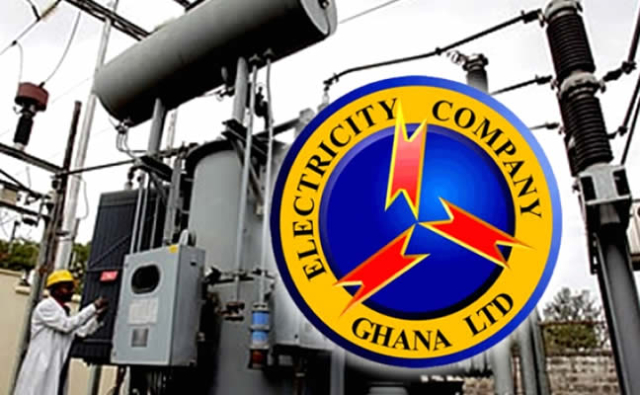

- ECG Commits GH¢3m to Strengthen Power Supply Across Accra West
The Electricity Company of Ghana has invested more than GH¢3 million in the first quarter of 2026 to improve electricity reliability and stabilise power supply across 40 communities in its Accra West Region.
The intervention covered six operational districts and formed part of a broader programme to address transformer overloads, low-voltage incidents, phase outages and recurring supply disruptions in densely populated and fast-growing urban communities.
Speaking during a technical review meeting in Accra, the Accra West Regional General Manager of ECG, Sariel Etwire, said the company remained committed to improving service quality and strengthening network stability as electricity demand continues to rise across residential, commercial and peri-urban areas.
According to ECG, pressure on the distribution network has been worsened by illegal connections, vandalism and unchecked vegetation growth around power infrastructure. These challenges, the company said, continue to affect transformer performance and contribute to outages during peak demand periods.
Beneficiary communities under the first-quarter intervention included Amasaman, Sarpeiman, Pokrom, Odumase Junction, Gbawe, Anyaa Market and Ablekuma Joma. In these communities, overloaded or damaged transformers were either replaced or upgraded to improve supply reliability.
The investment comes at a time when ECG is under growing pressure to improve power distribution reliability, reduce technical losses and respond to rising electricity consumption driven by urban expansion and increased commercial activity.
The Accra West Region has seen rapid population growth in recent years, with communities such as Amasaman, Gbawe, Anyaa and Ablekuma expanding significantly. This has placed additional demand on existing transformers, cables and distribution lines, many of which were originally designed for lower load levels.
ECG says the latest intervention forms part of an ongoing large-scale transformer installation and upgrade exercise expected to continue across its operational districts.
The Accra West investment also fits into ECG’s wider national infrastructure programme announced earlier this year. Under that strategy, the company is pursuing a GH¢3.46 billion programme to modernise distribution infrastructure, reinforce substations and expand network capacity across several regions.
The broader programme includes the installation of 2,500 transformers, replacement of deteriorated poles, upgrades to underground cable systems and expansion of substation infrastructure.
For ECG, the objective is to reduce overload-related outages, improve voltage quality, cut technical losses and strengthen the resilience of the distribution grid.
Power reliability remains a major issue for households and businesses, particularly in urban communities where population growth and commercial activity have outpaced electricity infrastructure expansion. Frequent outages and voltage instability can damage appliances, disrupt business operations and increase costs for small enterprises.
The latest investment is therefore expected to provide some relief to residents and businesses in the affected communities.
However, ECG’s success will depend not only on infrastructure upgrades, but also on enforcement against illegal connections, improved maintenance culture, vegetation control and faster response to faults.
The company’s warning about vandalism and illegal connections is significant. These activities do not only affect revenue mobilisation; they also weaken the network, create safety risks and increase the likelihood of outages for paying customers.
ECG’s Accra West intervention is therefore both a technical investment and a service reliability measure. It signals an attempt by the utility to move from reactive repairs to more targeted network reinforcement in areas experiencing rapid load growth.
For communities that have experienced unstable supply, the transformer replacements and upgrades could improve voltage levels and reduce pressure on local distribution infrastructure.
For ECG, the bigger test will be whether the ongoing investment programme can deliver measurable improvements in power reliability across the country, especially as demand continues to rise and the distribution network remains one of the most critical pressure points in Ghana’s power sector.

