


- Eni’s Local Content Promise Raises the Stakes for Ghana’s Oil-Service Sector Upstream
Eni Ghana has pledged to expand opportunities for Ghanaian businesses in the upstream petroleum sector, but the next measure of local content will be whether domestic firms can move beyond supplying routine goods and services to take on more technically demanding work.
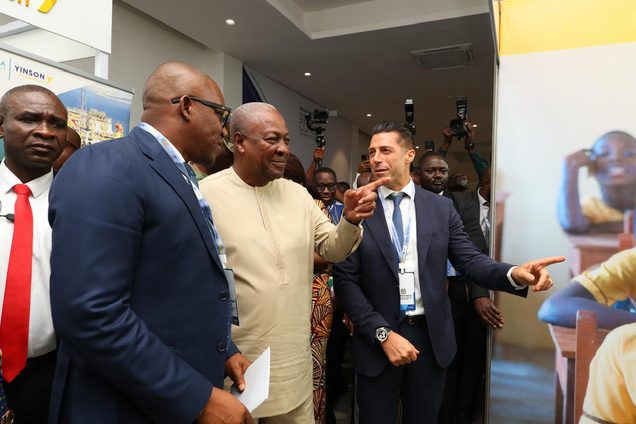
At the 2026 Local Content Conference and Exhibition in Takoradi, the company’s Managing Director, Federico Ricco, said the next priority was to widen the role of Ghanaian companies in major upstream projects.
He pointed to engineering, construction and project execution as areas where firms that have built capacity should be considered for increasingly complex assignments.
The commitment is significant because it shifts attention from how many local companies participate to what they are able to do, what value they retain and whether their capabilities can endure between projects.
A Ghanaian supplier that wins a one-off contract may be counted as local content. A company that develops specialist skills, invests in equipment, employs trained professionals and competes for regional work represents a deeper industrial gain.
Eni said approximately 90% of its workforce in Ghana is Ghanaian, while a substantial share of its operational activity is carried out by local companies. Ricco described local content as “not merely a regulatory requirement but an integral part of how Eni operated, developed its projects and created lasting value”.
Those figures point to progress in employment and procurement. They do not, on their own, show how much of the industry’s most valuable work is performed by Ghanaian-owned companies, how much technology and expertise has transferred to them, or how competitive they have become in activities that typically require large financing and specialist experience.
That is where the pledge faces its real test. Engineering and construction contracts can involve substantial financial guarantees, complex safety requirements, advanced technology and the ability to manage projects across several stages.
If local businesses are to compete for them, opportunity must come with a path to qualification: predictable procurement calendars, transparent standards, access to finance, joint ventures that build domestic expertise and the systematic development of local professionals.
The conference theme, “Enriching Local Content for Sustainable Growth”, captures the distinction. Local participation can increase without producing a durable industrial base if firms remain dependent on foreign partners for high-value services or if their work disappears when a particular project ends.
A resilient supply chain would allow Ghanaian firms to retain skilled workers, maintain equipment and bid for work across successive developments.
That continuity matters in an industry defined by long investment cycles. Ricco said a steady pipeline of projects would give Ghanaian companies the confidence to sustain investments in people, equipment and technical capabilities. Without that pipeline, firms may struggle to justify the cost of training and specialised assets.
If projects do advance, however, operators and regulators will need to ensure that local firms are ready before procurement decisions are made, rather than being brought in only after major contracts have been structured.
The issue extends beyond Eni. Ghana’s upstream sector needs new exploration and development investment to replenish resources and support production over time. Ricco said additional resources had been identified through Eni’s exploration work and that their development and eventual production were a shared priority with government and partners. He also argued that continued exploration of new blocks is necessary to maintain a pipeline of projects.
But an identified resource is not yet a producing field, and a pledge to create opportunities is not a contract award. The resource must be evaluated, its commercial potential established and investment decisions made.
Any resulting project would then need to be translated into procurement plans that give capable Ghanaian firms meaningful routes into the work.
Ricco said the government and Petroleum Commission had made efforts to improve the sector’s competitiveness and attract investment. He said these should lead to concrete agreements and projects reaching Final Investment Decision, or FID.
That distinction is important: investment announcements can raise expectations, but an FID signals that a project has passed key commercial and technical tests and is moving towards execution.
For local firms, a project reaching FID is only the beginning. The next questions are what contracts will be available, how early suppliers can prepare, whether bidding requirements are accessible to domestic companies and what mechanisms will ensure that knowledge remains in Ghana after foreign contractors complete their work.
The answers determine whether upstream investment expands local industry or primarily brings in services from outside.
The regional opportunity could provide a further test. Ricco said Ghanaian firms could position themselves as service providers across West Africa, where he expects significant upstream investment in the coming years.
Regional expansion would be a meaningful measure of competitiveness: companies winning work beyond their home market would demonstrate that the capabilities developed under Ghana’s local-content framework can meet broader industry standards.
That prospect also raises a practical challenge. A company may be locally owned but still lack the scale, specialist certifications or working capital needed to serve multiple projects.
Partnerships can bridge those gaps, but they only deepen local capability when Ghanaian firms gain technical responsibility and commercial knowledge, not simply a place in a consortium’s branding.
The policy question is therefore not whether international operators should work with local businesses. It is how that relationship is structured. Operators need suppliers that can meet demanding standards and deliver reliably.
Ghana needs those engagements to build domestic expertise and retain a greater share of the economic value generated by petroleum activity. The two objectives can reinforce each other when skills transfer and supplier development are built into project planning.
Eni’s pledge provides an opening, but its impact will be judged through procurement and performance. The company’s stated ambition is to expand the participation of firms capable of supporting complex activities and to help them become regional providers. The measure of success will be whether more Ghanaian firms gain that work, whether they develop stronger technical and financial capacity, and whether those gains continue beyond a single project.
For Ghana, local content is becoming a question of industrial depth. A workforce that is overwhelmingly Ghanaian is valuable; so is a strong local supply chain.
The next step is to ensure that domestic firms do not remain confined to the margins of complex projects, but build the expertise and scale to help deliver them.

