

E&P’s Tarkwa Fleet Expansion Signals Readiness for Ghana’s Biggest Indigenous Mining Transition
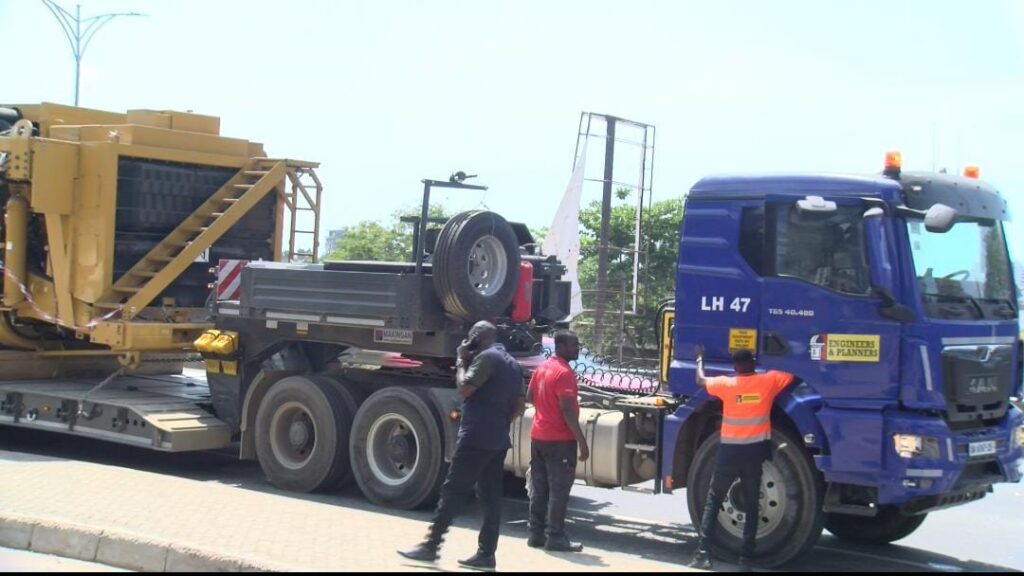
Engineers & Planners (E&P) has dispatched some 30 semi-knockdown Caterpillar 785D dump trucks to its operational base in Tarkwa, in a move that goes beyond routine equipment delivery and points to a broader capital-intensive expansion strategy in Ghana’s mining sector.
The E&P’s 30 semi-knockdown Caterpillar 785D dump trucks to Tarkwa is more than a show of equipment strength. It is a clear signal to the market that one of Ghana’s most established indigenous mining contractors is preparing for a bigger strategic role in the country’s gold industry. This delivery, described as the final batch in a broader order of high-capacity dump trucks, deepens E&P’s fleet at a time when the company is under growing preparation not simply as a contractor, but as the next owner-operator of a major mine. In that sense, this is not just a logistics story. It is an industrial strategy story.
The timing matters. Gold Fields’ transition arrangement at the Damang mine runs to April 18, 2026, after which Ghana is expected to move into the next phase of the asset’s future. And all media reports points to the government hoping to revive and have the mine operated, having asked Goldfields to engage with E&P who have served as the contractor at the mine for about 25 years, to continue with the mining by taking over fully. Against that backdrop, the Tarkwa fleet build-out shows a visible proof point of operational readiness.
In mining, equipment depth is not cosmetic. It is one of the clearest indicators of whether a company can sustain high-volume output, manage haulage economics, reduce bottlenecks and absorb the pressures that come with operating a large-scale asset. A deployment of 30 Caterpillar 785D units to Tarkwa therefore sends a message far beyond site efficiency. It suggests E&P wants to be seen as ready to move from subcontracting into the far more demanding world of full mine operation. That leap becomes one of the most consequential shifts in Ghana’s modern mining history.
The strategic importance of that cannot be overstated. Multinational operators with deeper balance sheets, longer access to global capital, and stronger procurement networks have dominated Ghana’s large-scale gold industry for decades. An indigenous firm stepping into ownership and operational control of a large mine, such as Damang, would mark a significant reordering of who captures value, who makes operating decisions, and who sets the terms of long-cycle capital deployment within Ghana’s extractive economy.
E&P’s own capital narrative shows its investment in heavy-duty mining equipment dates back to 2002. It has also pointed to an estimated $650 million already committed to Tarkwa and Damang operations as of 2018, alongside plans to further invest around $1.2 billion across the two mines. Even with the need to test the execution of that pipeline, the numbers are striking. A planned $1.2 billion in additional investment is not the profile of a company thinking transactionally or preparing for short-cycle contract work. It is the profile of a firm positioning for scale, permanence and operating control.
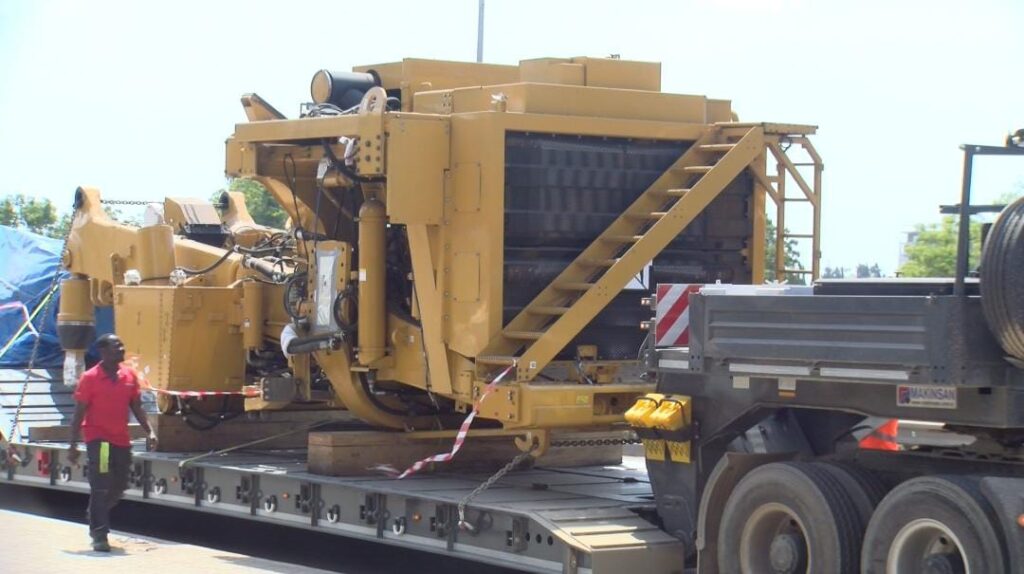
That is why the latest fleet dispatch matters so much. It provides physical expression to a larger strategic argument: that E&P has the equipment, depth, operational familiarity, and confidence to compete at a level traditionally reserved for multinational mining houses. In practical terms, the additional trucks should improve turnaround times, strengthen haulage performance and support higher throughput in Tarkwa. In strategic terms, they function as market evidence that the company is building itself for a larger future.
With the final batch now delivered, the company is expected to further strengthen its logistics and haulage performance in Tarkwa, positioning itself for improved output and a stronger footing in an increasingly capital-intensive mining landscape.
The clearest reading of the moment is this: E&P is utilising visible capital expenditure to signal to the market its readiness to compete with the multinational companies that have long dominated large-scale mining in Ghana and throughout Africa. With Damang ultimately becoming the platform for that breakthrough on April 18, the company’s latest move to Tarkwa looks increasingly like more than an equipment story. It is a statement of arrival.
https://drive.google.com/file/d/1p02gphqkKtitPWYsJNh0ayTAT1nkQSjx/view?usp=sharing

