



- Exim Bank Moves to Align Financing with Global Sustainability Standards
Ghana Export-Import Bank has formally joined the United Nations Global Compact, positioning the development finance institution to strengthen its credibility with international lenders, development finance institutions and strategic investors.
The bank says its membership of the world’s largest corporate sustainability initiative marks a major step in embedding environmental, social and governance standards into its operations, lending decisions and institutional governance.
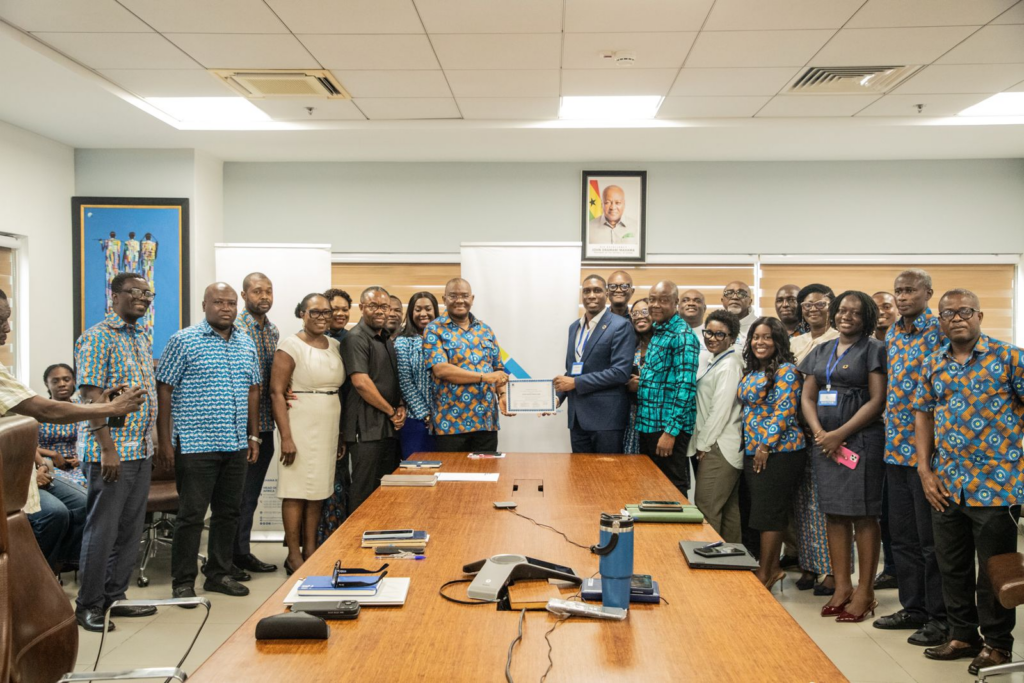
Chief Executive Officer of Ghana Exim Bank, Sylvester Adinam Mensah, speaking on the sidelines of the signing ceremony in Accra on Thursday, described the membership as a strategic milestone that aligns the institution with globally recognised sustainability principles.
He said the move reflects the bank’s commitment to responsible business practices, sustainable financing and long-term economic development.
According to him, financial institutions have a critical role to play in promoting environmental protection, responsible investment and inclusive growth by ensuring that the projects they finance meet minimum sustainability standards.
Mr Mensah said Ghana Exim Bank has now adopted the 10 principles of the UN Global Compact, which cover human rights, labour, environmental stewardship and anti-corruption.
The adoption of the principles means sustainability considerations will become an integral part of the bank’s financing decisions, investment appraisals and internal governance systems.
He noted that Ghana Exim Bank’s admission into the UN Global Compact followed nearly a year of preparation, during which the institution worked to meet governance and sustainability requirements necessary for membership.
As part of that process, the bank established a dedicated Sustainability and Strategic Impact Department to guide its sustainability agenda and ensure that environmental and social considerations are properly integrated into institutional decision-making.
The bank has also developed sustainability policies to guide its financing operations and internal practices.
Mr Mensah said sustainability has now been embedded into Ghana Exim Bank’s credit assessment framework, meaning businesses seeking funding support must demonstrate compliance with minimum environmental and sustainability requirements before financing is approved.
“Our credit processes now incorporate sustainability at every stage. We assess not only the financial strength of projects but also the environmental responsibility of the institutions we finance,” he said.
He explained that project evaluations now go beyond commercial viability to include environmental impact, green energy adoption, responsible resource management and long-term sustainability measures.
The approach is expected to influence the behaviour of businesses that depend on Ghana Exim Bank for financing, particularly exporters, manufacturers, agro-processors and small and medium-sized enterprises operating in sectors where environmental and social risks are increasingly important.
Mr Mensah said the bank intends to use its financing role to encourage higher sustainability standards across Ghana’s private sector.
By doing so, Ghana Exim Bank expects to ensure that companies benefiting from its support adopt more responsible operational practices while remaining competitive in international markets.
The move comes at a time when development finance institutions, global investors and international lenders are increasingly tying access to capital to ESG performance.
Across global capital markets, sustainability has moved from a reputational concern to a central financing requirement, with lenders paying closer attention to how institutions manage climate risk, environmental impact, governance standards, social inclusion and accountability.
For Ghana Exim Bank, joining the UN Global Compact is expected to strengthen its standing among international partners and improve its ability to mobilise sustainable financing.
The bank’s membership could also support Ghana’s broader sustainable development agenda by encouraging businesses within its financing pipeline to align with responsible investment and ESG requirements.
As a development finance institution, Ghana Exim Bank plays an important role in supporting export growth, import substitution, agro-processing, manufacturing and private sector development.
Its financing decisions therefore have influence beyond the bank itself, shaping investment behaviour across key productive sectors.
Embedding sustainability into its lending framework means the bank can use capital allocation as a tool to promote greener production, responsible resource use and stronger governance among beneficiary businesses.
The decision also comes as Ghanaian businesses face increasing pressure to meet sustainability standards in export markets.
Global buyers, lenders and development partners are demanding stronger evidence of traceability, environmental responsibility, labour protection and governance compliance.
Companies that fail to meet these standards risk losing access to finance, partnerships and international markets.
Ghana Exim Bank’s membership of the UN Global Compact therefore positions it to help local businesses adjust to this changing environment by making sustainability part of the financing and advisory relationship.
The bank’s Sustainability and Strategic Impact Department is expected to play a central role in implementing the new framework, monitoring compliance and supporting the integration of ESG principles into the bank’s operations.
For the bank, the strategic value is twofold. It improves institutional credibility with global partners while also strengthening risk management in its lending portfolio.
Projects that ignore environmental and social risks can expose lenders to reputational damage, operational disruption, regulatory sanctions and repayment risks. By incorporating ESG considerations into credit assessment, Ghana Exim Bank is seeking to build a more resilient and responsible financing model.
Mr Mensah said the bank’s decision to join the UN Global Compact should be seen as part of a wider commitment to sustainable economic transformation.
For Ghana, the move reinforces the importance of aligning industrialisation, export development and private sector financing with global sustainability expectations.
The country’s long-term competitiveness will increasingly depend not only on production capacity and export volumes, but also on whether businesses can demonstrate that their goods, services and operations meet responsible business standards.
Ghana Exim Bank’s decision therefore sends a signal to the market that sustainability is no longer peripheral to development finance.
It is becoming central to how projects are assessed, how capital is mobilised and how institutions build trust with international investors and development partners.
The bank expects its membership to deepen collaboration with global sustainability networks, improve engagement with development finance institutions and open new opportunities for sustainable financing.
For Ghanaian businesses seeking support from the bank, the message is equally clear: access to finance will increasingly require evidence of environmental responsibility, sound governance and long-term sustainability.
Ghana Exim Bank’s membership of the UN Global Compact is therefore more than a symbolic affiliation. It is a strategic shift in how the bank intends to finance growth, manage risk and position itself within the global development finance system.

