

Farmers Day: PFAG Calls for Stronger Investment in Agriculture Infrastructure, Market Reforms and Anti-Mining Enforcement
The Peasant Farmers Association of Ghana (PFAG) has commended farmers across the country, particularly smallholder farmers, for their resilience and continued contribution to national food production. The Association also congratulated all award winners at the national and sub-national levels, urging them to leverage the recognition to deepen output and support Ghana’s food and nutrition security drive.
This year’s Farmers’ Day celebration is themed “Feed Ghana, Eat Ghana, Secure the Future,” a message PFAG says aligns with government’s renewed focus on food security, import substitution and the broader Agriculture for Economic Transformation Agenda (AETA). The Association acknowledged recent interventions such as the Feed Ghana Programme, the “Nkoko Nkitinkiti” initiative and the vegetable development project, alongside increased budgetary allocation for the sector in 2026.
However, PFAG maintains that long-standing structural constraints continue to undermine productivity. The recent glut in staple commodities, it said, exposes entrenched post-harvest and supply-chain inefficiencies that require comprehensive and lasting solutions.
Calls for Priority Action
PFAG outlined five priority areas it believes government must urgently address to protect farmer investments, reduce the food import bill estimated at US$3 billion and strengthen national food sufficiency.
• Expand Production Infrastructure
While acknowledging the GH¢105 million allocation for irrigation and GH¢828 million for agricultural roads in the 2026 Budget, PFAG described the amounts as inadequate given the scale of sector needs. The Association called for major irrigation projects across all regions, the development of agricultural land banks, investment in solar-powered irrigation technologies and expanded feeder road networks to link farming communities to markets.
• Address Post-Harvest Losses and Improve Market Linkages
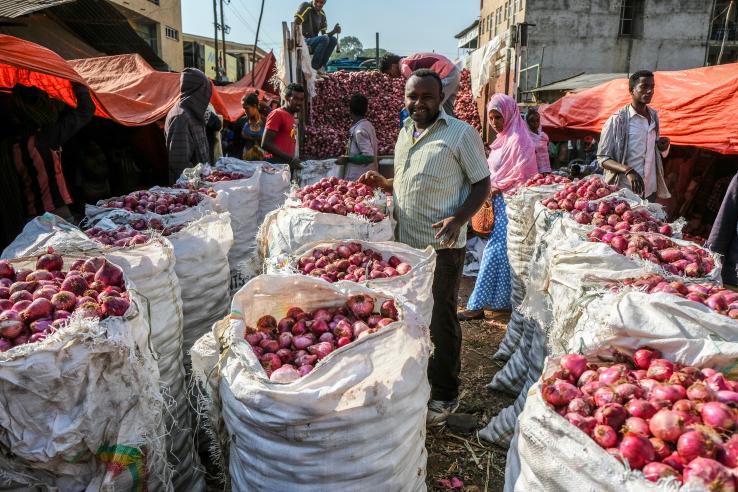
PFAG welcomed efforts to mitigate the glut, including resourcing the National Food Buffer Stock Company (NAFCO) and directing public schools to procure local produce. It, however, urged government to formalise these directives through legislation and extend them to agencies such as NADMO and the security services.
A transparent national mechanism supported by reliable data, adequate funding and accountable procurement processes, PFAG noted, is needed. The Association further recommended a national strategy for marketing all major food crops to prevent recurring gluts.
• Mitigate Sector Shocks
Citing the impact of COVID-19, the Russia-Ukraine conflict, erratic weather patterns and commodity gluts, PFAG stressed the need for a structured mechanism to cushion the sector against future shocks. The Association proposed the creation of an Agriculture Development Fund to stabilise input prices, protect farmer investments and reduce volatility.
• Review Decentralisation Framework
Though recognising the role of local government, PFAG expressed concern about the limited prioritisation of agricultural interventions within the decentralisation system. It noted that the current District Assemblies Common Fund (DACF) formula excludes agriculture-specific allocations, limiting resources available to frontline agricultural officers. The Association called for a revision of the DACF formula to incorporate agricultural programmes and improve implementation capacity.
• Tackle Illegal Mining Activities
PFAG warned that illegal mining—particularly galamsey and sand winning—is severely damaging farmlands and threatening food and nutrition security. It said thousands of acres of arable land have already been destroyed, with many more at risk. The Association urged government to adopt decisive measures to protect farmlands and water bodies, describing illegal miners as posing a direct threat to farmers’ livelihoods and national food systems.
Commitment to Collaboration
PFAG concluded by reaffirming its appreciation for the country’s farmers and the government’s ongoing commitment to agricultural development. The Association, however, stressed that persistent systemic challenges require urgent, coordinated action.
It called on all stakeholders to work collectively to translate recommendations into tangible outcomes, ensuring a resilient and responsive agricultural ecosystem capable of securing Ghana’s food future.

