

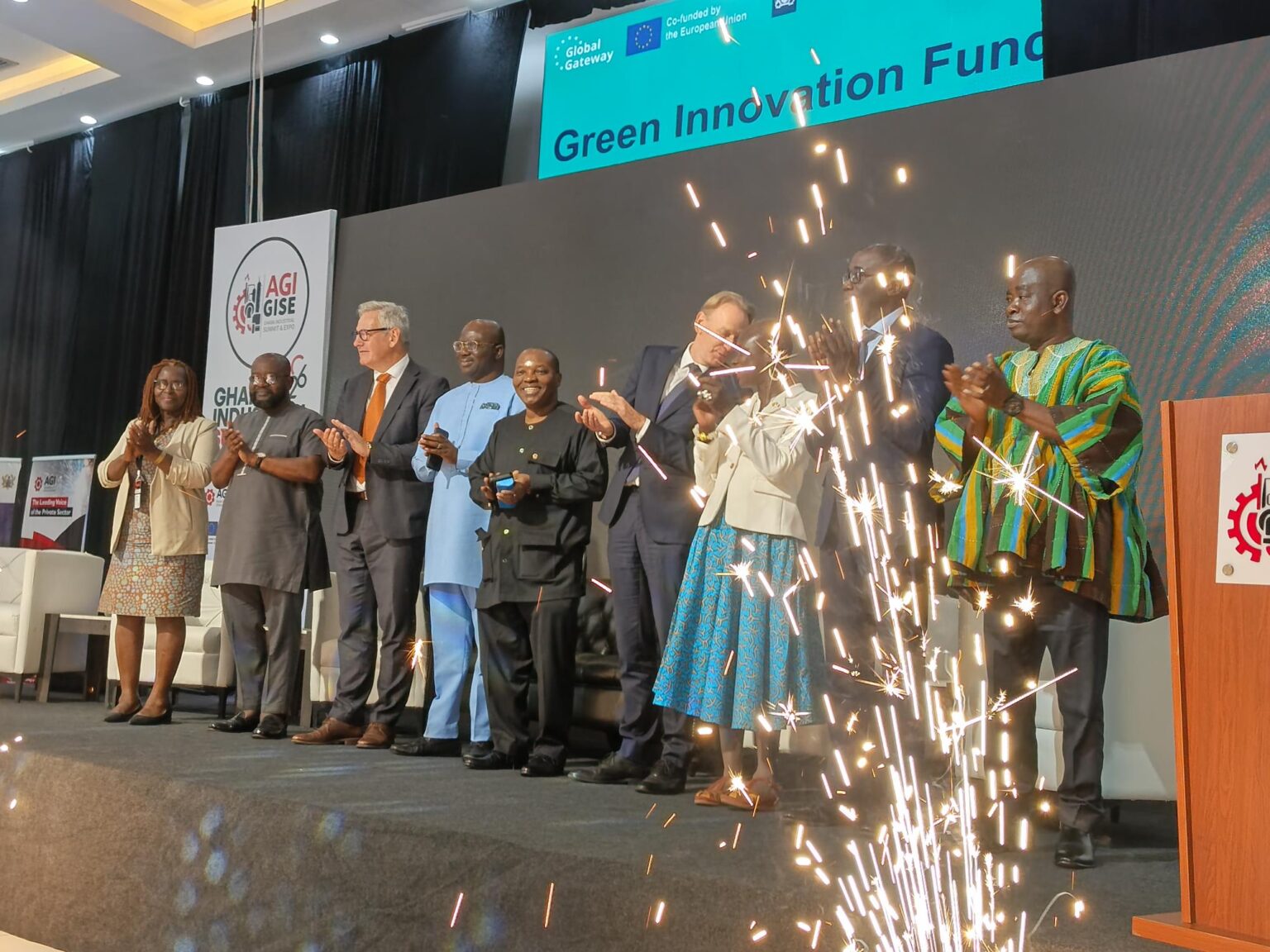

- Fidelity Commits €2.37mn as Ghana Gets €6.67mn Green Innovation Fund
Fidelity Bank Ghana has committed €2.37 million to a new €6.67 million Green Innovation Fund alongside the European Union and the Netherlands, creating a blended-finance vehicle intended to help Ghanaian businesses invest in cleaner technologies, expand production and improve their competitiveness in increasingly climate-conscious export markets.
The Green Innovation Fund was launched during the European Union session of the Ghana Industrial Summit and Exhibition 2026 in Accra, with the EU and Netherlands contributing €4.3 million and Fidelity providing €2.368 million.
Fidelity’s contribution represents about 35.5% of the fund, while the European partners account for roughly 64.5%, creating a financing structure that combines development-partner resources with commercial-bank capital.
The facility will target businesses, particularly small and medium-sized enterprises, seeking financing and technical support to adopt green technology, expand operations and create sustainable employment.
It is also intended to strengthen the ability of Ghanaian companies to compete domestically, within the African Continental Free Trade Area and in European markets, where environmental and sustainability requirements are becoming increasingly important to market access.
The fund forms part of the wider €17.3 million Green, Digital and Inclusive Private Sector Development programme, a four-year initiative launched in January by the European Union, France and the Netherlands.
That programme is designed to expand access to finance, improve the business environment and increase the capacity of enterprises to adopt green and digital technologies as Ghana seeks to build a more productive private sector.
For Ghanaian SMEs, access to affordable capital remains one of the biggest barriers to investing in equipment capable of reducing energy consumption, improving resource efficiency or meeting international environmental standards.
Green investment can require substantial upfront expenditure even where businesses expect lower operating costs over the longer term. Commercial lending costs and short repayment periods can therefore make investments in renewable energy, energy-efficient machinery and cleaner production systems difficult for smaller firms to finance.
The new vehicle is an attempt to reduce that constraint by using development finance alongside domestic banking capital to support commercially viable investments with environmental benefits.
EU Ambassador to Ghana Rune Skinnebach said the financing gap remained a significant obstacle despite the country’s strong entrepreneurial base, arguing that access to capital and appropriate support was necessary to convert innovation into viable businesses, employment and economic impact.
The initiative also reflects a broader shift in the relationship between climate policy and international trade.
Sampson Ahi, Deputy Minister for Trade, Agribusiness and Industry, urged businesses to use the facility to adopt cleaner and digital technologies capable of strengthening their competitiveness in Ghana, Europe, AfCFTA and other international markets.
Environmental requirements are no longer confined to corporate social-responsibility programmes. Carbon intensity, product traceability, energy use and supply-chain sustainability are increasingly shaping procurement decisions and market regulations, particularly in Europe.
For Ghanaian exporters, failure to invest in cleaner technology could consequently become a competitiveness problem rather than merely an environmental one.
Companies able to reduce energy costs, document production processes and meet sustainability requirements may have greater access to buyers and financing, while businesses unable to make the transition risk facing higher compliance costs or losing access to parts of international supply chains.
The AfCFTA provides another potential market for firms able to improve productivity and scale.
Although environmental standards differ across African markets, greater regional competition means Ghanaian manufacturers increasingly need to combine lower production costs with quality, traceability and more efficient technologies.
Fidelity’s participation in the Green Innovation Fund also builds on the bank’s wider sustainable-finance strategy.
The lender already operates programmes supporting sustainability and innovation, including its GreenTech Innovation Challenge, which targets youth-led and technology-driven solutions in agriculture.
Earlier this year, Fidelity also launched a separate Green Lending Fund aimed at financing climate-smart business investments. The new €6.67 million Green Innovation Fund is a distinct partnership involving European development partners and should not be conflated with the bank’s existing green-finance products.
The involvement of a domestic commercial bank could nevertheless be important for scaling the market beyond grant-funded projects.
Development funding can absorb some of the risk involved in encouraging new technologies, but sustainable green finance ultimately requires local financial institutions to develop the capacity to assess projects, price environmental risks and lend to companies on a commercial basis.
That is particularly important as Ghana seeks to mobilise substantially more private capital for its climate and development needs than government budgets or donor grants can provide.
The new fund’s effectiveness will therefore depend on how quickly the headline capital translates into accessible financing.
Published information on the launch establishes the size and broad objectives of the vehicle, but detailed terms covering individual financing amounts, interest rates, repayment periods, eligibility requirements and the timetable for disbursement have yet to be publicly set out.
Those details will matter to SMEs deciding whether the facility genuinely changes the economics of investing in greener technology.
A €6.67 million fund is modest relative to the wider financing requirements of Ghana’s private-sector transition, but it could provide an important demonstration of how public and development capital can be combined with domestic commercial finance to lower investment barriers.
It will be whether Fidelity and its European partners can translate the €6.67 million commitment into machinery installed, energy consumption reduced, businesses expanded, jobs created and Ghanaian companies better positioned to compete in markets where environmental performance is becoming increasingly inseparable from commercial competitiveness.

