

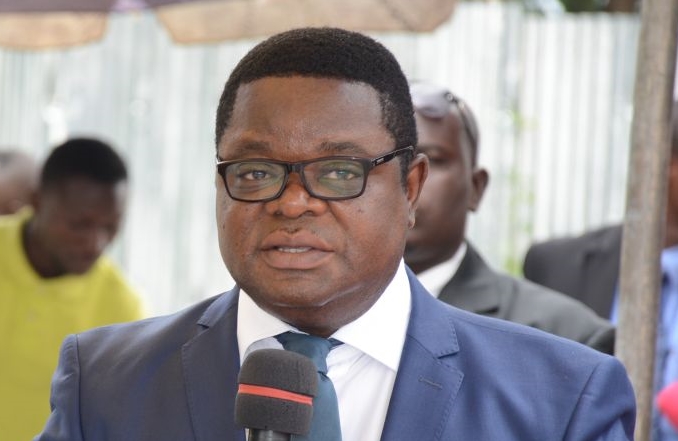

- Flood Crisis Is Now an Economic Governance Failure – Prof Quartey
Economist Professor Peter Quartey has warned that Ghana is paying a heavy economic price for its repeated failure to prevent flooding, arguing that poor planning, weak infrastructure investment and ineffective sanitation management are costing the country billions of cedis.
His comments follow the devastating floods that hit parts of Accra, the Central Region and other parts of the country earlier this week, claiming at least 18 lives and destroying homes, businesses and properties worth millions of cedis.
Speaking on JoyNews’ PM Express Business Edition on Thursday, Prof Quartey said Ghana continues to spend scarce public resources on flood-related interventions without achieving lasting results.
“I am very worried because it looks like we are wasting money. We are not investing our money efficiently or properly,” he said.
According to him, Ghana’s investment in water, sanitation and hygiene remains far below what is required to address the country’s recurring flood crisis.
He said the government’s annual investment in WASH programmes stands between GH¢750 million and GH¢780 million, with about 80.00% to 90.00% of that amount funded by donors.
For Prof Quartey, the figures show that Ghana is not investing enough in sanitation and waste management, while the limited resources available are also not being used efficiently.
“So we are not investing in waste management; we are not investing in sanitation. We are basically not investing; the little we are investing is also very inefficient,” he said.
He cited drainage works along the Weija-Kasoa Road near the West Hills Mall junction as an example of public spending that has failed to deliver effective flood control.
According to him, storm drains constructed in the area are already choked, forcing water onto the streets despite the large sums spent on the project.
“We have invested money, but getting nothing out of it, and that tells you how wasteful we are,” he said.
Prof Quartey also raised concerns about sanitation contracts, citing reports that street-sweeping arrangements had not been renewed for several months.
He said failure to invest consistently in basic waste management, drainage maintenance and enforcement has turned flooding into an annual economic burden.
Beyond the destruction of homes and properties, he said floods impose wider productivity losses on the economy.
According to him, flooded roads keep workers in traffic for hours, increase fuel consumption, reduce working hours and leave employees exhausted before they arrive at work.
Businesses also suffer from disrupted supply chains, delays in transporting goods and raw materials, lost income and lower productivity.
“The psychological cost itself, then loss of human lives,” he added.
Prof Quartey said the annual cycle of floods, public outrage and official promises has become unacceptable, stressing that Ghana’s problem is not only lack of infrastructure but also weak law enforcement.
He argued that poor waste disposal, construction on waterways and illegal development continue because the law is not applied firmly.
“We blame people for poor waste disposal… if you don’t enforce your laws, it’s going to happen,” he said.
He pointed to Britain’s success in reducing littering through strict enforcement, questioning why Ghana has failed to apply similar discipline to sanitation and urban management.
“Can’t we stop it? Can’t we educate people? Can’t we enforce the laws? People block waterways, and they get away with it,” he said.
The economist also expressed frustration with local governance, arguing that district and municipal assemblies have not shown enough capacity to manage the problem effectively.
“If I had my own way, the assemblies, in fact, I will stop appointing DCEs and MCEs. I will put retired military officers there to man the assemblies,” he said.
His comments come as the government has announced a GH¢300 million emergency package for flood relief and mitigation, with GH¢150 million allocated to immediate relief support and another GH¢150 million earmarked for measures to reduce the risk and severity of future flooding.
For analysts, however, the latest floods have again exposed Ghana’s deeper urban governance challenge. Accra’s vulnerability is not caused by rainfall alone, but by blocked drains, uncontrolled development, poor waste management, weak planning enforcement and years of underinvestment in resilient infrastructure.
Prof Quartey’s warning adds an economic dimension to the debate. The cost of flooding is not limited to emergency relief, damaged property and lost lives. It also includes reduced productivity, disrupted business activity, higher transport costs, weaker investor confidence and repeated pressure on public finances.
The central argument is simple: Ghana is spending after the damage has been done, when stronger prevention would cost less and deliver better results.
As the country counts the human and economic losses from the latest floods, the challenge for policymakers is whether emergency allocations will finally be matched by serious investment in drainage, sanitation, enforcement and accountable local governance.
Without that shift, Ghana risks continuing the same costly cycle: rain falls, communities flood, lives are lost, public money is released, promises are made — and little changes before the next disaster.

