

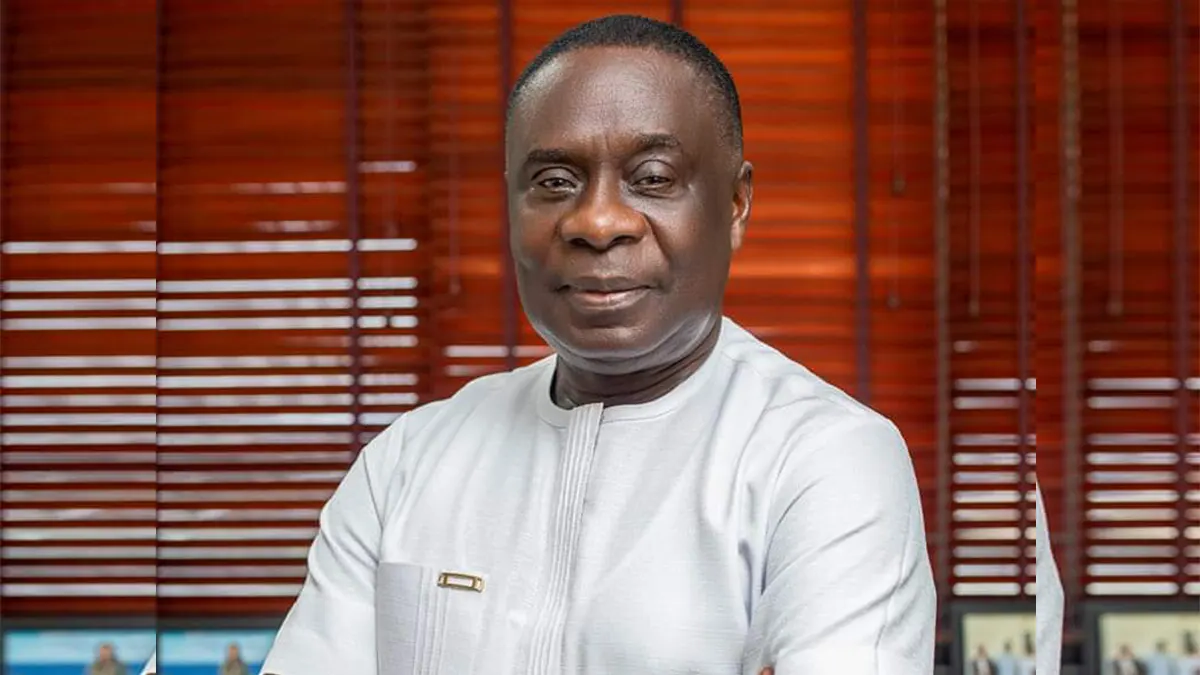

- Foreign Missions to Connect Ghanaian Firms to Global Capital and Markets — Gyakye Quayson
Ghana is repositioning its diplomatic missions abroad as active investment and trade platforms, seeking to connect domestic businesses with international capital, markets and commercial partners as the government attempts to build the export demand required to sustain its 24-hour economy programme.
Deputy Minister for Foreign Affairs James Gyakye Quayson said economic diplomacy had become a central priority of the ministry, with investment desks being established across Ghana’s missions to identify opportunities, promote Ghanaian companies and connect investors with relevant institutions at home. He was speaking on behalf of Foreign Affairs Minister Samuel Okudzeto Ablakwa at the International Chamber of Commerce Ghana CEO Breakfast Meeting themed “Networking for Ghana within a 24-Hour Economy.”
“Our missions are increasingly serving as platforms for economic engagement, with investment desks established across Ghana’s missions abroad to identify investment opportunities, promote Ghanaian enterprises and connect investors with relevant institutions in Ghana,” Mr Gyakye Quayson said.
The strategy addresses a fundamental question surrounding the 24-hour economy: businesses cannot sustainably operate additional shifts merely because the government encourages them to stay open longer. Factories need customers, exporters need markets and companies require investment if additional operating hours are to translate into higher production rather than simply higher electricity, labour and security costs.
Mr Gyakye Quayson placed the private sector at the centre of that transformation, arguing that government could create the regulatory and policy environment but could not itself provide the entrepreneurship and capital required for growth. “Government can provide an enabling policy and regulatory environment, but innovation, entrepreneurship and investments must be driven substantially by the private sector,” he said.
That makes economic diplomacy potentially more consequential than conventional diplomatic promotion. If Ghanaian factories are expected to add production shifts, agro-processors expand output and logistics companies operate for longer periods, foreign missions may increasingly have to help create the external demand that makes the additional capacity commercially viable.
The Deputy Minister said Ghana’s missions were therefore working to widen access for domestic products in both traditional and emerging markets, with particular emphasis on opportunities created by the African Continental Free Trade Area. The objective, he said, was to establish Made in Ghana as a trusted and competitive brand across African markets.
That ambition shifts part of the responsibility for export development from institutions based in Accra to Ghana’s diplomatic network overseas. Embassies and high commissions would not simply represent the state politically but increasingly function as commercial connectors — identifying buyers, facilitating business missions and helping Ghanaian enterprises navigate foreign markets.
Mr Gyakye Quayson said the Ministry of Foreign Affairs was already facilitating bilateral and multilateral engagements, investment missions, business forums and high-level meetings with governments, investors and commercial communities. These interventions, he said, are intended to attract foreign direct investment, promote Ghanaian exports and position domestic companies within global value chains.
The wider economic logic is significant. Ghana’s 24-hour economy will struggle to achieve its full potential if expanded production is directed almost exclusively towards domestic consumption, particularly in sectors where the local market may not be large enough to absorb additional output.
Export markets therefore become a critical component of the policy. A manufacturer operating three shifts instead of one needs significantly more demand, and access to consumers across Africa, Europe, Asia and North America can provide a larger commercial base from which additional investment becomes rational.
The Deputy Minister also pointed to preferential market access available to Ghanaian firms in the European Union, United States, United Kingdom and China. He said China had operationalised a zero-tariff regime for Ghanaian products this year, presenting another potential opening for companies capable of meeting the scale, standards and consistency demanded by international buyers.
But tariff preferences alone will not automatically produce exports. Ghanaian companies must be able to manufacture competitively, secure certification, meet quality requirements and deliver adequate quantities on time, meaning the domestic industrial environment remains as important as the market access negotiated abroad.

The 24-hour economy is intended to address part of that production challenge. Mr Gyakye Quayson said the policy, together with the Accelerated Export Development Initiative, is designed to increase productivity, expand employment and improve utilisation of infrastructure across manufacturing, agriculture and agro-processing, oil and gas, energy, mining, financial and digital services, transport, logistics, healthcare and pharmaceutical production.
He linked the programme to government investments in infrastructure, agriculture, skills development and tourism, arguing that the combination could create the productive foundation required for higher economic activity. Yet he stressed that execution would depend heavily on collaboration with private enterprise.
The government is also presenting the programme against an improving macroeconomic environment. In his address, Mr Gyakye Quayson cited inflation falling to 4.60% in July 2026, international reserves rising to US$12.94 billion in June, equivalent to five months of import cover, and declining interest rates as evidence of improving conditions for investment.
The deeper test, however, will be whether macroeconomic stability is converted into productive investment. Lower inflation and a more stable currency can reduce uncertainty, but they do not automatically create factories, export contracts or jobs unless businesses respond by committing capital.
This is where the foreign ministry’s economic diplomacy strategy could become an important bridge. Ghana may attract investment domestically through improved economic conditions while simultaneously using its missions to connect that productive capacity to international markets.
Mr Gyakye Quayson also highlighted trade-facilitation reforms that could reduce friction for Ghanaian businesses operating internationally. He said Ghana signed the Istanbul Convention on Temporary Admission in 1990 but has yet to fully implement the related ATA Carnet system, which facilitates the temporary movement across borders of commercial samples, professional equipment and goods for exhibitions and trade activities.
He said the Foreign Affairs Ministry supported efforts to explore accession and implementation arrangements, potentially making it easier for Ghanaian companies to participate in international exhibitions, trade missions and other temporary commercial activities. Such administrative reforms may appear technical, but reducing paperwork and border friction can materially affect the cost of entering foreign markets, particularly for SMEs.
The Deputy Minister also linked Ghana’s external economic agenda to international tax cooperation, saying the country supports a global framework capable of addressing illicit financial flows, tax avoidance and profit shifting. The objective, he argued, should be to ensure that resources generated through economic activity are retained sufficiently to finance infrastructure, healthcare, education and wider development.
His message to the ICC gathering was consequently broader than a call for businesses to embrace longer operating hours. It was an argument that the 24-hour economy must connect production, infrastructure, investment, exports and diplomacy into a single growth strategy.
That may ultimately determine whether the programme succeeds. Keeping economic activity running around the clock is relatively easy to describe; creating enough profitable economic activity to justify those hours is considerably harder.
Ghana’s diplomatic missions could therefore become an important part of the policy’s commercial architecture. If they can identify buyers, facilitate investment, connect companies to supply chains and help Ghanaian exporters overcome market-entry barriers, economic diplomacy could provide some of the demand needed to make expanded domestic production sustainable.
Mr Gyakye Quayson closed by inviting businesses to work more closely with government and Ghana’s missions abroad to convert the country’s economic opportunities into “concrete investment, partnership and markets”.
For Ghana, that is likely to be the real measure of the 24-hour economy. Its success will not ultimately be judged by how many businesses keep their lights on after midnight, but by whether those additional hours generate more goods, more exports, more investment and more productive jobs and whether Ghana’s diplomatic network can help find the markets that make that expansion worthwhile.

