

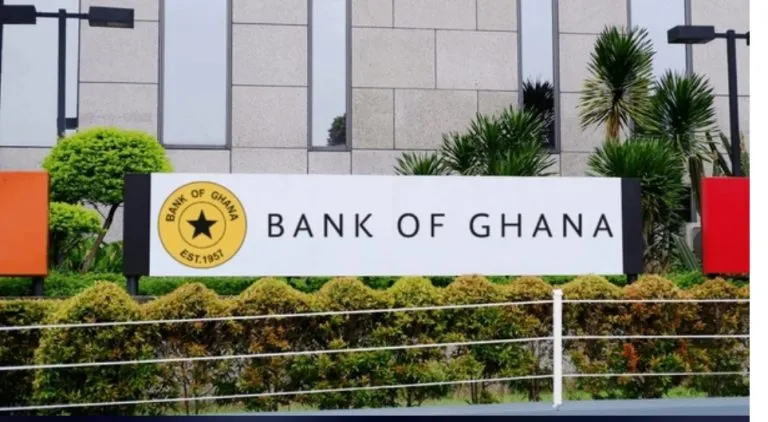

Formal Submission on the Exposure Draft of the Guideline for the Regulation and Supervision of Non-Interest Banking
Submitted to:
The Governor
Bank of Ghana
Accra
23/12/2025
Attention: Director, Banking Supervision Department
Subject: Comments on the Non-Interest Banking Guidelines
1. INTRODUCTION
We submit this memorandum in response to the Bank of Ghana’s invitation for public comments on the Exposure Draft: Guideline for the Regulation and Supervision of Non-Interest Banking.
We acknowledge the Bank of Ghana’s stated objectives of promoting financial innovation, inclusion, and regulatory clarity.
However, following a comprehensive clause-by-clause review, and informed by both technical regulatory analysis and independent public-interest policy commentary, we conclude that the Draft, in its current form, is not fit for implementation.
The Bank of Ghana lacks its own tried and tested Non-Interest Banking and Finance model it intends to introduce in Ghana hence the inherent contradictions in the draft exposure
This submission is not an ideological objection to any faith-based financial practice. Rather, it is grounded strictly in constitutional order, regulatory coherence, prudential soundness, consumer protection, and public interest considerations.
Accordingly, this submission advances two distinct but related positions:
- That the Draft should be withdrawn and re-issued due to material internal contradictions, technical gaps, and prudential risks; and
- That any future framework for non-interest banking must be redesigned to ensure constitutional neutrality, equal consumer protection, supervisory clarity, devoid of regulatory arbitrage, and demonstrable economic justification.
2. SUMMARY OF CORE DEFECTS
2.1 Internal Contradictions and Regulatory Incoherence
The Draft contains multiple internal inconsistencies, including but not limited to:
conflicting hierarchies of applicable standards, inconsistent dispute-resolution pathways, unclear allocation of supervisory authority between BoG and internal committees, and prudential requirements that are declared equivalent to conventional banking without the necessary technical adaptations.
These contradictions create legal uncertainty, compliance risk, and enforcement ambiguity and endorses a perception of deception by the Central Bank.
2.2 Creation of a Parallel Governance and Adjudicatory System
The Draft establishes internal bodies (NIBAC and NIFAC) with adjudicatory-type functions that displace standard consumer redress mechanisms applicable to other banks. This introduces unequal treatment of bank customers and weakens established regulatory safeguards.
The Central Bank risks becoming subordinate to these internal bodies (NIBAC and NIFAC).
Part IV of the Draft introduces a “window” system that is operationally complex, cost-opaque, and highly vulnerable to manipulation, without providing the necessary accounting, audit, governance, and supervisory detail required to manage such risks.
2.4 Market Demand, Cost, and Systemic Justification
Independent policy analysis has raised serious questions about:
whether there is sufficient unmet demand in Ghana to justify the regulatory and supervisory overheads of a specialised non-interest banking regime;
whether claimed cost or inclusion benefits survive once full compliance, governance, and risk-adjustment costs are accounted for; and whether the introduction of such a regime may impose hidden costs on the broader banking system and consumers.
These issues remain unaddressed in the Draft.
3. DETAILED OBSERVATIONS AND OBJECTIONS
3.1 Standards Hierarchy and the Principle of “Permissibility” (Paragraph 49 and related provisions)
The Draft states that non-interest banking operations are guided by the standards of the Islamic Financial Services Board (IFSB), alongside Basel and IFRS.
Concerns:
This formulation implicitly elevates Islamic finance standard-setting bodies into a quasi-regulatory position, despite the absence of enabling legislation.
Paragraph 109 later asserts the primacy of local standards issued by ICAG, directly contradicting Paragraphs 49 and 105.
The result is an unclear and unstable hierarchy of norms, exposing institutions and regulators to compliance uncertainty and legal challenge.
Recommendation:
Ghanaian law and BoG directives must be explicitly primary.
Basel and IFRS should remain the only binding international references.
IFSB and AAOIFI standards should be designated strictly as non-binding technical guidance, applicable only where BoG issues Ghana-specific interpretive directives.
3.2 Dispute Resolution Framework (Paragraphs 55–57 and Paragraph 117)
The Draft mandates that disputes be resolved through NIBAC and NIFAC before recourse to ADR, describing NIBAC as an “internal adjudicatory structure.”
Concerns:
This framework removes ordinary judicial recourse as a standard option available to customers of conventional banks.
It displaces BoG’s traditional role in consumer dispute oversight.
The use of the term “adjudicatory” improperly confers quasi- authority on internal compliance bodies.
Paragraph 117, which requires compliance with BoG complaints directives, contradicts this structure.
Implications:
Customers of NIBIs would enjoy less legal protection than customers of other banks.
The framework risks evolving into a parallel, values-based dispute system inconsistent with constitutional equality before the law.
Recommendation:
Dispute resolution for NIBIs must mirror conventional banking practice:
- Internal complaints handling under BoG directives;
- Optional ADR under Act 798; Courts of competent jurisdiction.
NIBAC and NIFAC should be confined strictly to internal compliance and technical advisory functions, not adjudication.
3.3 Neutrality Versus Embedded Religious Coding (Paragraph 85 and related provisions)
Paragraph 85 prohibits religious connotations in the naming of non-interest banking institutions.
Concern:
While branding is restricted, the Draft embeds religious jurisprudential concepts, terminology, and governance structures throughout.
This results in formal neutrality but substantive religious coding, undermining the stated intent of neutrality and creating conceptual confusion for regulators, courts, and consumers.
Recommendation:
If neutrality is to be genuine:
Product descriptions and governance structures must be framed in functional, legal, and economic terms;
Religious jurisprudence should not serve as the determinative regulatory reference point.
3.4 Window System Risks
(Part IV – Paragraphs 62 and 67)
The Draft permits conventional banks to operate non-interest “windows” with strict separation of funds, systems, and records.
Concerns:
In practice, this necessitates parallel accounting systems, governance structures, software, and internal controls.
Critical questions remain unanswered:
- How are shared overheads allocated?
- How are managing directors accountable across parallel structures?
- Will there be separate audited balance sheets prior to consolidation?
These gaps create supervisory blind spots and opportunities for earnings manipulation and regulatory arbitrage.
Recommendation:
The window model should not be permitted at this stage.
Only:
fully licensed standalone NIBIs, or
separately incorporated subsidiaries should be allowed until detailed accounting, audit, governance, and supervisory annexes are developed and tested.
3.5 Audit, Accounting, and Disclosure (Paragraphs 98, 105, and 109)
The Draft requires compliance with AAOIFI and IFSB standards in addition to IFRS.
Concerns:
This undermines the primacy of ICAG and IFRS.
It creates conflicting disclosure expectations and increases litigation risk.
Combined with the window model, it enables performance masking and opacity.
Recommendation:
IFRS and ICAG standards must be exclusive and primary.
Any supplementary guidance must be formally adopted by BoG through circulars.
3.6 Consumer Education and Staff Training (Paragraphs 116 and 120)
Concerns:
“Financial literacy” provisions may be used to aggressively promote non-interest banking rather than neutrally educate consumers.
Mandatory staff training in mixed-model banks raises risks of coercion and internal discrimination.
Recommendation:
Consumer education must be strictly factual, BoG-approved, and non-promotional.
Staff training should apply only to personnel directly assigned to non-interest banking operations, with explicit safeguards against compulsion.
3.7 Capital Adequacy and Prudential Treatment (Paragraph 122)
The Draft applies conventional CAR methodology to NIBIs.
Concern:
Non-interest banking risk structures differ materially from conventional banks.
Applying the same CAR framework without tailored directives is technically unsound and evidences regulatory haste.
Recommendation:
Either:
Issue NIB-specific prudential guidance, or defer implementation until such guidance is completed.
4. CONCLUSION AND FORMAL REQUEST
In light of the foregoing, we respectfully submit that:
The Exposure Draft, as currently constituted, is internally inconsistent, operationally fragile, and legally vulnerable.
It should therefore be withdrawn and re-issued following comprehensive technical revision.
It is important for the Bank of Ghana to communicate with full clarity and transparency regarding the objectives, scope, and regulatory implications of the proposed framework. Any perception of inconsistency between stated policy intent and the substantive design of the Guideline risks undermining stakeholder confidence and market trust. The Exposure Draft, as currently structured, reveals material divergences between earlier stakeholder assurances and the regulatory architecture now proposed, which warrant careful reconsideration in order to preserve institutional credibility and public confidence.
Any future framework must:
preserve constitutional neutrality, ensure equal consumer protection, maintain BoG’s supervisory primacy, avoid parallel adjudicatory systems, and address prudential and accounting realities before permitting window operations.
We remain available for further stakeholder engagement in in the public interest.
Respectfully submitted,
Advocates for Christ Ghana – Economy, Business & Finance Gate

