

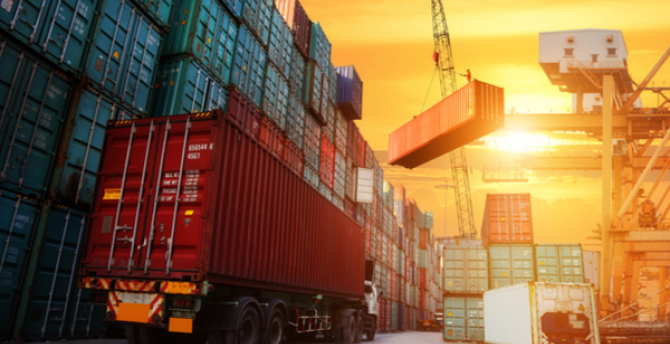

- Ghana’s Trade Surplus Surges to GH¢148.30 Billion as Gold Dominates Export Earnings
Ghana’s merchandise trade reached US$52.50 billion in 2025, up from about US$6.00 billion in 2004, marking an almost ninefold increase over two decades and underscoring the country’s deeper integration into global commerce.
The expansion has been accompanied by a major improvement in the trade balance. Ghana recorded surpluses in 2011, 2014, 2018, 2019, 2023, 2024 and 2025, with the surplus widening sharply from GH¢5.30 billion in 2023 to GH¢44.70 billion in 2024 and GH¢148.30 billion in 2025.
The figures are contained in the Ghana Statistical Service report, Ghana’s Merchandise Trade Statistics, 2004–2025: Two Decades in Review, which tracks the changing scale, composition and geography of the country’s external trade.
The headline surplus is economically significant because stronger merchandise exports can improve foreign-exchange availability and support reserve accumulation. But the composition of that trade reveals a more complicated picture, with Ghana increasingly dependent on gold while remaining heavily reliant on imported fuel, vehicles and machinery.
Gold has become the dominant pillar of the export economy. Its share of total merchandise exports rose from 38.50% in 2004 to 63.10% in 2025, meaning almost two-thirds of export receipts are now tied to a single commodity.
That has provided Ghana with a powerful foreign-exchange engine, particularly during periods of strong international gold prices. But it also creates concentration risk because changes in global prices, production or demand can have an outsized effect on export earnings.
Cocoa has moved in the opposite direction. Cocoa beans and cocoa products accounted for 29.30% of Ghana’s exports in 2004 but just 14.00% in 2025, while mineral fuels and oils contributed a further 8.80%.
The shift highlights a long-standing structural problem: Ghana trades substantially more than it did two decades ago, but much of the country’s export earnings are still derived from commodities rather than higher-value manufactured goods.
There are some positive signs within non-traditional exports. Cocoa products increased their share within the relevant grouping from 9.80% in 2004 to 27.00% in 2025, while edible fruits and nuts rose from 6.10% to 12.10% and plastics accounted for 8.50%.
These gains matter because value addition can create a much larger domestic economic footprint than raw commodity exports. Processing cocoa, minerals and agricultural products locally can support manufacturing, packaging, logistics, employment and a broader tax base.
Ghana’s trade relationships have also shifted decisively towards Asia. The continent accounted for 50.10% of Ghana’s exports in 2025, compared with only 7.90% in 2004, while Europe’s share fell from 51.20% to 26.80%.
The same transition is visible in imports. Asia’s share increased from 26.90% to 48.40%, while Europe’s declined from 45.90% to 24.70%, reflecting the growing importance of Asian economies as both buyers of Ghanaian commodities and suppliers of manufactured goods and equipment.
The import mix offers perhaps the clearest indication of Ghana’s domestic production gaps. Mineral fuels and oils accounted for 25.70% of imports in 2025, vehicles and automotive parts represented 15.40%, and machinery and electrical equipment accounted for 13.90%.
Not all of these imports are economically negative. Machinery and industrial equipment can expand productive capacity, but persistent dependence on imported fuel and finished products leaves the economy vulnerable to global price shocks and currency depreciation.
That exposure feeds directly into inflation and production costs. When fuel prices rise internationally or the cedi weakens, businesses can face higher transport, energy and input costs, with those pressures eventually transmitted to consumers.
The trade data therefore strengthen the case for a more focused industrial strategy. Expanding refining, manufacturing, agro-processing and mineral value addition could reduce some import dependence while increasing the value retained from Ghana’s exports.
The challenge is not simply to replace imports, however. Domestic production must be competitive in price, quality and scale if businesses and consumers are to shift sustainably towards locally produced alternatives.
The African Continental Free Trade Area offers another opportunity. A larger continental market can create new demand for Ghanaian manufacturers and service providers, but exploiting it will require reliable electricity, efficient ports, stronger transport links, affordable finance and internationally competitive standards.
The record GH¢148.30 billion trade surplus should therefore be seen as both an achievement and a warning. Ghana’s external position has strengthened substantially, but much of that improvement rests on gold while the country continues to import critical energy products and capital goods.
A sustained surplus can provide a stronger external buffer, but it will be more resilient if it is generated by a broader range of industries rather than one dominant commodity.
The central question for Ghana is therefore changing from how much it trades to what it trades and how much value it captures before goods cross the border.
Moving from US$6.00 billion in 2004 to US$52.50 billion in 2025 demonstrates remarkable growth in commercial scale. But the next stage of development will be determined by whether that trade increasingly originates from industries that process, manufacture and create value domestically.
The Ghana Statistical Service said the evidence points towards the need to “strengthen domestic value addition, increase production and improve trade facilitation”.
For policymakers, that is the deeper message in the data. Ghana has become a much larger trading economy; the unfinished task is turning that scale into a more diversified, productive and less commodity-dependent one.

