

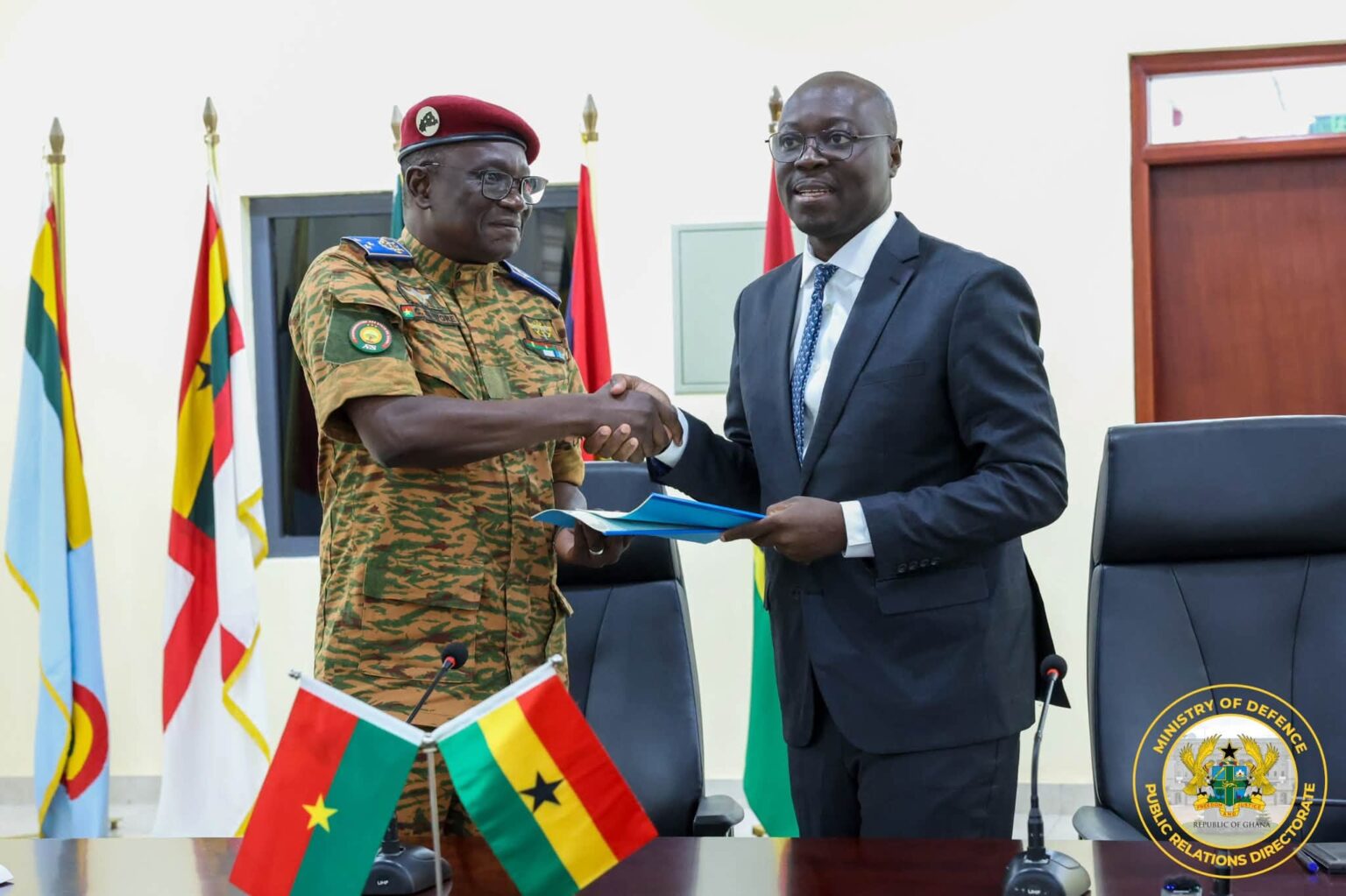

- Ghana, Burkina Faso Deepen Security Cooperation to Protect Trade Corridors From Sahel Threats
Ghana and Burkina Faso are deepening security cooperation around their shared border and strategic trade routes, reflecting growing recognition that the spread of violent extremism across the Sahel is no longer only a defence problem but an increasingly serious threat to commerce, food supply chains and regional integration.
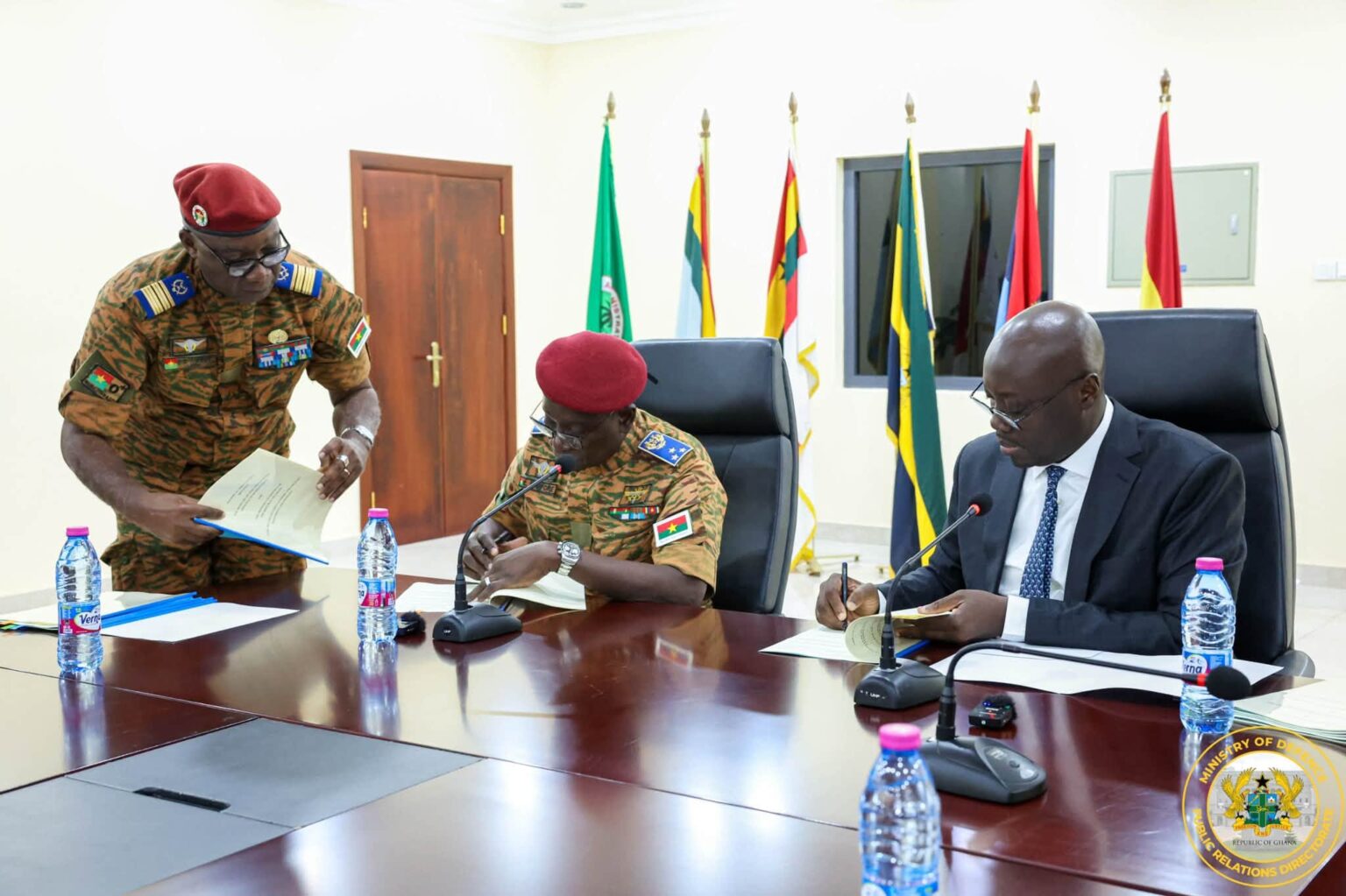
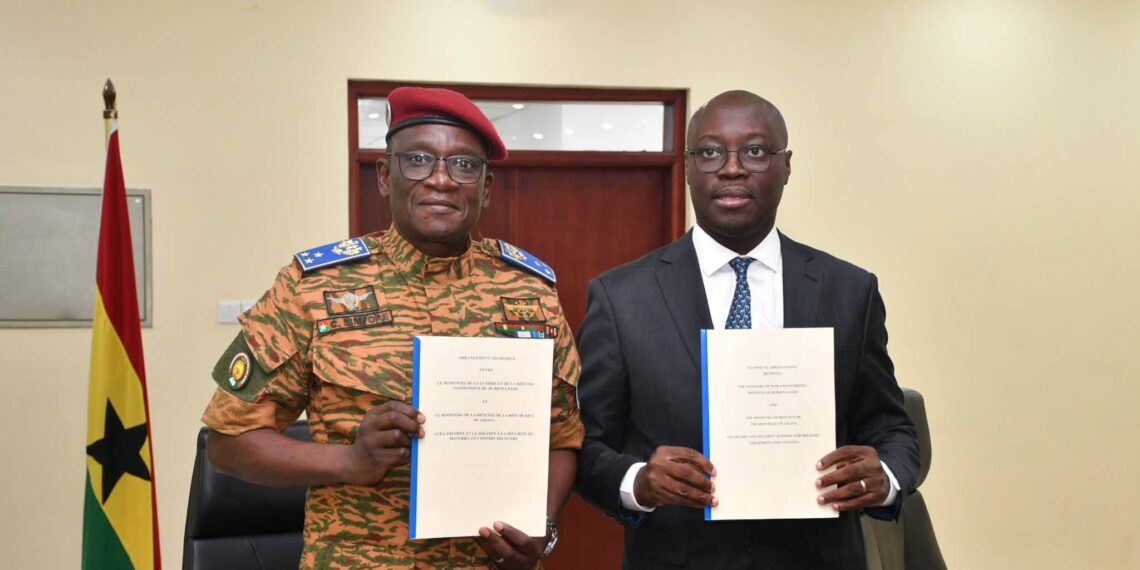
The latest effort builds on a wider package of bilateral agreements concluded earlier this year covering transport and road transit, cross-border cooperation, border administration, disaster response and measures against illicit trafficking. The two countries also committed to developing a joint security framework focused on intelligence sharing, border surveillance and stronger coordination against terrorism and violent extremism.
The economic rationale is becoming harder to separate from the security imperative. Ghana depends on transport corridors through Burkina Faso for a significant amount of informal and formal trade, particularly agricultural produce, while northern Ghana acts as an important gateway between the country’s ports and the landlocked Sahel.
That relationship was brutally exposed in February when Ghanaian tomato traders travelling in northern Burkina Faso were attacked by militants near Titao. Ghana’s Trade Ministry later said eight Ghanaian citizens were killed, underscoring how insecurity along regional corridors can directly threaten the people and businesses sustaining cross-border food trade.
The attack demonstrated that trade agreements guaranteeing the movement of goods are of limited economic value if traders cannot safely travel along the roads those agreements are supposed to open. Security has consequently become part of the infrastructure required for regional commerce.
For years, economic integration in West Africa has focused primarily on tariffs, customs procedures and freedom of movement. The emerging challenge is more fundamental: trucks, traders and agricultural supply chains increasingly require physical protection against armed groups operating across porous borders.
A previous analysis published by The Vaultz News after the Titao attack warned that trade arrangements alone did not guarantee the security of traders moving through volatile areas and called for stronger intelligence sharing, border protection and interstate coordination.
That distinction has significant consequences for Ghana. The country imports important quantities of tomatoes, onions and other agricultural produce from Burkina Faso, meaning disruption along the northern corridors can quickly become a domestic food-security and inflation issue.
When traders withdraw from dangerous routes, supply can tighten. Transporters may also demand higher compensation for risk, insurance and security, potentially increasing the cost of goods before they reach markets in Kumasi, Accra and other urban centres.
Burkina Faso’s temporary restriction on fresh tomato exports earlier this year illustrated how dependent Ghanaian markets can be on regional supply chains. Ghana welcomed the subsequent lifting of the restriction, saying the decision would ease tomato flows and help stabilise domestic availability.
Violent extremism adds another layer of vulnerability because it can interrupt those same flows without any formal trade restriction. A road may remain legally open while becoming commercially unusable if traders conclude that travelling through it is too dangerous.
The Ghana-Burkina security relationship therefore has implications far beyond military cooperation. If intelligence sharing and coordinated surveillance can make commercial routes safer, the benefits could include lower transport risk, greater confidence among traders and more predictable agricultural supply.
That would also matter for Ghana’s broader ambitions under the African Continental Free Trade Area. A country positioning itself as a commercial gateway to West Africa cannot rely solely on efficient ports and customs systems if the inland corridors connecting those facilities to Sahelian markets remain insecure.
President John Dramani Mahama has already described the Upper West Region as strategically important because of its location as a gateway to Burkina Faso and the wider Sahel, linking infrastructure improvements there to cross-border trade and regional economic opportunities.
Government’s wider road strategy similarly identifies routes towards Burkina Faso as economically important national corridors. Plans include improvements to the Wa-Hamile connection and other northern links designed to strengthen movement between Ghana’s production centres, border communities and neighbouring economies.
But physical infrastructure alone cannot deliver those benefits if insecurity undermines movement. A newly paved highway that traders are afraid to use represents an incomplete investment.
That is why defence expenditure and economic infrastructure increasingly overlap in northern Ghana. Surveillance systems, border posts, intelligence networks and rapid-response capabilities may not traditionally be classified as trade infrastructure, but they can become essential to keeping trade corridors functioning.
Ghana has also strengthened its broader security posture through a separate Security and Defence Partnership signed with the European Union in March. That arrangement covers counterterrorism, border management, intelligence cooperation, cybersecurity and crisis response, while European support has included surveillance and communications equipment intended partly to reinforce Ghana’s northern borders.
The proximity of Burkina Faso makes bilateral cooperation particularly important, however. Security threats originating in the Sahel cannot be managed effectively if intelligence stops at the national boundary while armed groups move across remote and lightly governed areas.
The economic consequences of failure could be substantial. Beyond food trade, Ghanaian ports provide transit opportunities for landlocked Sahelian economies, and persistent instability could weaken Accra’s ambition to become a more important logistics and commercial gateway for the region.
There is also a livelihood dimension. Cross-border trading networks support drivers, market women, wholesalers, transport operators and thousands of small businesses whose activities rarely appear fully in formal trade statistics but remain economically important.
Protecting those traders is therefore not simply a humanitarian responsibility. It is part of protecting a regional commercial system that connects farms and markets across national borders.
The challenge will be turning security agreements into operational improvements on the ground. Intelligence must reach the people who need it, dangerous routes must be identified early, border agencies must communicate effectively and traders need reliable information about where movement is safe.
Regional governments may also need to rethink how agricultural trade itself is organised. Security experts have proposed more centralised collection and logistics systems that could reduce the number of individual traders travelling deep into high-risk areas, using larger controlled transport operations to move produce towards safer distribution centres.
Such arrangements would carry costs and would not eliminate security risk, but they illustrate the broader point that counterterrorism policy and supply-chain design can no longer be treated as unrelated disciplines.
The developing Ghana-Burkina framework is therefore important not simply because two neighbouring states are cooperating militarily. Its larger significance is that both countries are beginning to recognise that security along commercial corridors is becoming a prerequisite for economic integration.
For Ghana, the test will be whether cooperation produces safer roads, more predictable food supplies and stronger connections between its ports and the Sahel. If it does, the economic return could extend well beyond defence.
If insecurity continues to make critical trade routes dangerous, however, the consequences will eventually be measured not only in security incidents but in higher transport costs, disrupted agricultural markets, weaker regional trade and lost investment.
In an increasingly unstable West African neighbourhood, protecting Ghana’s trade corridors is therefore becoming an economic policy objective in its own right. The ability to move goods safely between Ghana and Burkina Faso may prove just as important to regional integration as removing tariffs or modernising border posts.

