

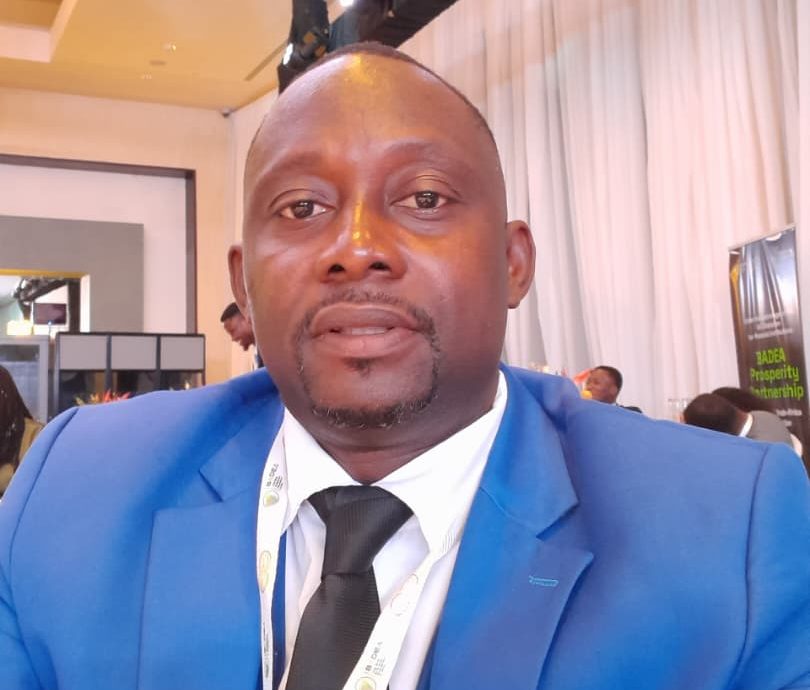

- Galamsey Financiers Are Known but Compromised Officials Shield Them — Kyei Yamoah
Ghana’s failure to prosecute the powerful financiers behind illegal mining is not principally the result of an intelligence deficit, but of corruption within institutions expected to act on information already available in affected communities, according to Kwadwo Kyei Yamoah, Executive Director of HELP Foundation Africa.
Mr Yamoah said the individuals who finance illegal mining operations, supply excavators, purchase gold and provide political or security protection were often known to residents, traditional authorities and local officials.
Illegal mining operations were too visible, he argued, to escape the attention of police commanders, intelligence officers, district authorities and chiefs stationed in areas where the activity takes place.
Excavators and other heavy machinery must pass through communities and travel along public roads before reaching mining sites. Mining and processing equipment also produces significant noise, while operations depend on regular supplies of fuel, labour and other materials.
“The intelligence exists,” Mr Yamoah said during a NorvanReports Xspace Conversation on the theme “Beyond Wontumi’s Conviction: Can Ghana Dismantle the Political, Financial and Corporate Networks Behind Illegal Mining.”
“The reason it is not acted upon is that those who are supposed to act have been compromised.”
His comments highlight a persistent weakness in Ghana’s fight against galamsey. Security operations frequently result in the arrest of labourers found in pits or operating machinery, while prosecutions of financiers, excavator owners, gold buyers and politically connected organisers remain comparatively rare.
Mr Yamoah said residents in mining communities often knew who provided the money for an operation, who secured access to the land, who owned the equipment and who purchased the gold.
They were also frequently aware of individuals who intervened when security agencies attempted to shut down an operation.
Although such information may initially circulate through informal conversations, he said it was often sufficiently credible to provide investigators with leads that could be verified through professional inquiries.
“Communities speak, and people gossip,” he said. “If you follow the information, you will realise that in many cases those speaking are pointing in the right direction.”
Unlike some forms of organised crime, illegal mining requires substantial physical infrastructure and cannot easily be concealed.
Farmers working close to mining areas hear the machinery. Residents see excavators and trucks moving through their communities, while traditional authorities are generally informed when outsiders seek access to customary land.
Mining operations can therefore rarely continue for extended periods without the knowledge of local actors.
Mr Yamoah recalled asking a traditional leader whether mining could occur on customary land without the chief knowing. The chief responded that it would be virtually impossible because traditional authorities had a responsibility to know what was taking place within their jurisdictions.
The central question, Mr Yamoah said, was therefore not whether traditional leaders and officials had knowledge of the operations, but whether they were prepared to act.
He argued that chiefs who consistently spoke against illegal mining were often those who had rejected attempts to involve them or had not benefited financially from the activity.
Where traditional authorities remained silent while mining occurred openly, investigators should examine whether payments, promises or other inducements had influenced their conduct, he said.
Mr Yamoah stopped short of suggesting that all traditional leaders in mining areas were complicit. But he said chiefs and customary authorities could not be excluded from scrutiny simply because of their positions.
Mining operators typically require access through landowners, chiefs, intermediaries or politically connected individuals. The arrival of workers, excavators and processing equipment should therefore create an identifiable chain of persons whose roles can be investigated.
The failure to pursue that chain, he said, had enabled principal financiers to distance themselves from the activities while poorer and more vulnerable workers bore the consequences of enforcement operations.
Mr Yamoah said another indication that the principal actors were known was the speed with which financiers or their representatives appeared when security agencies moved against mining sites.
Those individuals sometimes attempted to negotiate with officials, influence chiefs or persuade residents to change their accounts of who controlled an operation.
Their intervention, he argued, showed that those directing illegal mining were not always hidden behind complex corporate structures or difficult-to-trace arrangements.
In many cases, the underlying problem was that they possessed enough money, political influence or institutional access to interfere with investigations.
Such intervention could weaken witness co-operation, compromise the collection of evidence and discourage police officers or regulators from pursuing cases involving well-connected suspects.
Mr Yamoah said Ghana’s anti-galamsey strategy must consequently move beyond occasional raids and examine the institutional conditions that allow investigations to stall, evidence to disappear and financiers to avoid prosecution.
Community knowledge alone cannot secure a criminal conviction. Information must be properly recorded, independently verified and converted into admissible evidence through credible investigations.
Ghana, he said, needed stronger systems for documenting testimony, protecting witnesses and preserving information on machinery ownership, land access, gold purchases and financial relationships.
Police and intelligence agencies should also be required to account for the action taken after receiving reports of illegal mining, especially where operations were allowed to continue openly over prolonged periods.
Records held by district security councils, police commands and regulatory agencies could help establish whether officials ignored credible intelligence or actively protected those involved.
Internal investigations should also examine unexplained failures to arrest financiers, trace equipment owners or confiscate machinery following security operations.
Without stronger accountability inside enforcement institutions, Mr Yamoah warned, community intelligence would continue to be dismissed as rumour while influential individuals at the centre of the industry remained untouched.
His assessment suggests that Ghana’s galamsey crisis is as much a governance problem as it is an environmental or security challenge.
Drones, satellite imagery and additional security deployments may identify illegal mining sites, but such tools will have limited effect where officials lack the willingness or independence to act against powerful interests.
Stronger oversight would therefore be required across the police service, intelligence agencies, district administrations and mining regulators.
That could include independent reviews of politically sensitive investigations, audits of enforcement decisions and disciplinary action against officials found to have suppressed intelligence or interfered with evidence.
The objective, Mr Yamoah said, should be to understand why enforcement repeatedly ends with the arrest of workers while those who own the excavators, finance the operations, purchase the gold and protect the networks remain beyond the reach of the law.
Unless those institutional failures are confronted, he warned, Ghana will continue to fight illegal mining at the lowest level of the chain while the individuals who organise and profit from it remain protected.

