

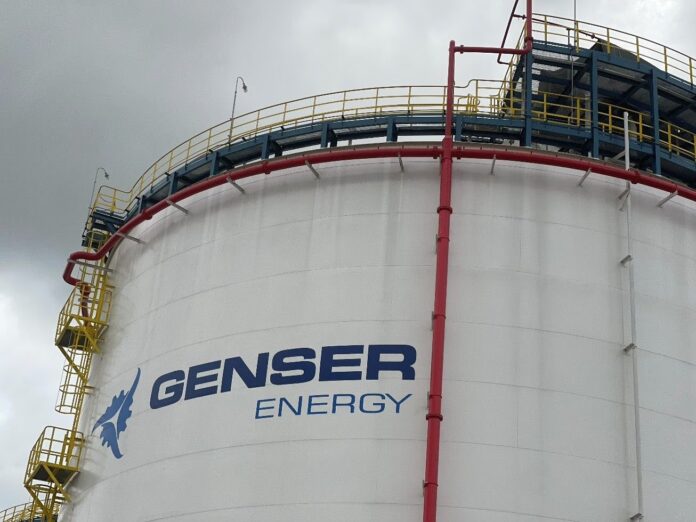

- Genser Energy Secures €456 Million Financing to Accelerate West African Expansion
Ghana-based Genser Energy has secured €456 million in new term and revolving credit facilities, giving the privately owned energy infrastructure company additional financial capacity to complete major projects and accelerate a regional expansion strategy increasingly centred on an integrated gas-to-power platform across West Africa.
The financing was arranged by Rand Merchant Bank, Absa Bank and Standard Bank of South Africa, and will provide working capital for ongoing engineering, procurement and construction projects while strengthening Genser’s balance sheet and supporting further investment.
The transaction is significant in a regional market where infrastructure developers continue to contend with high borrowing costs, foreign-exchange risk and relatively limited access to long-tenor commercial capital.
The latest funding extends a period of unusually large-scale capital mobilisation by the company. In 2025, Genser Energy Ghana completed a US$428 million corporate refinancing, while Genser Energy d’Ivoire secured a €200 million equipment loan facility, demonstrating continued lender appetite for the company’s infrastructure model and expansion plans.
Taken together, the transactions point to a business moving beyond its origins as a predominantly Ghana-focused power producer towards a broader regional energy infrastructure platform. The latest €456 million package therefore represents more than working capital, because it provides Genser with the liquidity and balance-sheet flexibility required to build, commission and scale capital-intensive assets across multiple jurisdictions.
“Since day one, Genser has taken a long-term approach to building energy infrastructure across West Africa,” said Baafour Asiamah-Adjei, chief executive of Genser Energy. “This financing reflects the confidence our financial partners continue to place in that vision, and we are grateful for the support of RMB, Absa and Standard Bank.”
“As we continue to grow, our focus remains unchanged: investing in large-scale infrastructure that delivers reliable energy, supports industry and creates long-term value for the countries and communities we serve,” he added.
The emphasis on industrial energy supply is particularly important because electricity reliability and energy costs remain among the most persistent constraints facing manufacturers, miners and other energy-intensive businesses across West Africa.
In Ghana, Genser has built installed generation capacity of more than 334MW and owns and operates a 436-kilometre privately developed natural gas pipeline network. Its activities now extend beyond electricity generation into gas transportation and processing, giving the company a more integrated position across the energy value chain and reducing its dependence on a single segment of the market.
That model is becoming increasingly relevant as Ghana seeks to extract greater economic value from domestic natural gas while reducing exposure to more expensive imported fuels. Reliable gas infrastructure can improve the economics of thermal generation, support industrial users and potentially reduce foreign-exchange demand associated with imported petroleum products, although the scale of those benefits will depend on gas availability, pricing and utilisation rates.
The next major milestone is expected later this year, when Genser plans to commission its Gas Conditioning Plant and the Takoradi Natural Gas Liquids Export Terminal. Those projects could deepen Ghana’s midstream infrastructure and improve the country’s capacity to process, transport and commercialise domestic gas resources more efficiently.
Their significance extends beyond Genser’s own financial performance because gas processing infrastructure can influence electricity generation costs, industrial competitiveness and the utilisation of upstream resources. A functioning midstream system can also reduce bottlenecks between production fields and end users, improving the reliability of supply for power producers and large industrial customers.
The new financing also gives Genser greater scope to expand outside Ghana, particularly in Côte d’Ivoire, where industrial growth, urbanisation and rising electricity demand are creating opportunities for additional energy infrastructure.
Genser’s presence there could gradually transform the group into a genuinely regional operator with assets spanning power generation, gas infrastructure and cross-border energy flows.
That regional strategy fits a broader shift in West Africa, where energy markets remain fragmented despite efforts to deepen electricity trading and improve interconnection. Companies capable of developing infrastructure across several countries could become increasingly important as governments seek to improve energy security without relying exclusively on public investment.
Genser already participates in cross-border electricity exports, providing a foundation for that wider regional role. If expanded successfully, its model could position the company as both an infrastructure owner and an energy platform linking gas supply, power generation and industrial demand across national markets.
Rapid expansion nevertheless brings financial risks, particularly because large gas and power projects require substantial upfront capital while returns are generated over long periods.
Borrowing in euros and other international currencies can also create foreign-exchange exposure where revenues are partly denominated in local currencies, making disciplined leverage and predictable offtake agreements increasingly important.
The structure of the latest financing provides some flexibility in managing those risks. Term facilities can support longer-duration capital requirements, while revolving credit allows Genser to draw and repay liquidity as working-capital needs change during construction, commissioning and expansion phases.
More broadly, the transaction carries significance for private infrastructure financing in West Africa. With many governments facing constrained fiscal space and elevated debt burdens, the ability of private companies to mobilise hundreds of millions of euros from commercial lenders could become increasingly important in closing infrastructure gaps without placing the entire financing burden on sovereign balance sheets.
For Genser, the €456 million package follows its strategic shareholder transition announced in July 2026 and provides a financial platform for the next phase of growth. For Ghana and the wider region, however, the more important test will be whether that capital translates into more reliable energy, lower industrial disruption and stronger regional infrastructure integration.
If Genser successfully commissions its new Ghanaian assets while scaling its operations in Côte d’Ivoire and other West African markets, the latest financing could prove to be more than another corporate funding transaction. It could become the financial foundation for one of the region’s most ambitious privately developed gas-and-power infrastructure networks.

