

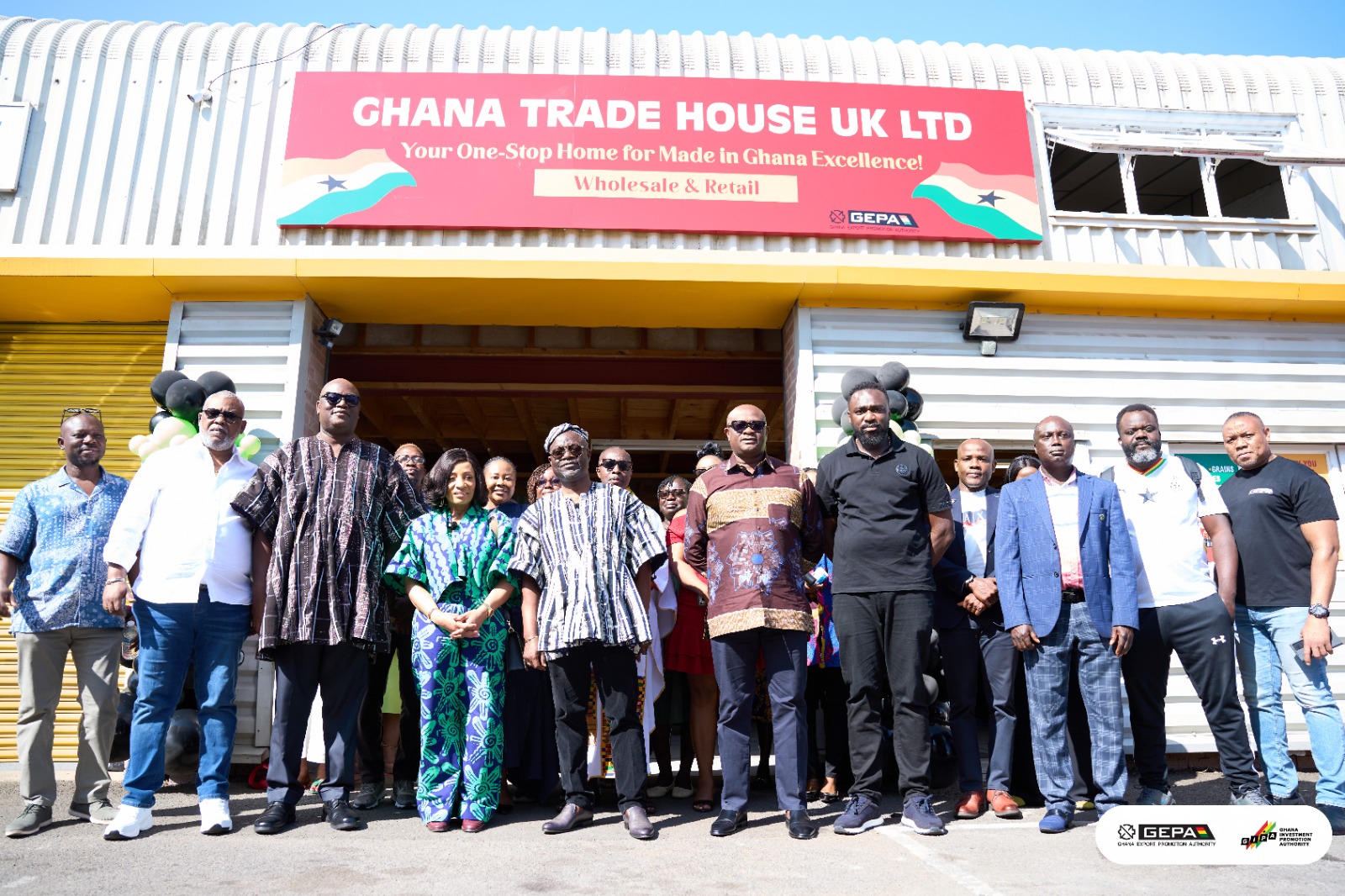

- GEPA Launches London Trade House to Push Made-in-Ghana Exports and Investment
Ghana has opened a permanent Trade House in London to give local exporters a stronger foothold in the United Kingdom, as bilateral trade between the two countries reached £1.60 billion at the end of 2025.
The facility, established by the Ghana Export Promotion Authority in partnership with the Ghana High Commission in the UK and other stakeholders, is intended to serve as a permanent marketplace and investment hub for export-ready Ghanaian businesses seeking deeper access to one of the world’s most sophisticated consumer and financial markets.
The Trade House will showcase products across processed foods, beverages, textiles, cosmetics and light manufacturing, while also serving institutional buyers and investors looking for structured access to Ghanaian firms.
The facility is expected to host business-to-business meetings, sector-focused promotions, investor engagements and themed events designed to connect UK buyers with individual companies as well as Ghana’s broader trade and investment ecosystem.
For Ghana, the initiative represents an attempt to shift from episodic trade missions towards a permanent market-development presence.
That matters because one of the persistent constraints facing exporters is not necessarily production alone, but sustained visibility, distribution, warehousing, branding and relationship-building in destination markets.
GEPA Chief Executive Officer Francis Kojo Kwarteng Arthur said the London hub would provide Ghanaian exporters with a dedicated location where products can be discovered, tested and scaled.
“For our businesses, London is no longer just a destination in our export statistics; it is a city where Ghanaian brands can build real shelf presence and long-term relationships,” he said.

The London facility follows the establishment of similar Ghana Trade Houses in Nairobi and Philadelphia, forming part of a broader strategy to provide exporters with warehousing, branding and market-entry support while giving foreign investors early exposure to high-potential Ghanaian companies.
The UK market is particularly important because of the scale of the existing commercial relationship.
According to the latest UK government trade factsheet cited at the launch, total trade in goods and services between Ghana and the UK reached £1.60 billion at the end of 2025, an increase of 12.50% from the previous year.
UK imports from Ghana rose to £697.00 million, reflecting stronger demand for Ghanaian products, while British exports to Ghana remained concentrated in machinery, textiles, vehicles, pharmaceuticals and other industrial inputs.
The investment relationship is also substantial.
More than 670 UK foreign direct investment projects have been recorded in Ghana over the past two decades, with cumulative investment exceeding £6.80 billion.
That existing commercial base provides the London Trade House with a stronger foundation than a greenfield export promotion effort.
Ghana’s High Commissioner to the UK and Ireland, Sabah Zita Benson, said the new facility would give the bilateral relationship a more practical and visible expression.
“By opening this Trade House, we are giving that partnership a new, everyday expression: Ghanaian products on display in London, backed by Ghanaian and British institutions committed to expanding trade and investment,” she said.
The policy objective is also closely tied to Ghana’s non-traditional export strategy.
Speaking on behalf of Chief of Staff Julius Debrah, Deputy Chief of Staff for Operations Stanislav Xoese Dogbe said recent improvements in the non-traditional export sector reflected the government’s accelerated export development agenda.
“Platforms like this will allow more Ghanaian products to be brought closer to us. GEPA is there to assist all these businesses, whether small or big, to be able to penetrate these international markets,” he said.
Ghana’s export base remains heavily dependent on commodities such as gold, cocoa and crude oil. Expanding non-traditional exports could help diversify foreign-exchange earnings, reduce vulnerability to commodity-price cycles and support more labour-intensive domestic production.
But achieving that requires more than producing exportable goods.
Small and medium-sized businesses often struggle with certification, packaging, logistics, product consistency, distribution contracts and the cost of establishing a physical presence overseas.
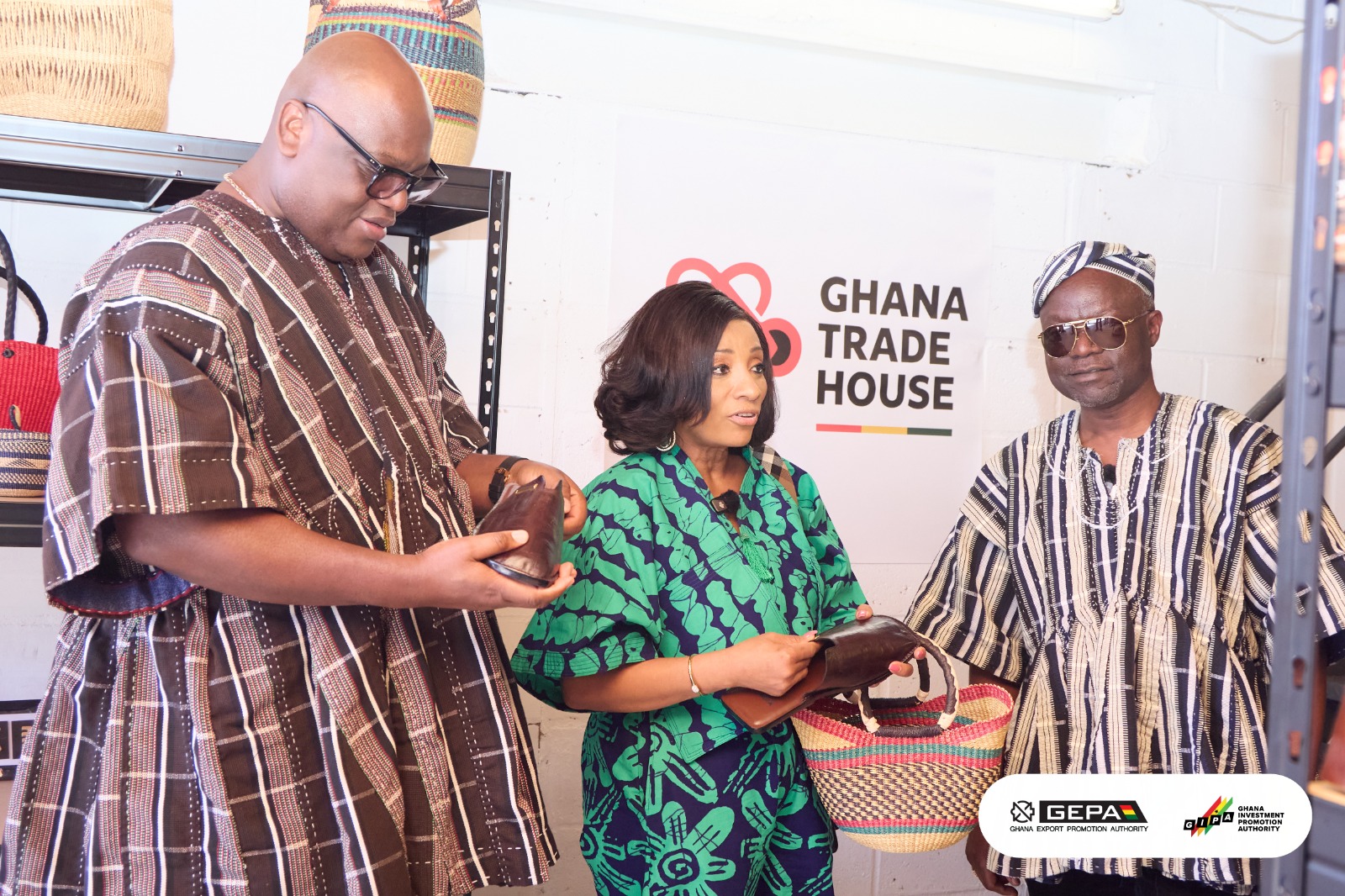
A permanent Trade House can help address some of those market-entry barriers, particularly if it is able to connect exporters directly with distributors, supermarkets, institutional buyers and investors.
The success of the model, however, will depend heavily on execution.
A physical showroom alone will not materially change export performance unless it is supported by active buyer development, market intelligence, logistics support and consistent product availability.
Exporters will also need to meet UK standards on quality, packaging, labelling and regulatory compliance if initial interest is to translate into repeat commercial orders.
That makes the data and investment component of the Trade House potentially as important as its retail function.
Ghana Investment Promotion Authority Chief Executive Simon Madjie said the London launch demonstrates the type of partnership required to turn export potential into investment and shared prosperity.
He said the facility could help create new investment opportunities by giving international investors a clearer view of Ghanaian businesses and sectors capable of scaling.
That linkage between exports and investment is significant. A company that develops sustained demand in the UK may eventually require additional capital, technology or production capacity in Ghana, creating the possibility that export promotion itself becomes a catalyst for new foreign direct investment.
The London Trade House therefore represents more than a branding exercise.
It is part of a wider attempt to build permanent commercial infrastructure around Ghana’s non-traditional export sector.
The immediate opportunity is to convert stronger Ghana-UK trade into greater shelf presence and more contracts for Ghanaian firms.
The longer-term test will be whether the facility can help move Ghanaian exporters from occasional overseas sales into durable, repeat business relationships.
If that happens, London could become not only a showcase for Made-in-Ghana products, but a strategic gateway for Ghanaian companies seeking to scale into the wider European market.

