

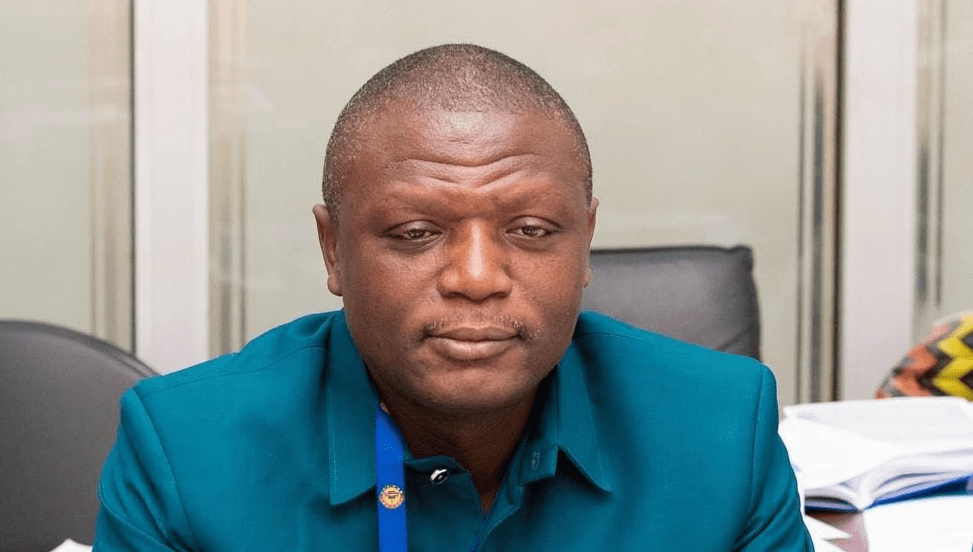

- Ghana Expects US$12.5mn FIFA World Cup Payout by End-September — Kofi Adams
Ghana expects to receive about US$12.5 million from FIFA before the end of September following the Black Stars’ participation in the 2026 World Cup, with the proceeds set to be transferred into the country’s newly established Sports Fund, according to Sports and Recreation Minister Kofi Adams.
Mr Adams said FIFA was completing tax and other settlement processes with the United States, Canada and Mexico, the tournament’s host countries, before determining the final amount payable to Ghana following the national team’s campaign.
“The country is supposed to benefit from its participation in this World Cup,” the Minister said, adding that government expects the outstanding processes to be concluded before the end of September. He said the final amount would become clearer once tax issues and FIFA’s arrangements with the host countries had been settled.
The funds are expected to pass through the Ghana Football Association before being transferred to the Ghana Sports Fund, which Parliament established as a permanent statutory mechanism for financing sports and recreation.
Parliament passed the Ghana Sports Fund legislation in December 2025 and it subsequently received presidential assent as the Ghana Sports Fund, 2025 (Act 1159). The government has presented the Fund as a mechanism for reducing the sports sector’s reliance on unpredictable central-government allocations and providing more sustainable financing for athlete development, infrastructure and national sporting programmes.
The expected FIFA payment could therefore provide an early significant inflow into the new financing structure at a time when Ghana is attempting to make the funding of national teams and other sporting disciplines more predictable.
There is, however, an unresolved difference between the Minister’s latest US$12.5 million estimate and earlier calculations of Ghana’s World Cup entitlement.
The Black Stars reached the Round of 32 before being eliminated 1-0 by Colombia in Kansas City. Earlier reporting calculated that performance as securing Ghana at least US$13.5 million, consisting of US$11 million for reaching the first knockout round and US$2.5 million in preparation funding.
FIFA had originally announced in December 2025 that teams finishing between 17th and 32nd would receive US$11 million in prize money, alongside US$1.5 million in preparation support. In April, FIFA increased the preparation allocation for each participating association to US$2.5 million as part of a wider expansion of financial distributions to the 48 teams.
On that basis, Ghana’s gross entitlement following its Round-of-32 finish had been understood to be at least US$13.5 million. Mr Adams’ latest reference to approximately US$12.5 million therefore leaves a difference of about US$1 million that has not yet been publicly reconciled.
The Minister indicated that taxation and final settlement arrangements remain outstanding, suggesting the amount eventually received could differ from the headline gross entitlement. The precise treatment of the difference has not yet been disclosed.
That distinction will be important for public accountability because Ghana’s participation in the tournament has already generated scrutiny over government expenditure.
Finance Minister Ato Forson said in July that government spent about GH¢58 million on the Black Stars’ World Cup campaign, out of an allocation of GH¢150 million that had been made on the assumption that Ghana could progress as far as the final.
Mr Adams has separately disclosed that approximately US$1.26 million was spent on 2,922 spectator tickets during the tournament. The beneficiaries included supporters’ groups, Ghana’s diplomatic missions in North America, diaspora organisations, students, members of the official government delegation and selected Ghana Football Association officials.
Those figures mean the expected FIFA inflow will be assessed not only as tournament revenue but also against what Ghana spent to participate in the competition and how the proceeds are subsequently deployed.
The Sports Fund provides a potentially important mechanism for separating tournament windfalls from immediate discretionary expenditure and directing them into a longer-term financing structure.
Ghanaian sport has historically depended heavily on annual government allocations, supplementary requests and event-specific financing, leaving several federations struggling to plan over multiple years.
A properly capitalised Sports Fund could provide greater visibility for athlete preparation, grassroots programmes, national-team commitments and infrastructure projects. But its credibility will depend on transparent reporting of inflows, allocations and expenditure.
That makes the treatment of the World Cup payment an early test of the new institutional framework.
The Minister has said the money will be transferred to the Fund once received through the GFA, in line with the statutory financing arrangements created by Parliament.
Beyond the financial settlement, Mr Adams said Ghana’s World Cup campaign had also highlighted lessons around preparation, coaching quality, playing philosophy and long-term planning for the national team.
The Black Stars played four matches at the tournament, progressing from Group L before their Round-of-32 elimination by Colombia. Their advancement into the knockout stage placed Ghana among the African teams guaranteed the higher US$11 million performance-payment tier.
Attention will now turn from what Ghana earned on the pitch to how the proceeds are accounted for off it.
The immediate question is whether the final FIFA settlement is US$12.5 million, US$13.5 million or another net figure after outstanding tax adjustments. The longer-term question is whether Ghana can use the proceeds to establish the Sports Fund as a transparent and predictable financing vehicle rather than allowing another World Cup windfall to be absorbed without a clear link to future sports development.

