

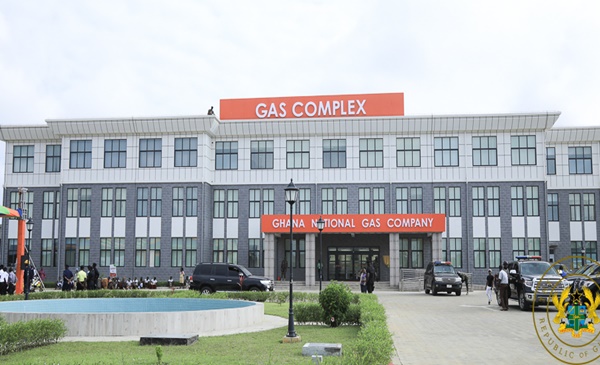

- Ghana Gas Profitability Must Translate into Cheaper, More Reliable Power — PURC
Ghana’s electricity consumers could eventually benefit from lower power costs if the Ghana National Gas Company sustains its recent profitability, improves operational efficiency and continues investing in infrastructure, according to the Public Utilities Regulatory Commission.
The assessment places Ghana Gas at the centre of the country’s effort to address one of the most persistent structural pressures in the energy sector: the cost of producing electricity.
Dr Shafic Suleman, Executive Secretary of the PURC, said the company’s recent financial performance indicates that stronger operational discipline and continued investment could translate into lower costs across the electricity value chain.
Speaking in Takoradi during an industrial tour of Ghana Gas facilities by PURC commissioners and management, Dr Suleman praised the company’s recent performance and urged management to sustain the momentum.
“The profits you saw them declare have been indicated. It’s an indication of their performance. I mean, over the last one and a half years, it means that they’ve performed so well, and we are giving them credit for that,” he said.
The comments highlight the relationship between the economics of domestic natural gas and the amount ultimately paid by electricity consumers.
Gas is an important fuel for Ghana’s thermal generation system. Improvements in the processing, transportation and reliability of domestic gas can therefore potentially reduce pressure on generators that might otherwise have to rely on more expensive alternative fuels.
That makes Ghana Gas more than simply a profitable state-owned company. Its operational performance can influence the cost structure further along the electricity supply chain.
Dr Suleman said the financial health of the company should therefore remain an important part of Ghana’s wider energy strategy.
“We are encouraging them to continue under the current CEO to continue to maintain stability and also continue to maintain their profits or profitability going forward,” he said.
But profitability alone will not determine what consumers eventually pay.
Electricity tariffs reflect costs across generation, transmission, distribution, fuel supply and other parts of the energy system. Stronger financial performance at Ghana Gas can therefore improve one component of the chain without automatically producing an immediate reduction in tariffs.
The more important issue is what the company does with that stronger financial position.
If profits support infrastructure investment, improve processing capacity, reduce operational inefficiencies and strengthen gas supply to power producers, the resulting gains could eventually help lower the cost of generation.
Dr Suleman made that connection directly. “I’m sure if they keep on investing, it will end up reducing the cost of utility provision, and that’s so if Ghana Gas maintains its current work ethics and also maintains profitability, in the long run the cost of power will also reduce,” he said.
High electricity costs affect manufacturers, miners, retailers and other energy-intensive sectors, increasing production expenses and reducing competitiveness.
For manufacturers in particular, more reliable and lower-cost power can improve planning, reduce operating expenses and strengthen the ability of local producers to compete with imported goods.
That means any efficiency gains at Ghana Gas could have consequences extending far beyond household electricity bills. The broader economic benefit would come through lower operating costs across industry.
But the link between gas-company profitability and final consumer tariffs remains indirect. A profitable Ghana Gas does not automatically mean a cheaper electricity bill the following month.
The gains must first show up through investment, stronger infrastructure and more efficient delivery of gas to generators. That is why PURC’s argument is fundamentally about operational efficiency rather than profitability for its own sake.
The stronger Ghana Gas becomes financially, the greater its ability to maintain and expand infrastructure without creating additional pressure elsewhere in the energy system. Continued investment could also reduce the likelihood of supply disruptions that force power producers to switch to more expensive fuels.
In that sense, the economic value of profitability is not the profit figure itself. It is the capacity that profitability gives the company to reinvest. For Ghana, that distinction matters because problems in one part of the energy value chain can quickly spread across the system.
A stronger and more efficient domestic gas system can help stabilise fuel supply, improve generation economics and gradually reduce pressure on consumer tariffs.
PURC is therefore effectively arguing that Ghana Gas should be assessed partly by the wider value it creates across the power sector. Dr Suleman stressed that keeping the company operational and financially sustainable should be regarded as a national economic interest.
“So it’s in the interest of all Ghanaians that Ghana Gas is operational. Ghana Gas is profitable going forward,” he said.
The longer-term test will be whether that profitability is converted into measurable improvements. Consumers will ultimately care less about the company’s financial statements than whether electricity becomes more reliable and affordable.
Businesses will judge the outcome by whether power costs become more predictable. And regulators will need to assess whether the operational gains at Ghana Gas are actually flowing through the system.
If Ghana Gas continues strengthening its infrastructure, expanding its capabilities and lowering inefficiencies, the company could contribute to a more competitive gas-to-power system. If profitability is not translated into productive investment, however, the wider economic benefits will be more limited.
PURC’s message is therefore not that Ghana Gas profits automatically reduce electricity tariffs. It is that sustained profitability can create the conditions for lower costs if it is accompanied by continued investment and operational efficiency.
The real measure of Ghana Gas’ success will not simply be whether the company remains profitable. It will be whether that profitability helps reduce the cost of supplying gas, improves the reliability of the energy system and ultimately lowers the cost of powering the Ghanaian economy.

