

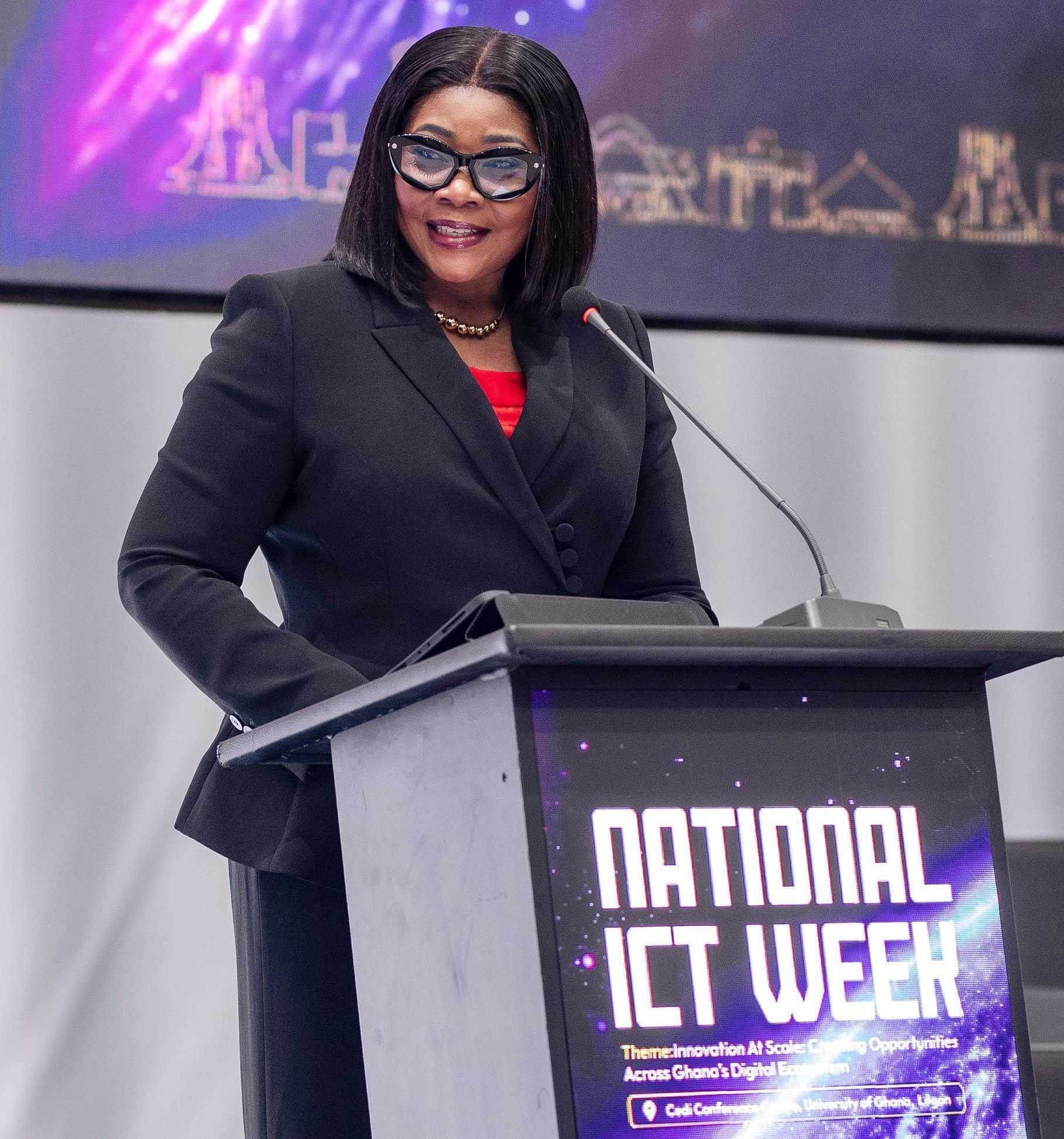

- Ghana Has Built Payment Rails but Not Credit Rails — Deputy Governor
The Bank of Ghana says Ghana must redefine financial inclusion beyond the number of accounts, wallets and transactions, arguing that the next phase of digital finance should be measured by whether households and businesses can access credit, insurance and investment on fair terms.
Second Deputy Governor Matilda Asante-Asiedu said Ghana had already built strong foundations for scaled financial innovation through interoperability, mobile money, digital identity infrastructure and regulatory reforms, but the country’s biggest remaining challenge was converting that infrastructure into wider access to productive finance. She delivered the remarks at the third Distinguished Digital Finance Lecture at the University of Ghana on August 17, 2026.
Her central argument was that Ghana no longer faces a problem of invention as much as one of coordination. “Ghana already has real foundations for scaled financial innovation. The task ahead of us is not invention. It is coordination,” she said, framing regulation as the infrastructure that allows successful financial products to become widely trusted and universally accessible.
The scale already achieved in payments is considerable. In June 2026 alone, mobile money platforms processed 954 million transactions valued at approximately GH¢493 billion, while Ghana had roughly 84.6 million registered mobile money accounts, of which 26.4 million were active, supported by more than one million registered agents.
The Bank of Ghana argues that the infrastructure supporting those transactions now needs to be deployed more effectively for credit creation.
GhanaPay has onboarded more than two million users since 2022, the Ghana Card has lowered onboarding costs within the formal financial system, while Instant Pay, Mobile Money Interoperability and e-zwich have created an increasingly interconnected payments architecture.
Yet the sophistication of the payments system contrasts sharply with Ghana’s estimated US$4.8 billion annual SME financing gap. Ms Asante-Asiedu said a business can receive payment within seconds through Ghana Instant Pay but may still wait months for a working-capital decision because lenders do not routinely use the same digital footprint as part of credit assessment.
“We have built extraordinary payment rails; but we have not yet built equally extraordinary credit rails,” she said. The Deputy Governor described the disconnect between transaction data and credit access as one of Ghana’s largest unrealised financial opportunities, arguing that the country does not fundamentally lack capital but suffers from weaknesses in the architecture that connects available liquidity with businesses that need financing.
A significant part of the problem, she argued, is the financial sector’s conventional understanding of collateral. Land, buildings, equipment and financial instruments remain important forms of security, but a growing share of value within modern businesses sits in contracts, receivables and predictable transaction histories that are not treated the same way under existing lending and capital frameworks.
Confirmed purchase orders, export contracts and multi-year service agreements can represent verifiable claims on future income, but lenders need stronger legal and prudential frameworks before such assets can be used more effectively in financing decisions.
Ms Asante-Asiedu said the missing pieces include clearer assignment mechanisms, enforceability against competing creditors and collateral eligibility rules capable of recognising such claims for capital purposes.
Transaction data presents another opportunity. Mobile money records can reveal the volume and regularity of cash flows, whether balances are retained or immediately withdrawn, merchant-payment patterns and whether business activity is expanding or weakening, providing lenders with information that can support more sophisticated risk assessment.
“That is not background information; it is a credit record. We have simply not built the habit of reading it as such,” she said. The Bank of Ghana is therefore positioning open banking and open finance as mechanisms for allowing customer-authorised financial information to support credit decisions and greater competition between financiers.
The central bank has committed to finalising and implementing those frameworks with SME credit rather than technological deployment as the principal measure of success. Ms Asante-Asiedu said the benchmark should not be the number of APIs published, but how much additional financing reaches businesses because lenders can see transaction histories and customers can seek better terms from competing providers.
The Bank is also confronting regulatory fragmentation and cybersecurity risks as digital finance expands. Digital lenders, insurtech companies and virtual-asset providers increasingly cross traditional regulatory boundaries, while greater interoperability creates a larger common attack surface for cybercrime and operational disruption.
To address that challenge, the central bank intends to pursue more coordinated regulation with the National Insurance Commission and Securities and Exchange Commission through the Financial Stability Council.
It also plans to strengthen resources supporting the Cyber and Information Security Directive 2026 so that smaller institutions, including Community Banks, can meet acceptable resilience standards rather than cybersecurity becoming affordable only to the largest banks.
The broader message is that Ghana’s payments revolution is no longer sufficient as a measure of financial progress. A citizen may own an account, operate a wallet and conduct hundreds of digital transactions but still remain excluded from the credit system required to expand a business, protect against risk or build long-term wealth.
“The next standard for inclusion in this country should be whether people can access credit, insurance and investment on fair terms when they need to,” Ms Asante-Asiedu said. For the Bank of Ghana, the next phase of financial innovation will therefore be judged not by how quickly money moves, but by whether the digital infrastructure already built can help more Ghanaians borrow, invest and grow on sustainable terms.

