


- Ghana Inflation Eases to 4.60% in July as Food Prices Cool, Services Remain Sticky
Ghana’s consumer inflation eased to 4.60% in July 2026, reversing June’s surprise acceleration and strengthening evidence that overall price pressures remain contained, although stubbornly higher services and non-food inflation suggest that the country’s inflation battle is increasingly changing shape rather than disappearing.
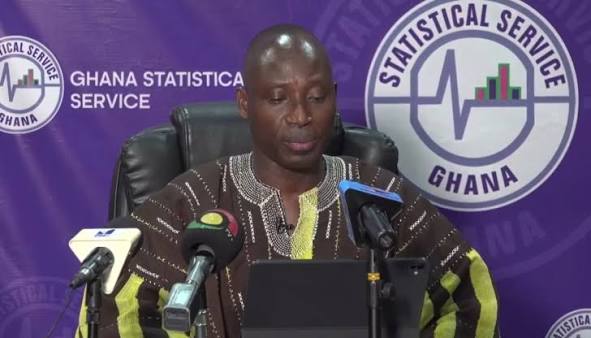
Data from the Ghana Statistical Service showed that year-on-year inflation declined by 0.70 percentage points from 5.30% in June, while prices increased by only 0.10% month-on-month in July.
The Consumer Price Index rose to 271.1 from 270.8 in June, with the latest reading meaning that the general price level was 4.60% higher than in July 2025.
The decline is particularly significant after inflation accelerated from 3.70% in May to 5.30% in June, interrupting several months of relatively subdued price growth and raising questions over whether Ghana was beginning to encounter renewed inflationary pressure.
But underneath the headline number, the inflation picture is becoming increasingly divided.
Food inflation dropped to 3.10% from 3.90% in June, while non-food inflation remained almost twice as high at 6.10%, although slightly below June’s 6.30%.
For much of Ghana’s recent inflation crisis, food was one of the strongest drivers of household cost pressures. July’s figures suggest that food is now helping pull headline inflation down while services, housing-related expenses, education, financial services and transport are carrying a greater share of the remaining inflation burden.
The contrast is even clearer when goods and services are separated. Goods inflation stood at just 3.40% in July, compared with services inflation of 8.50% two and a half times the rate of goods inflation.
Services inflation moderated from 9.40% in June, but remains substantially above overall inflation, while goods inflation declined from 3.70%. The month-on-month data showed services prices rising 0.40%, while goods prices were essentially unchanged.
That could become one of the more consequential aspects of Ghana’s inflation outlook.
Goods prices can respond relatively quickly to exchange-rate movements, commodity prices and changing supply conditions. Services inflation can prove more persistent because it is often linked to wages, rents, administrative prices and other domestic costs that adjust more slowly.
July therefore tells two stories at once: Ghana’s headline inflation rate is falling again, but some of the most domestically rooted components of the inflation basket remain noticeably elevated.
Insurance and financial services recorded the highest inflation among the major non-food divisions at 9.70%, followed by education services at 9.40%.
Housing, water, electricity, gas and other fuels recorded inflation of 8.30%, restaurants and accommodation services stood at 8.20%, while transport inflation remained elevated at 7.50%.
Recreation, sport and culture recorded 6.10%, while personal care and related services registered 5.30%.
Transport deserves particular attention. It recorded negative year-on-year inflation for much of the period from July 2025 through May 2026, including -2.80% in May. That position changed dramatically in June when transport inflation jumped to 9.10%, before moderating to 7.50% in July.
The development helps explain why headline inflation rose sharply in June and then eased in July.
It also reinforces the vulnerability of Ghana’s inflation outlook to energy and transport costs even as broader price pressures remain relatively controlled.
Food, meanwhile, provided a substantial counterweight. Overall food and non-alcoholic beverages inflation slowed to 3.10%, and prices in that category actually declined 0.10% month-on-month.
Some important food categories were in outright annual deflation. Cereals and cereal products recorded -10.70% inflation, oils and fats -3.80%, tea and related products -2.90%, and milk, other dairy products and eggs -1.20%.
Fish and other seafood inflation slowed to 3.20%, from 6.20% in June, while fruits and nuts inflation declined sharply to 15.20% from 18.80%.
Not all food categories were benign, however. Ready-made food and other food products recorded inflation of 14.50%, while coffee and coffee substitutes remained unusually elevated at 17.80%. The detailed food-price table therefore shows that lower aggregate food inflation continues to mask significant differences across individual household staples.
There is an equally striking divergence between locally produced and imported inflation.
Inflation for locally produced goods and services stood at 5.90% in July, almost three times the 2.00% recorded for imported items.
Imported inflation declined from 2.30% in June, with imported prices falling 0.10% month-on-month. Locally produced inflation also moderated from 6.70%, although domestic prices increased 0.10% during July.
The gap suggests that Ghana’s current inflation pressures cannot be explained primarily by imported prices.
Instead, a significant portion is now emanating from domestic cost structures — potentially reinforcing the importance of productivity, utility prices, transportation, wages and locally determined service costs in the next phase of disinflation.
Regional differences are even more dramatic. The national 4.60% rate conceals an inflation range stretching from -3.80% in Bono East to 10.80% in North East.
Central Region recorded 7.50%, Ashanti 7.60%, Eastern 6.10%, Greater Accra and Ahafo each 4.70%, while Volta matched the national average at 4.60%.
At the other extreme, Western recorded deflation of -1.50%, Savannah -1.40%, while Upper East inflation was only 0.30%. Six regions recorded rates above the national average.
North East stands out sharply, largely because food inflation in the region reached 20.70%, compared with the national food inflation rate of just 3.10%.
Bono East, by contrast, recorded food deflation of -7.50% and non-food deflation of -6.30%, producing the country’s lowest overall regional inflation at -3.80%.
For policymakers, July’s data should therefore provide reassurance without encouraging complacency.
Headline inflation has fallen substantially from 12.10% in July 2025 to 4.60% one year later, and the July monthly increase of only 0.10% points to relatively subdued immediate price momentum. It also means the June increase to 5.30% has, at least for now, not developed into a sustained upward trajectory.
But the composition of inflation matters increasingly as the headline rate becomes lower.
With food inflation at 3.10%, goods at 3.40% and imported inflation at 2.00%, the remaining pressure is concentrated more heavily in non-food items, services and specific domestic cost categories.
That distinction will matter for the Bank of Ghana. A central bank can take comfort from a 4.60% headline rate, particularly when month-on-month inflation is only 0.10%. But services inflation at 8.50%, education at 9.40%, insurance and financial services at 9.70%, housing and utilities at 8.30%, and transport at 7.50% suggest that the final stage of restoring durable price stability may prove more complicated than the headline number implies.
July therefore marks a welcome return to disinflation after June’s temporary setback.
The bigger question is whether Ghana can now keep inflation low while pulling down the stickier parts of the basket. For households, that distinction is not academic.
Inflation at 4.60% signals that prices overall are increasing far more slowly than a year ago. It does not mean prices are falling, and it does not mean every household is experiencing the same rate.
For some consumers, particularly those spending heavily on transport, education, housing or other services, the cost-of-living pressure remains considerably stronger than Ghana’s headline inflation number suggests.
And that may now be the defining feature of Ghana’s inflation story: the national rate is increasingly comfortable, but beneath it, the battle against the last pockets of persistent price pressure is far from finished.

