


- Ghana Is Leaving the Emergency Room; The Harder Test Is Whether It Can Stay Out
Ghana’s 2026 Mid-Year Fiscal Policy Review is, in form, a statutory budget update. In substance, it is something larger: a political claim of economic vindication, a fiscal restraint statement, an investor-facing credibility document and a post-IMF transition manifesto wrapped into one.
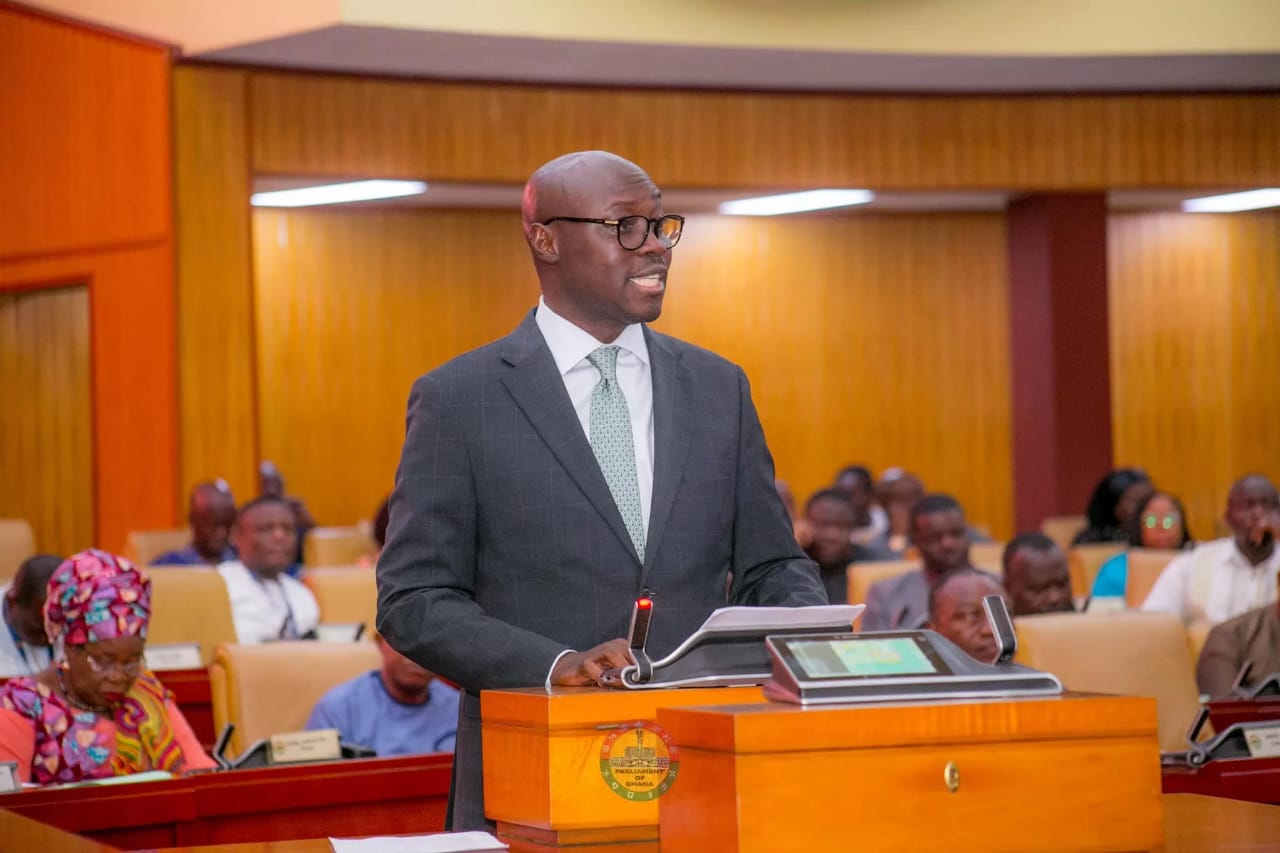
Presented to Parliament by Finance Minister Dr Cassiel Ato Forson on Thursday, July 23, 2026, the review carries the government’s chosen framing clearly on its cover: “Resetting for Growth, Jobs, and Economic Transformation.” It is not merely reporting numbers. It is trying to persuade Ghanaians, creditors, investors and development partners that the country has moved from crisis stabilisation to a more durable phase of reform.
The central message is restraint. Government is not seeking a supplementary budget. It says the 2026 appropriations remain unchanged and that it will instead undertake a “strategic realignment” of spending within the existing envelope. At the same time, it reaffirms the year’s major macroeconomic targets: real GDP growth, non-oil growth, inflation within the 8.00% ± 2.00 percentage-point band, a primary surplus of 1.50% of GDP and reserves covering at least three months of imports.
That choice matters. In Ghana’s fiscal history, mid-year reviews often become opportunities to loosen policy, revise spending demands or quietly reset targets. This one does the opposite. The government is trying to signal that recovery will not become an excuse for fiscal expansion. It is saying, in effect, that the discipline required to escape crisis must become the discipline required to sustain growth.
But there is a tension at the heart of the statement. Ghana’s economy is performing better than expected, yet the government is refusing to spend more. Citizens are being told that the country has moved from the “emergency room” to the “wellness centre,” but also that stability is still fragile and must be protected. Investors will welcome the restraint. Households may ask when stability will become visible relief.
Dr Forson’s political argument is blunt. He says the Mahama administration inherited an economy “on its knees” in January 2025, after reckless spending, excessive borrowing, weak accountability and failure to level with citizens about the true state of public finances. The statement lists the consequences: cedi collapse, inflation above 50.00%, high interest rates, depleted reserves, sovereign downgrades, loss of market access, debt restructuring, haircuts and hardship.
That framing is not accidental. The government wants the 2026 review read through the lens of memory: Ghana was in crisis, policy changed, and the numbers improved. Dr Forson rejects the suggestion that the recovery is simply the product of debt restructuring or the IMF programme, arguing instead that it reflects “superior economic management.” The recovery, he says, has been anchored on three transformational reforms: fiscal correction, tax modernisation, and fiscal policy support for inflation targeting and exchange-rate stability.
The numbers provide the government with a strong opening case. In 2025, real GDP grew by 6.00%, while non-oil GDP expanded by 7.60%, the strongest in 14 years. Ghana’s nominal economy crossed GH¢1.40 trillion and exceeded US$100.00 billion, while GDP per capita rose to US$3,384.80, a 33.90% increase from US$2,527.30 in 2024. Services and agriculture drove the 2025 expansion, with information and communication growing by 20.20% and gold expanding by 19.60% in real terms.
The momentum continued into the first quarter of 2026. Overall GDP grew by 6.40%, ahead of the full-year target, while non-oil GDP grew by 6.30%. Services expanded by 7.10%, industry by 6.90% and agriculture by 4.00%. The return of oil and gas to positive growth, supported by about US$3.50 billion in new investment, is particularly important because the petroleum sector had become a drag on industrial performance.
Yet the composition of growth is as important as the headline number. The government insists that Ghana’s recovery is not merely a commodity story. That claim is partly supported by strong services growth, ICT performance, trade, transport and agriculture. But gold remains central to the recovery narrative, the external account and the currency story. That creates both opportunity and vulnerability.
Inflation is the clearest sign of stabilisation, but also the clearest warning against complacency. The review says inflation fell from 23.80% in December 2024 to 5.40% in December 2025 and reached a seven-year low of 3.20% in March 2026. By June, however, it had risen to 5.30%. More importantly, the June data show that inflation had become largely domestic: locally produced items rose by 6.70% and drove nearly 87.00% of inflation, while imported items increased by only 2.30%. Services inflation stood at 9.40%, reflecting higher bus and trotro fares.
That is the buried warning in the recovery story. Ghana has defeated the first-round crisis inflation driven by currency collapse and broad macroeconomic instability. But it now faces a second kind of price pressure: local services, transport, administered prices and domestically produced goods. This is harder to solve with interest rates alone. It requires logistics, competition, energy cost control, food supply management and transport reform.
On the fiscal side, the statement is strongest. In 2025, the primary balance on a commitment basis recorded a surplus of 2.50% of GDP, exceeding the target of 1.50%. The overall fiscal deficit on a commitment basis was 1.00% of GDP, far better than the target of 2.80%. Total expenditure fell from 22.70% of GDP in 2024 to 16.60% in 2025, while primary expenditure declined from 18.70% to 13.20%. Interest costs also eased from 4.00% to 3.50% of GDP.
The first-half 2026 outturn continues the same pattern. The primary balance on a commitment basis recorded a surplus of 0.90% of GDP, on course for the year-end target. The overall fiscal deficit on a commitment basis was 0.40% of GDP, compared with a target deficit of 2.00%. Total revenue and grants reached GH¢124.80 billion against a target of GH¢126.10 billion, while expenditure on a cash basis was GH¢136.90 billion, far below the GH¢172.50 billion target.
The expenditure numbers are politically useful because the government can claim it is not merely cutting blindly. It says compensation was below target due to payroll controls, interest payments delivered GH¢6.90 billion in savings, energy-sector shortfall payments were below target, and no new payables were accumulated. Instead, GH¢5.30 billion in arrears was cleared.
This is the most credible part of the government’s argument: commitment control appears to be biting. If government truly did not incur expenditure it could not pay for, that is a material shift in Ghana’s fiscal culture. The country’s fiscal crises have often been born not from budgets themselves but from spending outside the budget — arrears, guarantees, energy obligations, procurement commitments and state-owned enterprise liabilities that later migrate onto the taxpayer.
That is why the institutional reforms matter. The review points to amendments to the Public Procurement Act, commitment authorisation before procurement, inclusion of state-owned enterprises under commitment control, the Fiscal Council, the Value for Money Office, the Sinking Fund and a statutory fiscal rule requiring a minimum annual primary surplus of 1.50% of GDP and a 45.00% debt-to-GDP ceiling by 2034.
The bigger question is whether these institutions will remain powerful when politics becomes less favourable. Ghana has had rules before. The test is not whether rules exist, but whether they bind ministers, agencies, SOEs, contractors and political actors when spending pressure rises.
Debt is where the recovery story becomes both impressive and uncomfortable. The government says public debt fell from 61.60% of GDP at end-2024 to 44.70% at end-2025 and stood at 45.00% by end-June 2026. It argues that Ghana has achieved its 45.00% statutory debt target years ahead of schedule. Debt service as a share of domestic revenue fell from 55.70% in 2022 to 28.60% in 2025.
But the nominal debt stock remains large. Table 3 shows total public debt of GH¢719.50 billion at H1 2026, up from GH¢641.10 billion in 2025, even though the debt-to-GDP ratio is far lower than the crisis period. Domestic debt alone stood at GH¢391.10 billion, while external debt was GH¢328.40 billion.
That distinction matters for readers. The debt ratio has improved dramatically, helped by restructuring, growth, exchange-rate movements and fiscal consolidation. But Ghana is not suddenly debt-light. It has a refinancing wall ahead. The review itself acknowledges that GH¢58.00 billion of DDEP bonds will fall due in 2027 and another GH¢53.00 billion in 2028 — GH¢111.00 billion in two years. Dr Forson calls it “the true Agenda 111.”
The Sinking Fund is the government’s answer. The administration has pledged 7.00% of non-oil tax revenues, plus proceeds from domestic bond issuances, to the Sinking Fund Cedi Account. As of July 22, 2026, the fund had accumulated GH¢15.60 billion and is expected to reach GH¢30.00 billion by the end of the year, enough to repay the GH¢30.00 billion DDEP debt due in February 2027.
This is prudent. It is also necessary. Ghana’s credibility will not be rebuilt by announcing debt sustainability; it will be rebuilt by meeting the maturity wall without panic, arrears or financial repression. The Sinking Fund could become one of the most important credibility instruments in the post-restructuring era — but only if its governance is protected and reporting remains transparent.
The external account is the other major pillar of the recovery. Ghana’s trade surplus more than tripled from US$3.80 billion in 2024 to US$13.80 billion in 2025, driven largely by record gold export earnings of US$21.00 billion. Gross international reserves increased from US$9.10 billion at end-2024 to US$13.80 billion at end-2025, equivalent to 5.70 months of import cover. By June 2026, the current account surplus stood at US$5.10 billion, the trade surplus at US$8.80 billion and reserves at US$12.90 billion, covering 5.00 months of imports.
Gold is the hero of this story. It is also the risk. Gold generated US$12.50 billion in the first half of 2026 and accounted for 68.00% of total exports. That scale has supported reserves and the cedi, but it also concentrates external-sector performance in one commodity. A reserve strategy built around gold must therefore be governed with exceptional transparency.
The government is explicit about its ambition. It says the Ghana Gold Board helped generate an additional US$15.00 billion in foreign exchange inflows, improved the current account by 6.40 percentage points and forms part of the Ghana Accelerated National Reserve Accumulation Policy, which aims to raise reserves to 15 months of import cover by 2028. It has also reached agreement with large-scale mining companies to purchase 30.00% of their annual gold production for refining by local refineries.
The ambition is bold, but the cost must be watched. The review says government has allocated GH¢5.00 billion in the mid-year review to fund the cost of GANRAP and has reduced the average cost from 14.50% of gold purchased to 5.00%.
That is one of the most consequential reallocations in the budget. It tells us that Ghana is prioritising reserve accumulation as national insurance. But it also raises a hard question: how much fiscal space should be devoted to building an external war chest when infrastructure, agriculture, health and education still require large investments? The answer depends on execution. If the reserves protect the cedi, lower inflation and reduce borrowing costs, the benefits may justify the cost. If the programme becomes opaque or inefficient, it could create a new quasi-fiscal burden.
Tax policy is another area where the government is trying to change the narrative. It says it abolished nuisance taxes including the E-Levy, betting tax, COVID-19 Health Recovery Levy, emissions levy and VAT on motor insurance, while still increasing non-oil tax revenue from 12.60% of GDP in 2024 to 13.10% in 2025.
The logic is attractive: collect better, not more. The VAT reforms reduced the effective VAT rate from 21.90% to 20.00%, raised the VAT registration threshold from GH¢200,000 to GH¢750,000 and extended zero-rating for locally manufactured textiles to 2028. The government also expects a cross-border digital VAT system for non-resident platforms to generate GH¢2.30 billion in its first full year, growing by 20.00% annually thereafter.
But the most striking revenue measure is the Publican AI Trade Solution. Fully deployed in March 2026, it increased assessed customs collections by over US$302.00 million between the pilot phase and July 17, representing a 17.50% uplift over importer-declared values. The system analysed about 366,000 import declarations, with nearly one in four triggering more than one valuation-risk indicator. Monthly customs revenue has reportedly increased from an average of about GH¢4.00 billion in 2025 to between GH¢5.30 billion and GH¢5.50 billion in 2026, despite cedi appreciation.
This is potentially transformative. If sustained, AI-driven customs risk assessment could reduce undervaluation, misclassification and origin fraud. But it also needs safeguards. Technology can improve compliance, but it can also generate disputes, discretion and lobbying if valuation rules are not transparent and appeal systems are weak.
The customs and excise reforms go further. The government wants maximum warehousing periods, electronic inventory systems linked to Customs, a First Port Duty Rule for transit goods, tighter free zones rules, bank guarantees for petroleum product lifting and removal of tax exemptions on bunkering services. In excise, it says 78.00% of the taxable value of wine and spirits imports between 2023 and 2025 escaped excise duty through customs procedures. It will introduce a hybrid excise system for wines and spirits, while abolishing the 20.00% excise duty on locally manufactured fruit juices to support agro-processing and jobs.
This is the budget’s strongest industrial-policy signal: relieve productive local processing, close loopholes in imports and tax leakage, and use compliance rather than new taxes to strengthen revenue. It will be popular with industry, but difficult to administer.
The post-IMF section is the strategic centre of the review. Ghana reached staff-level agreement on the sixth and final review of the US$3.00 billion Extended Credit Facility, with the IMF Executive Board expected to approve the final review by end-July. The final tranche is SDR265.90 million, about US$370.00 million, bringing total disbursements to the full US$3.00 billion.
The government says no further IMF bailout will be required in the foreseeable future. It wants a 36-month Policy Coordination Instrument, a non-financing IMF framework for countries that do not require IMF money but want regular policy reviews and a signal to investors. In Dr Forson’s phrase, Ghana has moved from the “intensive-care unit” to the “wellness centre.”
The PCI is not money. It is discipline by surveillance. Its six pillars cover fiscal adjustment, debt sustainability, transparency, monetary and exchange-rate policy, financial stability, diversification and inclusive growth.
Here, however, the review makes one of its most important policy shifts. From 2027, under the PCI, government plans to reduce the primary surplus target on a commitment basis from 1.50% of GDP to 0.50% of GDP, using the fiscal space exclusively for growth-enhancing capital expenditure.
This could be the hinge on which the next phase turns. If the fiscal space is used for productive infrastructure, agriculture, energy efficiency and export capacity, it could support transformation. If it becomes a political spending valve, Ghana could repeat its old cycle: stabilise, celebrate, relax, relapse.
The energy sector remains the largest fiscal risk and one of the biggest opportunities. Government says it will restore financial viability through the Energy Sector Recovery Programme, full implementation of the Cash Waterfall Mechanism and private sector participation in ECG and NEDCo. Cabinet has approved PSP in electricity distribution, and a transaction adviser was appointed in June 2026 to design the framework.
On generation and fuel costs, the government is betting heavily on gas. It says investor-friendly upstream reforms have secured more than US$3.50 billion in new investment commitments from Jubilee and OCTP partners. Oil production from January to May reached 17.10 million barrels, with Jubilee output above projections at about 95,000 barrels per day and Sankofa at 28,000 barrels per day. Gas exports rose to about 282 million standard cubic feet per day.
The Gas-to-Power Strategy is expected to reduce electricity generation costs by at least 75.00% by replacing expensive light crude oil with cheaper natural gas. Government says this saved GH¢3.08 billion, equivalent to US$268.50 million, in fuel costs in the first half of 2026.
The proposed 1,200MW state-owned combined-cycle gas-fired plant at Kafodzidzi-Abrobeano is another major bet. The first 600MW phase is expected in 2028, with direct procurement of gas turbines from GE Vernova projected to save 35.00% to 45.00%. Government says the plant could lower tariffs by 10.00% to 20.00% and create more than 2,000 jobs in the first phase.
The energy promises are substantial, but the risk is familiar. Ghana’s power sector has often suffered not from lack of generation capacity but from poor contracts, weak collections, distribution losses and arrears. The review says renegotiated IPP agreements have delivered US$250.00 million in immediate savings and US$7.20 billion in projected lifetime savings. It also says US$497.70 million, about 42.00% of agreed legacy debt owed to IPPs, has been paid and no new arrears are being accumulated.
If true and sustained, that is significant. But the sector’s long-term stability will depend less on new plants and more on whether ECG and NEDCo can collect revenue, reduce losses and operate commercially.
Infrastructure is the government’s visible transformation agenda. Under the Big Push Programme, work has begun on 87 projects, including 74 trunk roads and bridges, 10 urban roads and three feeder roads. Thirteen projects had reached at least 50.00% completion by June, with six above 75.00%.
The flagship is the 176-kilometre Accra-Kumasi Expressway, a six-lane bidirectional corridor expected to cut travel time between the two largest commercial cities to about two hours. The statement says US$1.70 billion had been deposited into a dedicated Bank of Ghana account and ring-fenced pending award of the main construction contract.
That ring-fencing will reassure some investors and contractors. But the economic test will be procurement integrity, traffic demand, tolling structure, debt treatment and long-term maintenance. Ghana needs transformational roads, but it also needs to avoid prestige infrastructure that does not deliver productivity gains.
Agriculture receives meaningful attention. The government is investing US$523.00 million to rehabilitate 1,050 kilometres of feeder roads across four agricultural corridors, with expected reductions in travel time of up to 40.00% on paved roads and 30.00% on unpaved roads.
It is also pursuing a US$500.00 million oil palm development finance facility, reviewing 270,000 hectares of land in the Western Region and identifying 10,780 hectares suitable for sustainable oil palm development. The programme could eventually exceed 100,000 hectares across the oil palm belt.
The Feed Ghana Programme includes 50 Farmer Service Centres and a GH¢551.00 million escrow deposit to establish a letter of credit for 1,840 units of machinery and equipment. These include tractors, trailers, power tillers, ploughs, cultivators, seed drills, sprayers, fertiliser spreaders and combine harvesters.
This is where the budget’s transformation promise could become tangible. Ghana’s food inflation, import dependence and rural underemployment cannot be solved by macro stability alone. They require mechanisation, storage, irrigation, roads and organised value chains.
The social investments are broad. A US$300.00 million World Bank-financed secondary education initiative will deliver 210 major interventions, including 10 new secondary schools, rehabilitation of 150 schools, upgrades to Category B and A status, and furniture procurement. It is expected to benefit 2.30 million students, more than 100,000 teachers and about 2,000 school leaders.
In health, the Free Primary Healthcare Policy targets 150 underserved districts, with more than 24,000 pieces of medical equipment distributed and outreach tools deployed to hard-to-reach communities.
The 24-Hour Economy agenda has moved from slogan to institutional framework. Act 1164 came into force in February 2026. Already, 268 fuel stations, 11 bulk oil depots, two refineries, 33 manufacturing companies and 12 public institutions have adopted multi-shift operations. The Authority has mobilised a pipeline of more than US$11.50 billion across 18 catalytic projects, with US$5.50 billion secured through joint development agreements.
This is ambitious. But 24-hour production will require more than legislation and project pipelines. It needs power reliability, worker transport, security, credit, logistics, labour standards, export markets and demand. The idea is promising; the execution burden is heavy.
The conclusion of the review is emotionally written. Dr Forson acknowledges that low inflation alone does not refill an empty pot, and that there is still a distance between recovery and relief at the kitchen table. That admission is important because it recognises the gap between macroeconomic success and household experience.
That gap will define Ghana’s next political economy battle. The government can point to lower inflation, lower interest rates, stronger reserves, a smaller debt ratio and improved ratings. Citizens will ask whether food is cheaper, jobs are available, school costs are manageable, electricity is reliable and incomes are recovering.
The review ends with a warning that Ghana has stabilised, celebrated, relaxed and relapsed before. It says fiscal discipline must become a national culture, not the policy of one minister.
That may be the most honest line in the document.
Ghana’s 2026 Mid-Year Fiscal Policy Review is a strong recovery statement. The numbers are better. The policy architecture is more disciplined. The post-IMF transition is credible. The revenue reforms are serious. The infrastructure ambitions are large. The energy-sector agenda is consequential. The social commitments are visible.
But the review also reveals the risks: heavy reliance on gold, large DDEP maturities in 2027 and 2028, fragile energy-sector finances, domestic inflation pressures, uncertain execution of public investment and the political temptation to convert recovery into spending.
The government has earned the right to say Ghana is no longer in the emergency room. It has not yet earned the right to declare the patient fully healed.
The real test begins now: whether Ghana can preserve discipline when crisis pressure eases, invest without wasting, borrow without relapsing, build reserves without opacity, reform SOEs without political compromise, and turn macroeconomic stability into jobs, productivity and relief for ordinary households.
Stabilisation was the rescue. Transformation is the harder work.

