


- Ghana Must Fill Existing Hotel Rooms Before Building More — GSS Report
Ghana’s accommodation industry generated an estimated GH¢11bn in room revenue over the four months to February 2025, yet fewer than half of the rooms available across the country were occupied, exposing a tourism sector with considerable capacity but deeply uneven demand.
The country recorded between 4.69m and 5.21m available room-nights each month between November 2024 and February 2025. Occupied room-nights, however, ranged from 2.1m to 2.42m, according to the Ghana Statistical Service’s first nationally representative Accommodation Unit Survey.
National room occupancy peaked at 46.6 per cent in December before falling to 44.1 per cent in January and recovering marginally to 44.7 per cent in February.
The figures present a more complicated picture of Ghana’s tourism economy than the conventional focus on constructing hotels, attracting international brands and expanding room capacity suggests.
Ghana does not appear to have a general shortage of accommodation. Its more immediate challenge is converting existing rooms into occupied rooms and ensuring that investment follows demonstrated demand rather than expectations of future tourist arrivals that may not materialise.
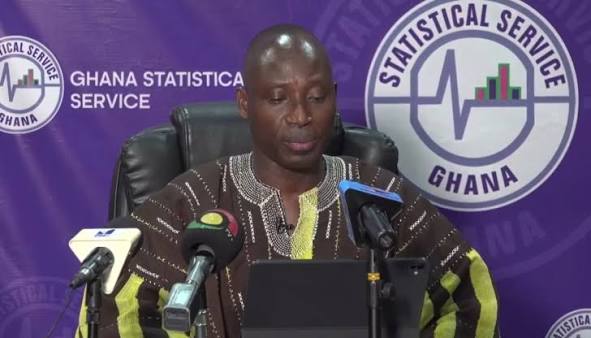
“Tourism development is not only about increasing the number of accommodation facilities,” Government Statistician Alhassan Iddrisu said in the report.
“It is also about understanding demand, improving utilisation, strengthening destinations, matching investment to market conditions and ensuring that tourism creates wider opportunities for businesses, communities and households.”
The survey covered 1,085 establishments selected from a national frame of 9,602 licensed and unlicensed accommodation businesses. It included hotels, guest houses, budget hotels, hostels, homestays, serviced apartments and unlicensed establishments in all 16 regions.
The results cover the first four months of a 12-month data-collection programme and should therefore be regarded as an emerging baseline rather than a definitive long-term trend.
Even so, they reveal structural weaknesses that investors, banks and tourism policymakers can no longer afford to overlook.
Hotels accounted for roughly 70 per cent of Ghana’s available room capacity during the period, offering between 3.3m and 3.66m room-nights each month.
But their room occupancy remained between 36.4 per cent and 37.8 per cent. This means almost two-thirds of available hotel rooms were not sold.
Hostels, by comparison, accounted for only about one-tenth of available room capacity but recorded occupancy rates of between 91.1 per cent and 95.2 per cent.
Standard hostels performed even more strongly, maintaining room occupancy of between 96 per cent and 99.4 per cent.
The contrast suggests that Ghana’s strongest accommodation demand may not be concentrated in the conventional hotel market. Price, purpose of travel, location and the availability of longer-term or group accommodation appear to be shaping utilisation more strongly than the formal classification of an establishment.
Hotels still generated most of the industry’s revenue, but their large stock of unsold rooms represents a significant efficiency problem. Hotel operators must maintain buildings, utilities, security and staff regardless of whether rooms are occupied.
Persistently low utilisation therefore raises a difficult question for the sector: should capital continue to flow into new hotel construction when many existing properties are struggling to fill even four out of every 10 rooms?
The answer will vary by location and market segment. But the survey suggests that any new investment case based simply on national tourism potential, rather than verified local demand, should be approached cautiously.
Domestic guests overwhelmingly sustained the accommodation sector during the four-month period.
The number of Ghanaian residents using accommodation facilities ranged from 1.87mn to 2.17mn each month. Foreign guests, by contrast, remained below 40,000 per month.
Across the four months, establishments recorded about 8.09m domestic guests compared with approximately 137,800 foreign guests. On that basis, residents accounted for more than 98 per cent of reported guest numbers.
This finding should change how Ghana thinks about tourism development.
International arrivals are important because foreign guests typically bring additional foreign exchange and, according to the survey, generally stay longer. But the immediate commercial foundation of the accommodation industry is domestic demand.
Domestic hotel guests stayed for about two nights on average, while foreign hotel guests typically stayed between three and four nights.
Foreign visitors therefore represent a smaller but potentially higher-value segment. Their longer stays create more opportunities for spending on accommodation, food, transport, entertainment, retail and cultural activities.
The strategic question is not whether Ghana should choose between domestic and international tourism. It is whether the country can design separate and effective propositions for both markets.
Domestic tourists may be more sensitive to price, transport costs and the affordability of attractions. International visitors may place greater weight on air connectivity, service standards, safety, digital booking systems and the quality of complete travel experiences.
A policy designed mainly around attracting foreign tourists could neglect the residents who currently keep much of the industry operating. Yet a strategy dependent almost entirely on domestic demand may struggle to deliver the foreign-exchange and higher-spending benefits Ghana expects from tourism.
The regional results demonstrate why national averages can be misleading.
Greater Accra had the largest accommodation supply and generated the highest room revenue. Its estimated revenue declined from GH¢2.08bn in November to GH¢1.55bn in February.
Across the four-month period, the region generated about GH¢7.18bn — almost two-thirds of the national total.
Greater Accra also recorded the highest average daily rate and revenue per available room. Its average daily rate reached GH¢2,748 in November, more than twice the national figure of GH¢1,351.
But the region’s room occupancy remained comparatively modest, ranging from 41 per cent to 47.6 per cent.
Central Region, in contrast, maintained room occupancy of about 60 per cent and bed occupancy above 70 per cent throughout the period. It also recorded the country’s largest domestic guest numbers, reaching 872,358 in January.
This could reflect the region’s combination of educational institutions, beaches, heritage sites, conferences and short-distance access from Accra. It suggests that strong occupancy depends not merely on possessing attractions, but on how accommodation connects with education, events, transport and other recurring sources of demand.
Savannah Region recorded the highest regional room occupancy rate, reaching 63.7 per cent in January, although it operated from a substantially smaller accommodation base.
Eastern, Bono East and Volta regions remained below 28 per cent room occupancy throughout the four months. These low rates do not necessarily mean the regions lack tourism potential. They may instead indicate weak destination packaging, limited transport connectivity, insufficient events, poor marketing or a mismatch between available accommodation and actual visitor demand.
Constructing additional hotels in these markets without resolving the underlying demand constraints could intensify competition for an already limited pool of guests.
Unlicensed establishments accounted for between 899,000 and 1m available room-nights each month and generated an estimated GH¢2.29bn in room revenue over the period.
Their occupancy ranged from 44.8 per cent to 58 per cent, outperforming formal hotels in every month covered by the survey.
This is not a marginal segment operating outside the main industry. It represents a substantial part of Ghana’s accommodation economy.
The expansion of short-term rentals, informal guest houses and digitally marketed properties has widened consumer choice but also created regulatory and statistical challenges.
If a large proportion of demand is shifting towards unlicensed facilities, traditional hotels may be competing against operators with lower compliance, labour and taxation costs.
The appropriate response is not necessarily heavy-handed enforcement. It is to make registration accessible, establish minimum safety and service standards, improve tax visibility and bring informal operators into the tourism-planning system.
Ignoring them would leave policymakers with an incomplete picture of capacity, demand and revenue.
National room revenue declined from GH¢3.04bn in November to GH¢2.46bn in February.
Revenue per available room fell from GH¢603 in November to GH¢490 in January before recovering to GH¢524 in February. Average daily rates followed a similar pattern, declining from GH¢1,351 to GH¢1,112 before a modest recovery.
The fact that revenue weakened while national occupancy remained broadly around 44 to 47 per cent suggests that pricing and the mix of rooms sold played an important role.
Upmarket hotels recorded the highest average rates and revenue per available room, but their performance declined sharply through January. Their revenue per available room fell by 7.5 per cent in December and 21.7 per cent in January before increasing by 15.7 per cent in February.
This illustrates why operators cannot judge performance by occupancy alone. Discounting rooms may increase the number sold but weaken revenue, while charging premium prices can be counterproductive if too many rooms remain empty.
Hotels need to monitor occupancy, average daily rates and revenue per available room together, using data to adjust pricing, marketing and customer segmentation.
The report’s most important message is not that Ghana’s accommodation industry is performing poorly. It is that the industry is not one market.
Hostels are highly utilised while hotels carry considerable unused capacity. Central and Savannah record relatively strong occupancy, while several regions struggle to fill even three out of every 10 rooms. Domestic guests drive volume, while foreign visitors stay longer. Greater Accra dominates revenue, yet does not achieve the highest occupancy.
These differences make blanket tourism policies increasingly difficult to justify.
Before approving new hotel projects, extending tax incentives or financing additional room capacity, investors and public institutions should ask where demand will come from, what price guests will pay and whether existing facilities are already underused.
For areas with low occupancy, the priority may not be another hotel. It may be better roads, stronger attractions, regular festivals and conferences, improved destination marketing or partnerships that convert day visitors into overnight guests.
For operators, the lesson is equally direct: the age of relying on general statements about Ghana’s tourism potential must give way to data-led decisions about pricing, markets and location.
Ghana has built a sizeable accommodation base. The next phase of tourism policy must be less concerned with how many rooms the country possesses and more concerned with why so many remain empty.

